Use of spelter sockets
- Safety Flash
- Published on 4 February 2008
- Generated on 14 July 2025
- IMCA SF 02/08
- 2 minute read
A Member has reported an incident onboard one of its vessel’s that has highlighted a potential safety issue for other IMCA Members regarding the use of a particular type of open spelter socket as wire rope terminations (plain load pin with split cotter pin type).
What happened?
The incident occurred onboard a dive support vessel when the diving bell guide weight became detached from one of the wire rope guides at the termination end. As a result the vessel was unable to recover the guide weight without ROV subsea intervention.
The termination employed to connect the wire rope to the guide weight was an open jaw spelter socket fitted with plain load pin c/w split cotter pin which interfaced with the master link and a combination of shackles to a pad eye on the guide weight.
Following investigation, these points were noted:
- The disconnection occurred between the spelter socket and the master link and the spelter socket load pin was secured in position by the use of a split cotter pin only.
- It is not known how the spelter socket load pin became detached from the body of the socket. However, galvanic corrosion of the split cotter pin, incorrect fitting of the split cotter pin or side impact to the spelter socket load pin could have contributed to the failure. British Standard BS 463 states that the use of a ‘plain pin with split cotter pin’ is an ‘acceptable wire rope termination’, although this type of termination may not have been suitable for the purpose for which it was being employed.
- Open spelter sockets with ‘plain load pins’ are more suited to static connections. However, where it is necessary to make/break connections more frequently then closed spelter sockets should be used with an interfacing shackle, as these lifting accessories are commonplace and easy to change out or replace.

Actual rigging setup in use at time of incident
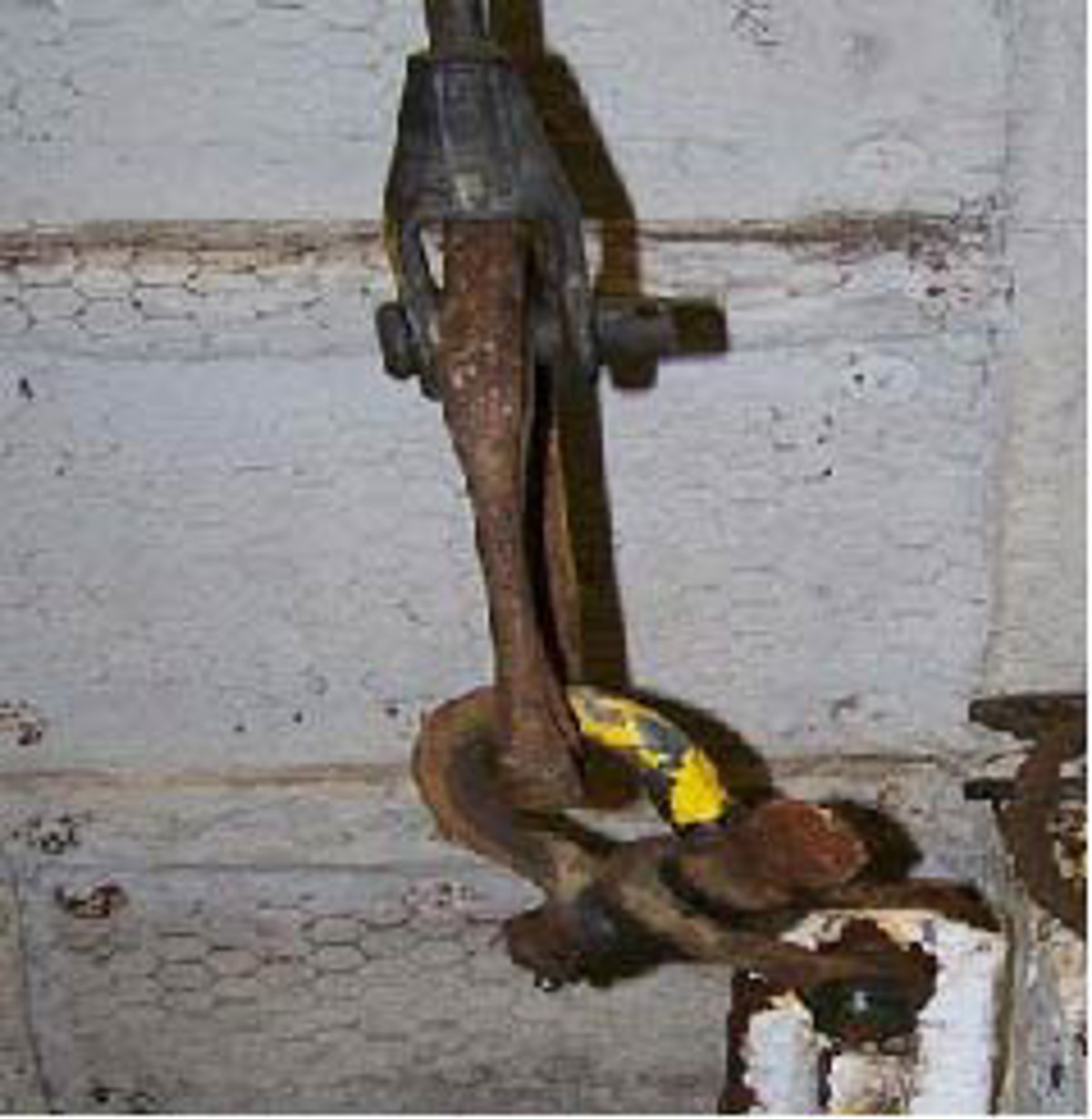
Actual rigging setup in use at time of incident
The following actions were recommended:
- Companies are encouraged to assess their use of spelter sockets and where possible use the closed type and suitable interface shackle.
- Where open spelter sockets must be used their suitability for the task should be assessed. If the spelter socket is to be used in a subsea lifting arrangement or experience any side impact (however minor) then the ‘screwed load pin with nut and split cotter pin’ securing type should be used.
IMCA Safety Flashes summarise key safety matters and incidents, allowing lessons to be more easily learnt for the benefit of the entire offshore industry.
The effectiveness of the IMCA Safety Flash system depends on the industry sharing information and so avoiding repeat incidents. Incidents are classified according to IOGP's Life Saving Rules.
All information is anonymised or sanitised, as appropriate, and warnings for graphic content included where possible.
IMCA makes every effort to ensure both the accuracy and reliability of the information shared, but is not be liable for any guidance and/or recommendation and/or statement herein contained.
The information contained in this document does not fulfil or replace any individual's or Member's legal, regulatory or other duties or obligations in respect of their operations. Individuals and Members remain solely responsible for the safe, lawful and proper conduct of their operations.
Share your safety incidents with IMCA online. Sign-up to receive Safety Flashes straight to your email.