Inadequate maintenance and securing arrangements of emergency exit hatches
- Safety Flash
- Published on 17 September 2018
- Generated on 18 July 2025
- IMCA SF 21/18
- 1 minute read
The port side emergency exit to deck from the steering gear room failed to open during an inspection by shore-side management.
What happened?
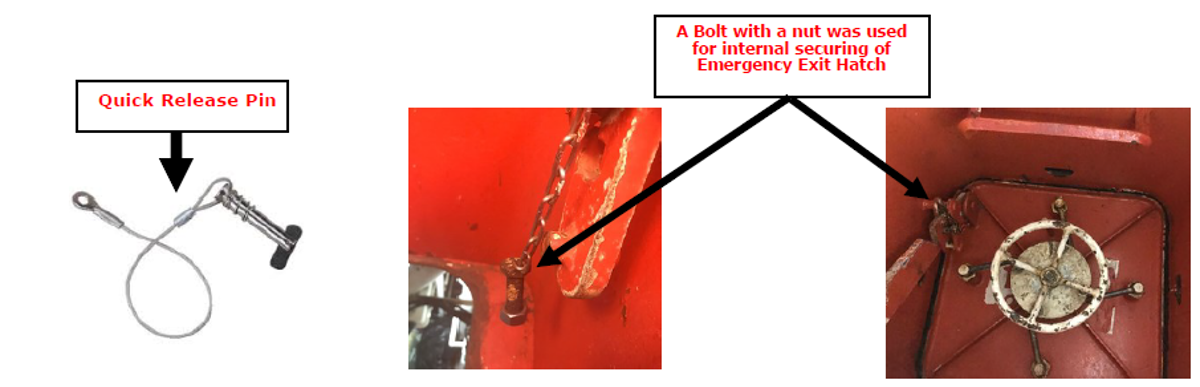
In addition, inappropriate locking arrangements (bolt with a nut) were found used for various emergency exit hatches located on both sides of the main deck.
What were the causes?
- There were inappropriate locking arrangements for emergency exit hatches – these should not be used. This practice could have led to a potentially hazardous situation where the hatch could not be opened.
What lessons were learned?
- As per company planned maintenance schedule, the correct and full operation of all watertight doors and escape hatches should be checked on a weekly basis.
- Safety inspections and maintenance of critical equipment should be conducted in an effective manner.
Related Safety Flashes
-
IMCA SF 14/17
9 June 2017
-
-
IMCA SF 11/15
10 August 2015

IMCA Safety Flashes summarise key safety matters and incidents, allowing lessons to be more easily learnt for the benefit of the entire offshore industry.
The effectiveness of the IMCA Safety Flash system depends on the industry sharing information and so avoiding repeat incidents. Incidents are classified according to IOGP's Life Saving Rules.
All information is anonymised or sanitised, as appropriate, and warnings for graphic content included where possible.
IMCA makes every effort to ensure both the accuracy and reliability of the information shared, but is not be liable for any guidance and/or recommendation and/or statement herein contained.
The information contained in this document does not fulfil or replace any individual's or Member's legal, regulatory or other duties or obligations in respect of their operations. Individuals and Members remain solely responsible for the safe, lawful and proper conduct of their operations.
Share your safety incidents with IMCA online. Sign-up to receive Safety Flashes straight to your email.