Fire in the laundry room
- Safety Flash
- Published on 16 October 2023
- Generated on 12 July 2025
- IMCA SF 24/23
- 2 minute read
A smoke detector was activated. A deck officer checked the origin of the alarm which was coming from an area close to the laundry room.
What happened?
A general fire alarm was sounded; all personnel started to muster, and a firefighting team assembled.
The fire team found the source of the fire which was coming from an industrial tumble dryer in the laundry room.
The fire was safely extinguished before the personnel muster was complete.
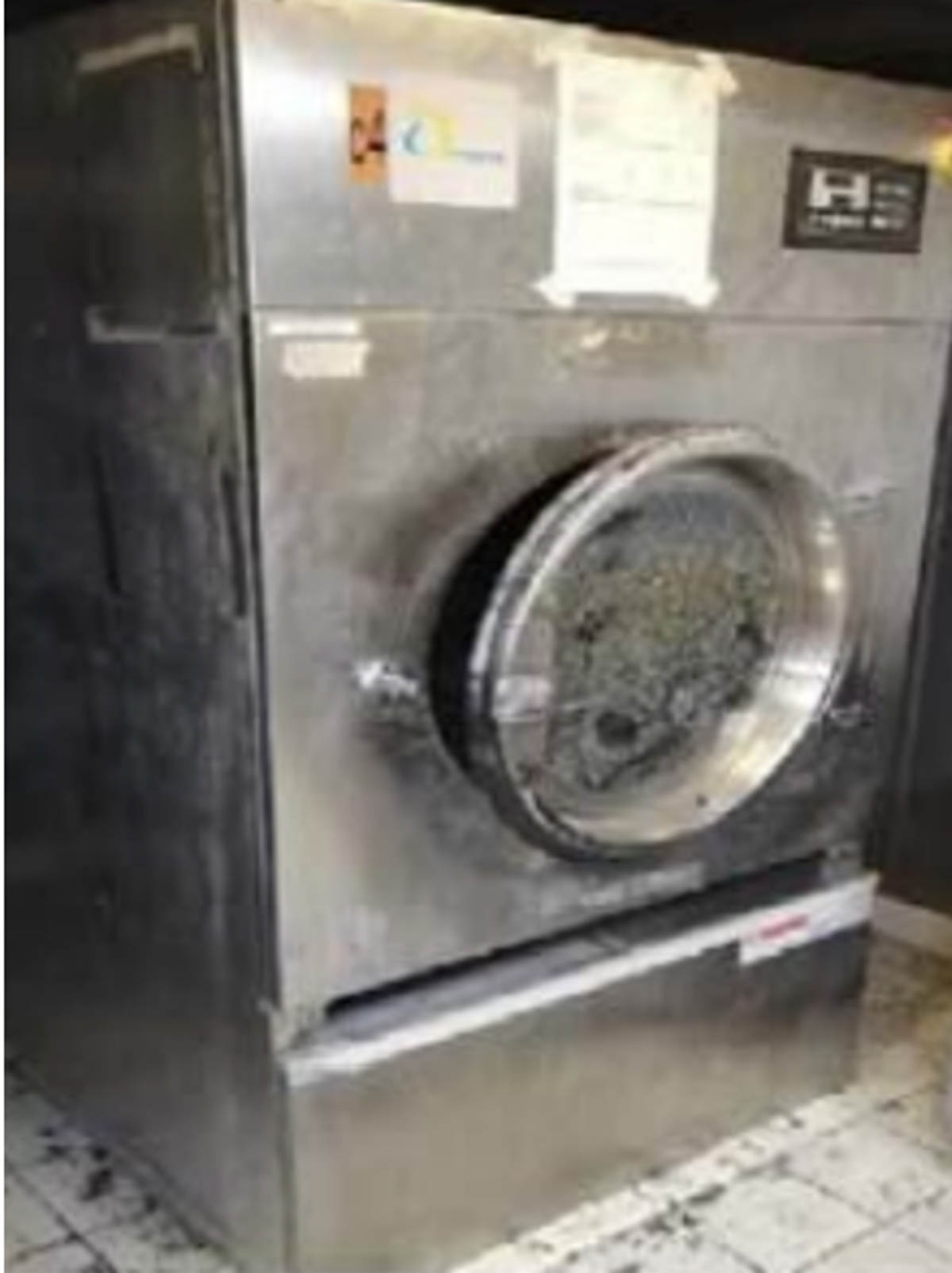
Industrial tumble dryer where fire broke out
What went right?
- Everyone started to muster quickly and professionally.
- The fire fighting team responded to the action area and put out the fire.
What went wrong?
Our Member noted that in this case:
- The air flow of the tumble dryer heating system may have allowed flammable material (particulate) to be conveyed through the electrical heating elements and pushed into the drum containing the clothes. The electrical elements are not protected (isolated) and are positioned very close to the actual rotating drum.
- The dryer had undergone recent maintenance (troubleshooting) and the control panel and set-up parameters had been changed during this process, and were different from the original.
- There was no smoke detection in the laundry – only heat detectors – and the alarm was by the smoke detector adjacent the door of the laundry in the corridor because the door was partially open.
- The type of tumble dryer conformed to no known industrial standard.
What were the causes?
- Changes to the dryer in the troubleshooting/maintenance process.
- Lack of smoke detection in the laundry.
Lessons and actions
- Use equipment complying with a recognised industrial design standard.
- Use spare parts that are original and/or fully compatible with the equipment.
- Review fire/smoke detection system to identify potential improvements particularly in laundry area.
Related safety flashes
-
IMCA SF 24/22
1 November 2022
-
-
IMCA SF 19/19
12 August 2019
-
-
IMCA SF 03/19
27 February 2019
IMCA Safety Flashes summarise key safety matters and incidents, allowing lessons to be more easily learnt for the benefit of the entire offshore industry.
The effectiveness of the IMCA Safety Flash system depends on the industry sharing information and so avoiding repeat incidents. Incidents are classified according to IOGP's Life Saving Rules.
All information is anonymised or sanitised, as appropriate, and warnings for graphic content included where possible.
IMCA makes every effort to ensure both the accuracy and reliability of the information shared, but is not be liable for any guidance and/or recommendation and/or statement herein contained.
The information contained in this document does not fulfil or replace any individual's or Member's legal, regulatory or other duties or obligations in respect of their operations. Individuals and Members remain solely responsible for the safe, lawful and proper conduct of their operations.
Share your safety incidents with IMCA online. Sign-up to receive Safety Flashes straight to your email.