Oil tank sight glass push buttons wired open
- Safety Flash
- Published on 13 December 2022
- Generated on 21 August 2026
- IMCA SF 28/22
- 1 minute read
On a visit to an engine room, a serious bypassing of safety controls was observed.
What happened?
Both top and bottom level check push buttons on an Oil Tank Sight Glass were inhibited by wire. The sight glass is used to check the oil level in storage tanks. It is designed such that a button has to be pushed to check and verify the level of the oil tank. The button allows a connection between the sight glass and the oil tank. Whilst the button was wired open, if the glass tube were to be accidentally broken or damaged, then the contents of the tank could easily spill into the engine room with consequent further serious hazard of slips/trips, fire, and lack of oil where it was intended.
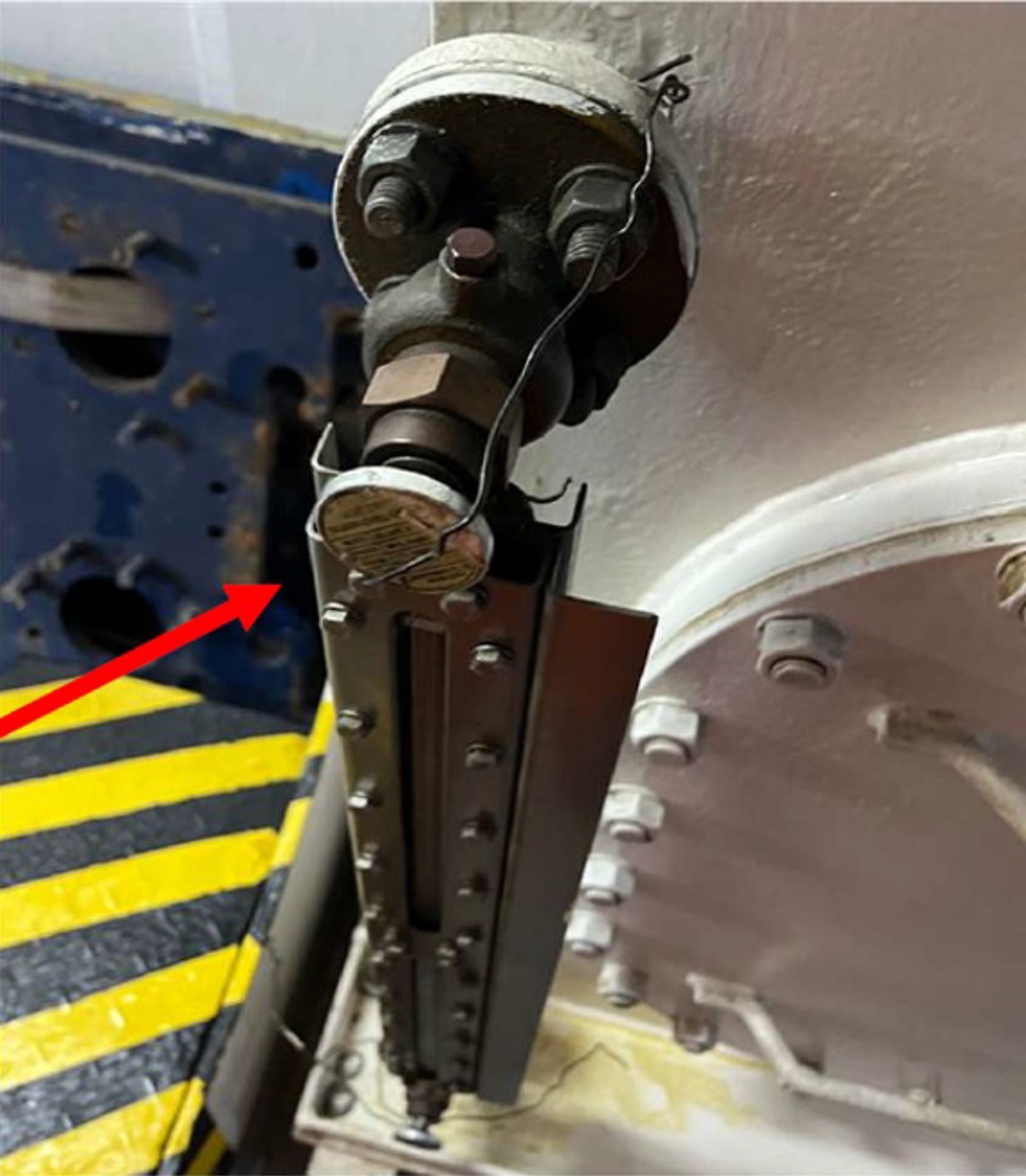
Top of sight closing device blocked by wire
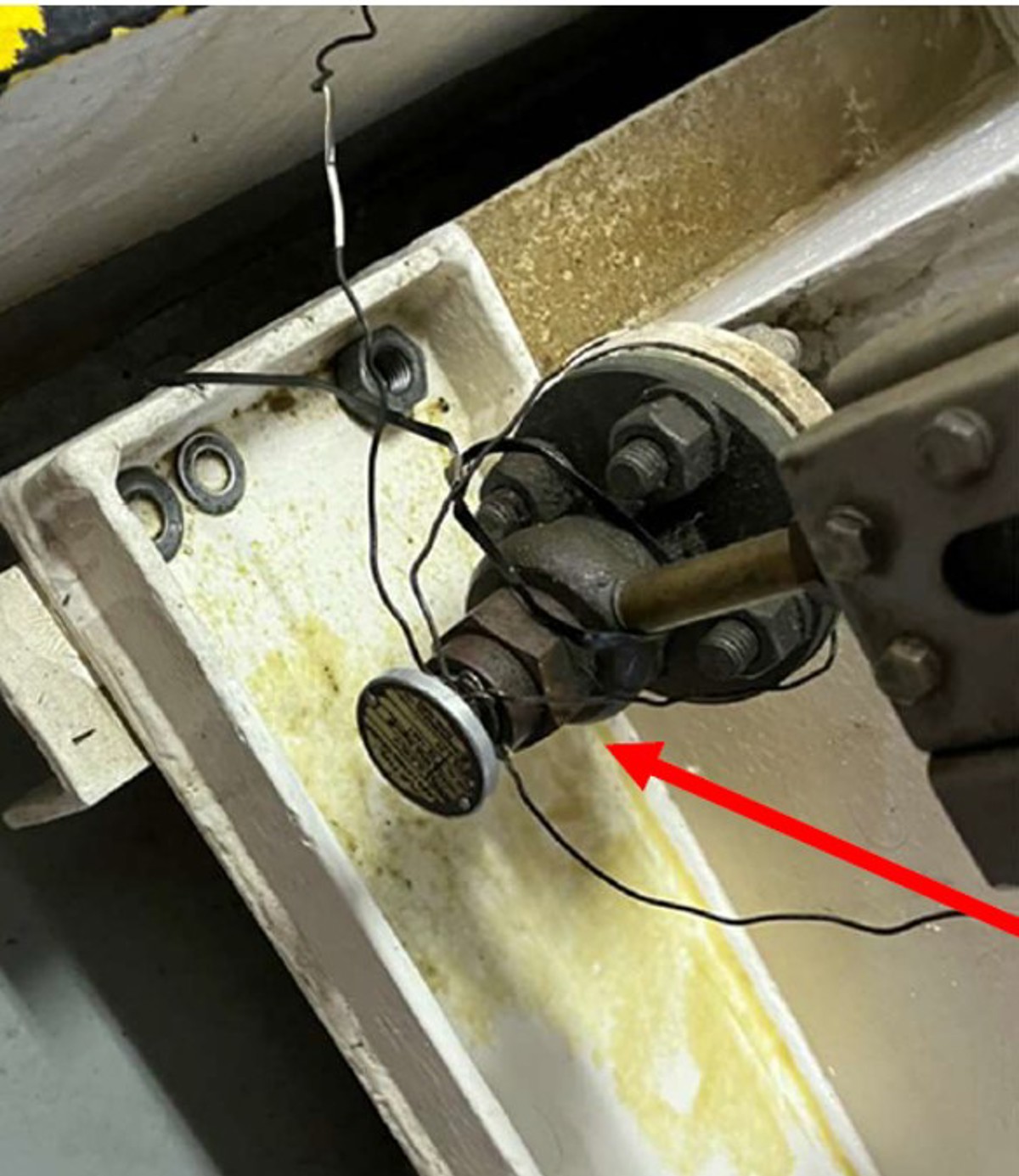
Bottom of sight closing device blocked by wire
What was the cause?
- Unsafe behaviour – this was an intentional override of a design feature related to safety-critical equipment
- The oil level gauge closing device had been inhibited with wire and remained in open position for a long time.
Related Safety Flashes
-
IMCA SF 28/20
28 September 2020
-
-
IMCA SF 06/20
19 February 2020
-
-
IMCA SF 09/19
3 May 2019
-

IMCA Safety Flashes summarise key safety matters and incidents, allowing lessons to be more easily learnt for the benefit of the entire offshore industry.
The effectiveness of the IMCA Safety Flash system depends on the industry sharing information and so avoiding repeat incidents. Incidents are classified according to IOGP's Life Saving Rules.
All information is anonymised or sanitised, as appropriate, and warnings for graphic content included where possible.
IMCA makes every effort to ensure both the accuracy and reliability of the information shared, but is not be liable for any guidance and/or recommendation and/or statement herein contained.
The information contained in this document does not fulfil or replace any individual's or Member's legal, regulatory or other duties or obligations in respect of their operations. Individuals and Members remain solely responsible for the safe, lawful and proper conduct of their operations.
Share your safety incidents with IMCA online. Sign-up to receive Safety Flashes straight to your email.