While working offshore, I communicated extensively with expatriate diving and maritime professionals. They frankly pointed out that diving equipment and operational procedures adopted in China at that time fell far short of international standards, creating numerous safety hazards. Foreign operators would rarely award complex, high-risk, and high-value underwater projects to Chinese teams. They told me that safe, standardised, and reliable diving operations could only be achieved by strictly following IMCA guidelines— this was the first time I had heard of IMCA, the international industry association.
In 2002, I was appointed General Manager of Shanye Marine. My first overseas trip was to Singapore, where I visited local diving service providers, professional training institutes and subsea equipment suppliers. During this trip, I met Mr Darren Brunton, who had just founded KBA Associates. Through him, I gained systematic and comprehensive knowledge of IMCA’s Codes of Practice, membership framework and operational standards.
Upon returning to China, I purchased the complete set of IMCA diving guidelines and organised internal teams to translate the full documents into Chinese, followed by regular standard training for all divers and technical engineers. Meanwhile, we collaborated with Wuhu Diving Equipment Plant to develop diving equipment compliant with IMCA requirements. The factory later formed a joint venture with Divex to manufacture saturation diving systems in China and became the country’s first IMCA supplier Member.
In 2005, I formally set the goal of applying for IMCA Membership. Talent development was our top priority. We selected Mr Billy Pan from our in-house diving supervisors for his outstanding technical expertise and English proficiency, and sent him to KBA Associates in Singapore to undertake the IMCA Assistant Supervisor training course. In 2006, he passed the official IMCA certification exam and became China’s first certified IMCA Diving Supervisor.
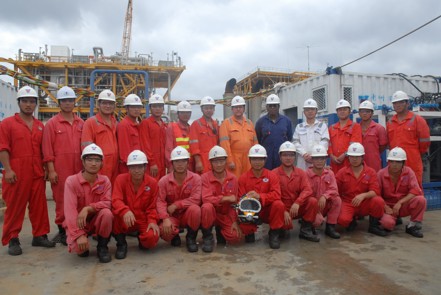
After Mr Pan obtained his qualification, I invited KBA’s expert team to our company to conduct practical assessments and Diving Medical Technician training for all divers. By 2009, 16 divers in our company held official IMCA certifications.
While upgrading personnel qualifications and equipment, we began developing a full suite of standardised management documents: compiling an English diving operations manual and converting all corporate management systems into bilingual Chinese and English versions. This was an extremely arduous undertaking. With no external consulting firm engaged and limited English proficiency across the team, the massive volume of documentation imposed a heavy workload on all staff. I came close to giving up on several occasions, yet we persisted and completed all preparatory materials.
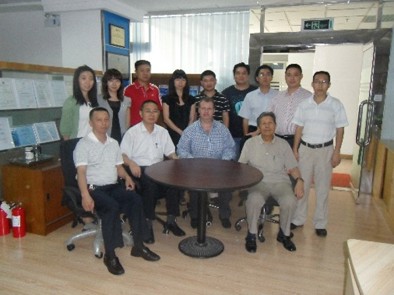
In 2010, Shanye Marine officially submitted its IMCA Membership application and passed the on-site audit to obtain provisional IMCA diving Member status.
After one full year of standardised operational implementation, the company passed IMCA’s follow-up on-site re-audit in 2011 and was formally recognised as a full IMCA diving Member. From setting our Membership target in 2005 to acquiring full formal Membership in 2011, we completed a six-year-long journey of industrial standardisation.
Since becoming China’s first IMCA diving Member in 2010, Shanye Marine has consistently implemented all IMCA codes in underwater operations, maintaining an industry-leading safety performance record. Among the 20 diving contractors serving China National Offshore Oil Corporation, our company has ranked first in the annual comprehensive safety performance evaluation year after year.
During a recent IMCA Member Meeting held in Shenzhen on 15 June I was asked: what is the biggest obstacle to the promotion and implementation of IMCA standards in China? Drawing on decades of frontline experience, I identified three core challenges: language barriers, cultural differences, and a cut-throat market driven by lowest-bid tendering.
First, language barriers. English proficiency among Chinese diving practitioners is generally limited, yet all IMCA codes, examinations and on-site audits are conducted in English, making it extremely difficult for local professionals to qualify as IMCA Diving Supervisors.
Second, cultural differences. The IMCA framework originates from the UK, built on a culture of rigorous procedural compliance that mandates strict adherence to standards in every operational link. In contrast, China’s industry culture prioritises flexibility and interpersonal considerations, which often leads to simplified workflows and relaxed standards on site, making consistent high-standard operations hard to sustain long-term.
Third, problematic lowest-bid tendering practices. Intense competition has created a highly saturated domestic subsea engineering market, where clients commonly award contracts to the lowest bidder.
Although I have retired, I continue to participate in industry diving training, qualification audits, and technical consulting work. I sincerely hope IMCA standards can gain wider adoption across China. I also look forward to deeper collaboration between IMCA, the China Diving and Salvage Association and the Association of Diving Contractors International. By leveraging each organisation’s strengths, we can collectively raise safety standards for all diving practitioners in China and drive standardised, sustainable, and high-quality development of the country’s offshore diving industry.
 |
 |
| IMCA Divers on-site Assessment - 2009 |
IMCA Diving Member Final Audit - 2011 |



Login / register to join the discussion
Comments
There are no comments for this article.