Diver falls into bell maintenance pit
- Safety Flash
- Published on 9 February 2010
- Generated on 17 October 2026
- IMCA SF 01/10
- 3 minute read
A Member has reported that as part of bell maintenance activities, a diver and dive supervisor removed grating from the bell maintenance access pit and positioned it against the moonpool handrail in the bell handling area.
What happened?
After the grating was removed the dive supervisor proceeded into dive control, at which point the diver moved the grating further and overstepped backward into the pit, falling 1m.
The diver sustained a minor laceration to his lower lip and injuries to his ribs on the left hand side of his body, resulting in a lost work day case for the company.
After investigation, the company has reported the following direct and root causes:
- The direct cause of the injuries was the 1m fall into the maintenance pit.
- The root causes included:
- inadequate design/engineering of the bell maintenance pit, including depth of the pit itself.
- risk assessment tools used did not include key hazards associated with the steps being undertaken as part of the overall maintenance work on the bell, including safe access into/out of and around the maintenance pit.
- Basic safety training modules (specifically risk assessment and manual handling) had not been completed within the first week onboard (as per procedure) and could have acted as a refresher for any training previously done on this, before being involved in risk assessing manual handling activities onboard.
The following corrective and preventative measures have been put in place by the company:
- Review of the existing task based risk assessment (TBRA) and creation of a TBRA specific to bell maintenance, including working in and around the bell maintenance access pit.
- False floor installed into maintenance pit to reduce the depth as required.
- Audit and review of employees onboard to ensure minimum safety training modules and requirements have been completed as per procedure.
More detailed one day risk assessment training courses are to be provided to employees on/offshore, above and beyond the risk assessment module contained in the working safely program.
Key lessons highlighted by the company:
- There was no requirement to move the pit grating further after it was placed against the moonpool handrail, in order to continue with the bell maintenance work.
- The bell maintenance pit did not have to be 1m deep in order to be fit for the purpose for carrying out bell maintenance activities.
- Manual handling and falls into the open pit, were not included in the risk assessment tools used, so may not have been recognised and discussed at the time.
- The definition of ‘hazard’ seemed misunderstood, as ‘damage to equipment’ and ‘injury to personnel’ were noted as hazards in the toolbox talk carried out, prior to the task commencing. Hazard understanding and recognition is a vital part of the risk assessment process and those unrecognised, can in turn be uncontrolled and may increase the risk of accidents.
- The toolbox talk carried out before bell maintenance commenced, had not highlighted the fact that the generic TBRA being used, was out of review date, and not specific to the bell maintenance tasks being undertaken.
Tighter control is needed onboard to ensure minimum safety training requirements are undertaken/ commenced as per company procedures.
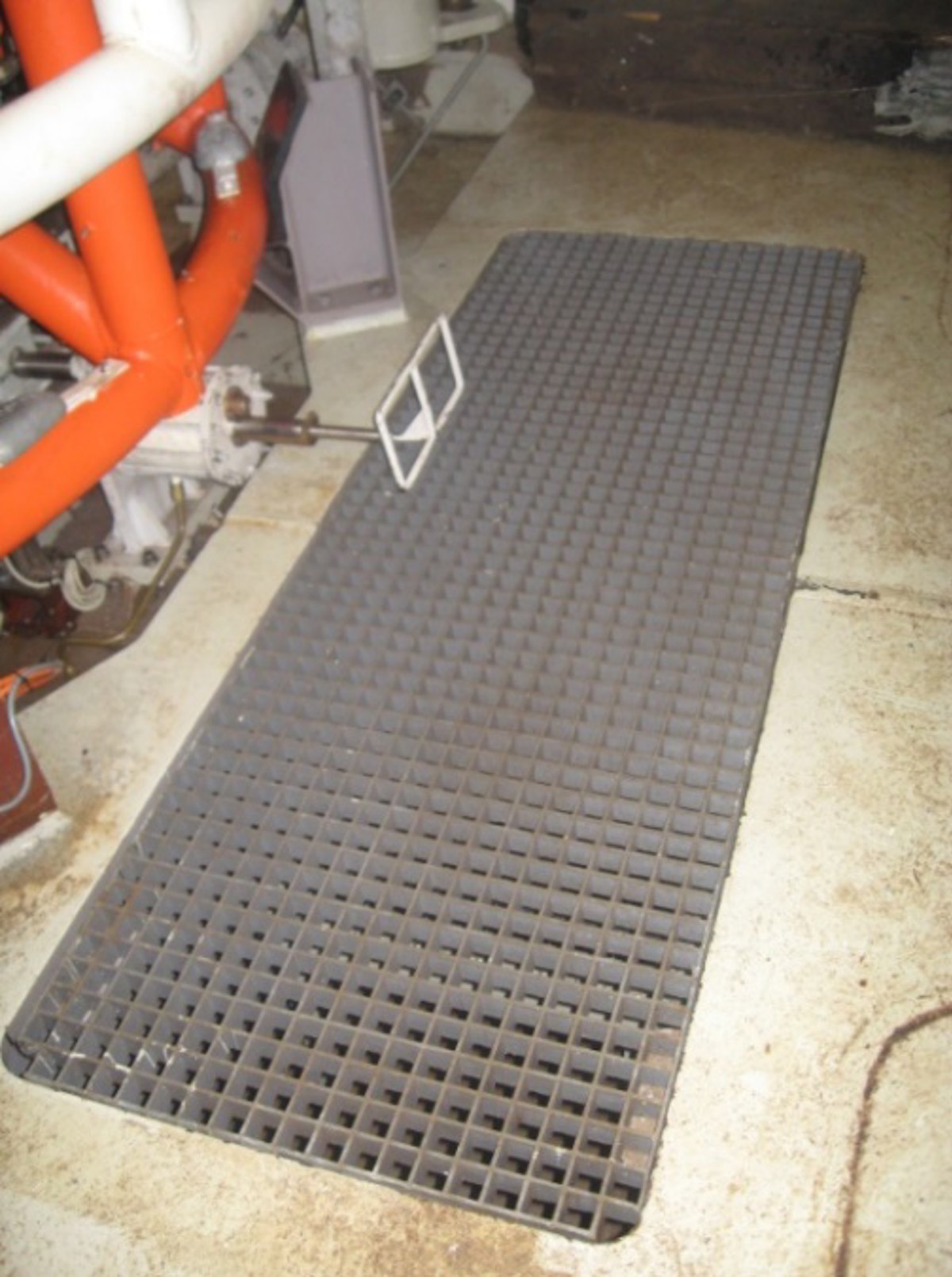
Bell maintenance pit located in the bell handling area of the vessel
IMCA Safety Flashes summarise key safety matters and incidents, allowing lessons to be more easily learnt for the benefit of the entire offshore industry.
The effectiveness of the IMCA Safety Flash system depends on the industry sharing information and so avoiding repeat incidents. Incidents are classified according to IOGP's Life Saving Rules.
All information is anonymised or sanitised, as appropriate, and warnings for graphic content included where possible.
IMCA makes every effort to ensure both the accuracy and reliability of the information shared, but is not be liable for any guidance and/or recommendation and/or statement herein contained.
The information contained in this document does not fulfil or replace any individual's or Member's legal, regulatory or other duties or obligations in respect of their operations. Individuals and Members remain solely responsible for the safe, lawful and proper conduct of their operations.
Share your safety incidents with IMCA online. Sign-up to receive Safety Flashes straight to your email.