MAIB: Vessel cook injured by spillage of burning cooking oil
- Safety Flash
- Published on 6 February 2025
- Generated on 9 October 2026
- IMCA SF 02/25
- 3 minute read
Cook receives burns from oil spill due to faulty thermostat.
What happened?
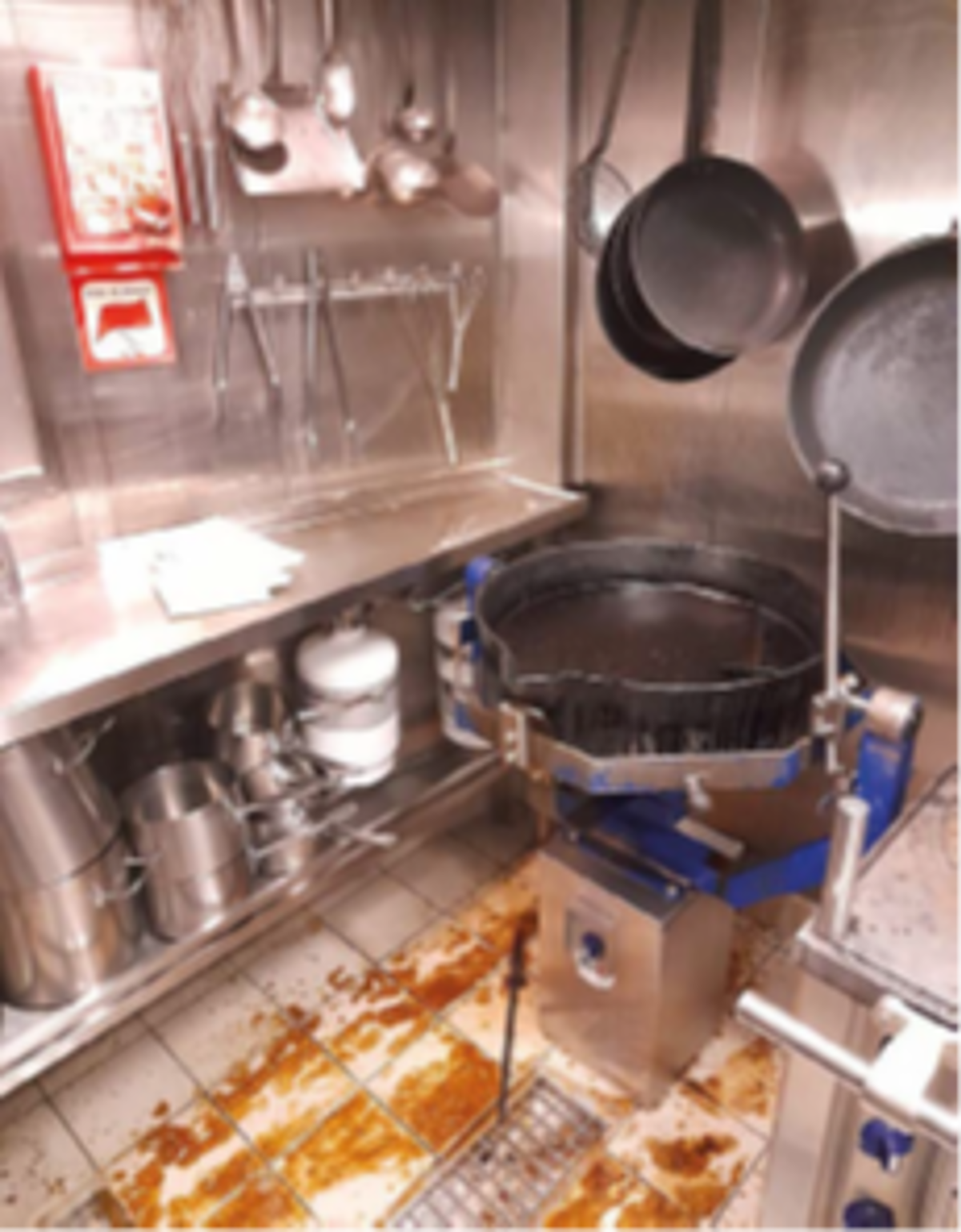
On an offshore support vessel, a cook was deep-frying fish in a shallow-sided gimballed “gyro” frying pan. Unbeknown to the cook the pan’s thermostat was faulty. The oil overheated, started smoking and ignited shortly afterwards. The cook activated the fixed wet chemical fire-extinguishing system. As the wet chemical filled the gimballed frying pan the burning oil spilled out onto the galley deck, covering the cook’s legs and feet in boiling oil.
The cook collapsed to the deck of the galley, shouting for help. The cook’s screams were heard by a passing crew person, who ran into the galley and dragged the cook out of danger. The wet chemical had successfully extinguished the fire in the pan, but had made a mess of the galley and severely injured the cook.
The electric supply to the gyro pan was isolated and the oil was left to cool in the pan before being removed. The cook was airlifted to hospital and treated for burns.
What went wrong?
- The cook routinely used the gyro pans to fry fish because the galley’s two deep fat fryers took a long time to heat up and needed a lot of oil. The MAIB notes that a gyro pan is unsuitable for use as a deep fat fryer due to the risk of oil splashing or spilling out over the shallow sides.
- The thermostat was faulty. Safety devices such as thermostats can malfunction, leading to unsafe situations if solely relied on.
- The activation of the fixed firefighting system installed above the pan caused the hot oil to spill out over the shallow sides when the wet chemical was deployed. Emergency systems and appliances might not function as expected on contact with incorrectly used equipment – this had serious consequences in this instance.
Lessons to learn
- The cook used a potentially hazardous work-around because the other equipment took too long to use. The workplace should be designed to make it easy to do things safely rather than easy to do things unsafely.
- Stop and think: why are we taking a short-cut? Could there be unknown hazards involved? Can we find a way to make the short-cut unnecessary, and if not, can we make it completely safe?
- Regularly check and maintain equipment, particularly equipment with thermostats or other safety cut-offs.
- If an appliance becomes hotter than expected, make sure it is reported to, and tested by, appropriately trained personnel.
- Always use equipment for its intended design purpose and in line with manufacturer’s guidance.
Related Safety Flashes
-
IMCA SF 04/19
12 March 2019
-
IMCA SF 03/18
31 January 2018
-
-
IMCA SF 19/19
12 August 2019
-
-
IMCA SF 12/23
16 May 2023
-
IMCA Safety Flashes summarise key safety matters and incidents, allowing lessons to be more easily learnt for the benefit of the entire offshore industry.
The effectiveness of the IMCA Safety Flash system depends on the industry sharing information and so avoiding repeat incidents. Incidents are classified according to IOGP's Life Saving Rules.
All information is anonymised or sanitised, as appropriate, and warnings for graphic content included where possible.
IMCA makes every effort to ensure both the accuracy and reliability of the information shared, but is not be liable for any guidance and/or recommendation and/or statement herein contained.
The information contained in this document does not fulfil or replace any individual's or Member's legal, regulatory or other duties or obligations in respect of their operations. Individuals and Members remain solely responsible for the safe, lawful and proper conduct of their operations.
Share your safety incidents with IMCA online. Sign-up to receive Safety Flashes straight to your email.