Some positive findings and good practices
- Safety Flash
- Published on 22 January 2026
- Generated on 12 March 2026
- IMCA SF 02/26
- 2 minute read
Checklists properly used
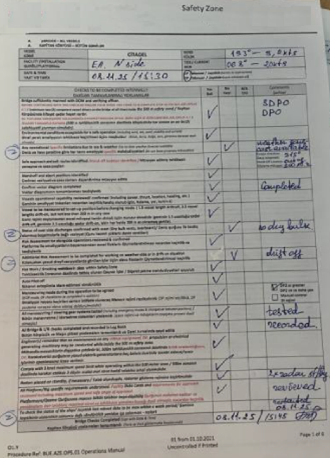
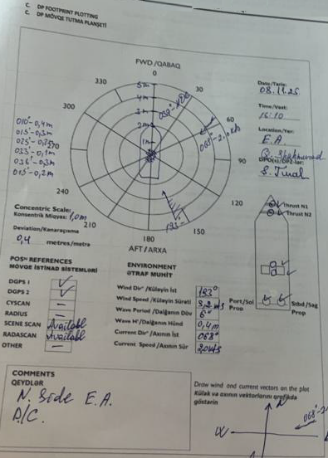
During an audit visit to a PSV, the 500m Safety Zone entry checklist was found fully completed with detailed checks and verification comments. The document pack was accurately filed and maintained to the highest standard, demonstrating strong operational discipline.
Bridge personnel should always follow safety zone procedures when entering the 500m Safety Zone. No vessel may operate in close proximity to offshore installations without completing the required checklists, obtaining proper authorization, and maintaining continuous situational awareness.
 |
 |
See also: UK HSE: Risk of collision with offshore installations from attendant vessels
Good preparation to prevent a fall into an open hatch
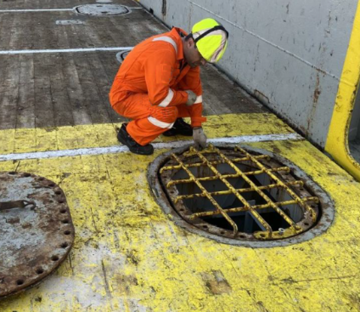
During preparation for mud tank cleaning, the crew safely removed the tank vertical access hatch covers to allow ventilation and then installed a specially fabricated metal mesh guard over the open hatch. This is an excellent control measure that prevents falls during ventilation.
All open hatches should be protected with approved physical barriers or guards during ventilation or maintenance activities. Ensure that no open hatch is left unattended or unsecured – if not, stop the job until safe conditions are restored.
Training simulator installed
A new state-of-the-art simulator facility was introduced in Papua New Guinea for the training and assessment of masters and navigation officers. It provides an excellent platform for developing professional masters & OOWs, and marks a strong step forward in building local competence and expertise.

A tidy deck is a safe deck
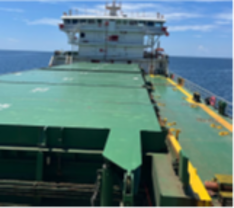
The vessel’s deck and overall condition were observed to be in excellent state, reflecting strong crew ownership and proactive maintenance efforts delivered through their own resources beyond the dry-dock scope.
Vessel crew should maintain a high standard of housekeeping and deck condition through consistent crew-led upkeep, routine maintenance, and proactive care, regardless of dry-dock schedules.
IMCA Safety Flashes summarise key safety matters and incidents, allowing lessons to be more easily learnt for the benefit of the entire offshore industry.
The effectiveness of the IMCA Safety Flash system depends on the industry sharing information and so avoiding repeat incidents. Incidents are classified according to IOGP's Life Saving Rules.
All information is anonymised or sanitised, as appropriate, and warnings for graphic content included where possible.
IMCA makes every effort to ensure both the accuracy and reliability of the information shared, but is not be liable for any guidance and/or recommendation and/or statement herein contained.
The information contained in this document does not fulfil or replace any individual's or Member's legal, regulatory or other duties or obligations in respect of their operations. Individuals and Members remain solely responsible for the safe, lawful and proper conduct of their operations.
Share your safety incidents with IMCA online. Sign-up to receive Safety Flashes straight to your email.