Small engine room fire – flammable object ignited
- Safety Flash
- Published on 13 February 2026
- Generated on 1 April 2026
- IMCA SF 03/26
- 2 minute read
While ramping up the starboard main engine, a small flammable foreign object ignited.
What happened?
During post–drydock sea trials, engine room crew were conducting firefighting equipment and main engine performance tests by gradually increasing engine load. While ramping up the starboard main engine, a small flammable foreign object ignited. The engine room team responded immediately, activating the emergency stop, engaging quick-closing valves to isolate the fuel supply, and extinguishing the fire with portable extinguishers.
There were no injuries, though the incident resulted in repairs and delays to the dry-dock schedule. Investigation confirmed that the ignition source was a small flammable foreign object located on the port main engine.
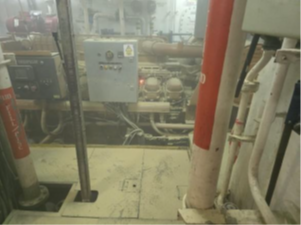
Ignition of the foreign flammable object on the engine
What went right?
- Condition of thermal insulation mats of the shield was acceptable.
- Exhaust manifold thermal insulation had been refitted before sea trials.
- Gaskets of exhaust manifold in the area of the ignition were in good order.
Why did it happen?
- Improper housekeeping – A small foreign object – most likely a small piece of cotton thread or similar flammable material got near a high temperature area of the engine.
- There was no post-maintenance check on the main engine – it was not checked for the foreign flammable objects after reassembly and adjustment during the dry dock.
What do we learn?
- The importance of cleanliness and “housekeeping”, particularly in the engine spaces, with special emphasis on verifying that no loose materials, rags or debris are left in machinery spaces after maintenance.
- After maintenance, before load testing, ensure double-check procedures for all piping, flanges, high-pressure fuel lines and thermal insulation that may have been dismantled or adjusted. This is particularly true following a dry dock period.
- The importance of drills and emergency preparedness: The success of the immediate response and the safe outcome validates the need for thorough and regular emergency response training and drills. All crew should re-verify their familiarity with quick-closing valves locations, fire-fighting equipment and operation protocols as soon as possible.
- Don’t assume – check, check and check again!
Related Safety Flashes
-
IMCA SF 20/24
14 October 2024
-
-
IMCA SF 21/20
13 July 2020
IMCA Safety Flashes summarise key safety matters and incidents, allowing lessons to be more easily learnt for the benefit of the entire offshore industry.
The effectiveness of the IMCA Safety Flash system depends on the industry sharing information and so avoiding repeat incidents. Incidents are classified according to IOGP's Life Saving Rules.
All information is anonymised or sanitised, as appropriate, and warnings for graphic content included where possible.
IMCA makes every effort to ensure both the accuracy and reliability of the information shared, but is not be liable for any guidance and/or recommendation and/or statement herein contained.
The information contained in this document does not fulfil or replace any individual's or Member's legal, regulatory or other duties or obligations in respect of their operations. Individuals and Members remain solely responsible for the safe, lawful and proper conduct of their operations.
Share your safety incidents with IMCA online. Sign-up to receive Safety Flashes straight to your email.