Cook temporarily trapped in freezer
- Safety Flash
- Published on 3 March 2026
- Generated on 3 March 2026
- IMCA SF 04/26
- 2 minute read
A vessel cook was temporarily trapped inside a large walk-in freezer.
What happened?
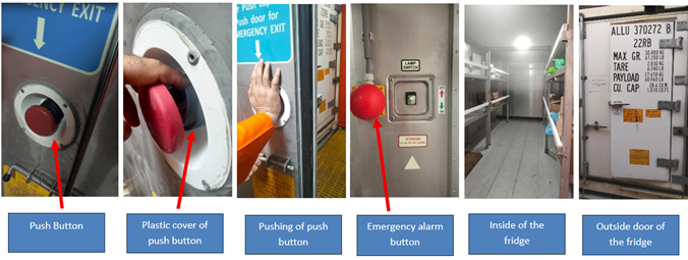
A freezer alarm was received on the bridge, indicating that a person was trapped inside the main deck freezer. Crew responded to the alarm, and it was found that the Chief Cook was inside the freezer and was unable to exit because the internal door-opening push button was blocked. The door was opened from the outside, and the cook exited safely without injury.
What went wrong?
- The push button to open the door, did not work: As the freezer is operated at –18°C, and the door was opened and closed frequently, the significant temperature difference near the door allowed condensation to form and allowed moisture to ingress beneath the rubber cover of the internal push button. This caused the push button to become stuck and inoperable, preventing the door from being opened from the inside.
- It was found that it was common practice to NOT fully secure or close the freezer door whilst inside but to leave it ajar. On the day of the incident, the vessel moved in adverse weather conditions, and the unsecured door closed suddenly, resulting in the cook being trapped inside.
Lessons to learn
- Refrigerator and freezer internal emergency release mechanisms can become inoperable due to condensation and ice formation, even when no visible defects are present.
- Entry into cold rooms or freezers without fully securing the door significantly increases the risk of entrapment, particularly during adverse weather conditions.
- Should walk-in freezers be treated as confined spaces or “lone working” spaces, given the risks involved of being trapped inside?
Actions taken
- Amended planned maintenance schedules to ensure weekly hygiene inspections focusing on condensation, ice formation, and functionality of internal release mechanisms and emergency alarm.
- Ensured that the freezer door button spring mechanism was greased to improve functionality and prevent freezing.
- Amended procedures to ensure that
- A second person was to be notified and present when entering the freezer.
- Door to freezer to be secured open whilst personnel were inside.
- Further training and raising of awareness was conducted for catering and deck crew.
IMCA Safety Flashes summarise key safety matters and incidents, allowing lessons to be more easily learnt for the benefit of the entire offshore industry.
The effectiveness of the IMCA Safety Flash system depends on the industry sharing information and so avoiding repeat incidents. Incidents are classified according to IOGP's Life Saving Rules.
All information is anonymised or sanitised, as appropriate, and warnings for graphic content included where possible.
IMCA makes every effort to ensure both the accuracy and reliability of the information shared, but is not be liable for any guidance and/or recommendation and/or statement herein contained.
The information contained in this document does not fulfil or replace any individual's or Member's legal, regulatory or other duties or obligations in respect of their operations. Individuals and Members remain solely responsible for the safe, lawful and proper conduct of their operations.
Share your safety incidents with IMCA online. Sign-up to receive Safety Flashes straight to your email.