W2W gangway bumper damaged during demonstration
- Safety Flash
- Published on 3 March 2026
- Generated on 3 March 2026
- IMCA SF 04/26
- 2 minute read
During testing to demonstrate emergency retraction, the movement of the vessel in the swell applied forces to the bumper, which caused the bolts to fail and the bumper to break off.
What happened?
During W2W (walk to work) gangway familiarisation for newly joined client personnel, the MPS (Manual Protection System) button was tested to demonstrate emergency retraction. The test was conducted while the W2W gangway was connected to a Transition Piece (foundation tower for an offshore wind turbine).
When the operator presses the MPS and the system switches to “emergency retract”, the gangway waits approximately one second before retracting, and does not compensate for movements from the vessel. The movement of the vessel in the swell applied forces to the bumper, which caused the bolts to fail and the bumper to break off. No-one was harmed.
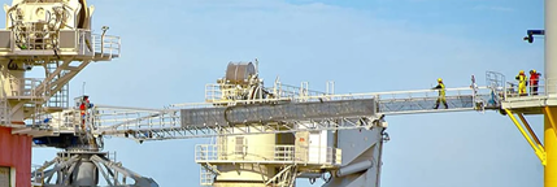
Typical W2W gangway (image: DNV)
What went wrong?
The MPS button should only have been used in a real emergency situation, and not for training purposes. This is stated in the operators manual. For live testing and demonstration of the EM Retract function on this particular gangway, the manufacturer has provided a test mode.
What was the cause?
When the operator presses the MPS and the system switches to emergency retract, the gangway waits approximately one second before retracting. During this time, the vessel moved closer to the TP. Because the gangway did not compensate during this period, both longitudinal and vertical forces were applied to the boom and telescope. The one-second delay is included for safety purposes, allowing service personnel time to react, in accordance with DNV requirements. This caused the telescope to compress and the boom to be pushed downward with a force exceeding the bolt limitations. The bolts are intentionally designed as the weak link to prevent overload of the mechanical telescopic boom structure.
What were the actions?
Once the bumper was safely repaired, the following was undertaken:
- Refamiliarisation training for the operating crew and amendments of familiarisation procedure to address correct testing and demonstration process for the Emergency Retract function following operators manual and makers guidance.
- Manufacturer of W2W gangway to review and evaluate potential software revision to prevent gangway from freezing after emergency retract is activated to avoid potential damage caused by vessel movements. This will require class involvement and approval.
IMCA Safety Flashes summarise key safety matters and incidents, allowing lessons to be more easily learnt for the benefit of the entire offshore industry.
The effectiveness of the IMCA Safety Flash system depends on the industry sharing information and so avoiding repeat incidents. Incidents are classified according to IOGP's Life Saving Rules.
All information is anonymised or sanitised, as appropriate, and warnings for graphic content included where possible.
IMCA makes every effort to ensure both the accuracy and reliability of the information shared, but is not be liable for any guidance and/or recommendation and/or statement herein contained.
The information contained in this document does not fulfil or replace any individual's or Member's legal, regulatory or other duties or obligations in respect of their operations. Individuals and Members remain solely responsible for the safe, lawful and proper conduct of their operations.
Share your safety incidents with IMCA online. Sign-up to receive Safety Flashes straight to your email.