MAIB: Sinking of tug Biter with loss of two lives
- Safety Flash
- Published on 24 March 2026
- Generated on 31 March 2026
- IMCA SF 06:26
- 2 minute read
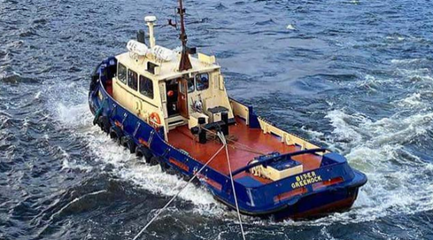
The UK Marine Accident Investigation Branch (MAIB) has published Accident Investigation 17/2024 relating to the girting and capsize of tug Biter with the loss of two lives.
What happened?
On 24 February 2023, the twin screw conventional tug Biter girted and capsized off Greenock, Scotland while attached to the stern of the passenger vessel Hebridean Princess, which was making its approach to James Watt Dock. Biter’s two crew were unable to escape from the capsized vessel and lost their lives.
What went wrong?
- The marine pilot’s training had not prepared them to work with conventional tugs.
- Master/pilot and pilot/tug exchanges were incomplete and, with no shared understanding of the plan, the passenger vessel’s master and the tug masters were unable to challenge the pilot’s intentions.
- The passenger vessel’s speed placed significant load on the tug’s lines and almost certainly caused the gob rope to render.
- The tug’s gob rope did not prevent it being girted.
- The tug’s rapid capsize meant the crew had insufficient time to release its towlines.
- An open hatch compromised the tug’s watertight integrity and limited the crew’s chance of survival.
MAIB have published a full and detailed report.
Lessons to learn
- MAIB have made recommendations to the owners and to the port involved, including:
- Review safety management systems and risk assessments to provide clear guidance on:
- the rigging of the gob rope.
- the safe speed to conduct key manoeuvres.
- Adopt a recognised training scheme for tug masters.
- Commission an independent review of marine pilot training.
- Review safety management systems and risk assessments to provide clear guidance on:
Members may wish to refer to:
· MAIB Safety Bulletin 1/2026
· Video accompanying MAIB Safety Bulletin 1/2026
Related Safety Flashes
-
IMCA SF 27/21
1 October 2021
-
IMCA SF 29/17
7 November 2017
-
IMCA SF 07/22
22 March 2022
IMCA Safety Flashes summarise key safety matters and incidents, allowing lessons to be more easily learnt for the benefit of the entire offshore industry.
The effectiveness of the IMCA Safety Flash system depends on the industry sharing information and so avoiding repeat incidents. Incidents are classified according to IOGP's Life Saving Rules.
All information is anonymised or sanitised, as appropriate, and warnings for graphic content included where possible.
IMCA makes every effort to ensure both the accuracy and reliability of the information shared, but is not be liable for any guidance and/or recommendation and/or statement herein contained.
The information contained in this document does not fulfil or replace any individual's or Member's legal, regulatory or other duties or obligations in respect of their operations. Individuals and Members remain solely responsible for the safe, lawful and proper conduct of their operations.
Share your safety incidents with IMCA online. Sign-up to receive Safety Flashes straight to your email.