Lost time injury (LTI): Incident with circular saw leads to loss of thumb
- Safety Flash
- Published on 10 July 2012
- Generated on 21 October 2026
- IMCA SF 07/12
- 3 minute read
A Member has reported an incident in which a crewman cut off the top of his thumb and his middle finger whilst working with a circular table top bench saw.
What happened?
The incident occurred when the crewman was cutting 5mm thick plywood with the circular saw in order to make shelving for other plywood pieces. The plywood was laid flat on the bench with the injured person’s hands laid flat on top of the plywood, but the plywood snagged and dragged the crewman’s right hand towards the spinning blade. The injured person was medivaced ashore by helicopter in a timely manner after immediate first aid onboard had been administered. The surgeons at the local hospital managed to reattach the middle finger but the top of the thumb was lost.
The investigation revealed the following:
- No risk assessment had been conducted for the operation.
- The equipment was incorrectly set up and incorrectly operated by the injured person, though he stated that he was familiar with the operation of the equipment.
- The bench saw was supplied on board with the necessary safety equipment and full instructions for its safe operation. These instructions included reference to the use of the safety guard, a special tool for pushing the wood through, and the requirement to set the cutting blade to the correct level in accordance with the thickness of the wood that was being cut.
- The instruction manual appeared not to have been available at the workplace and the safety requirements for the safe operation of the saw were either not fully understood or were disregarded.
- There was no guard fitted to the circular saw blade.
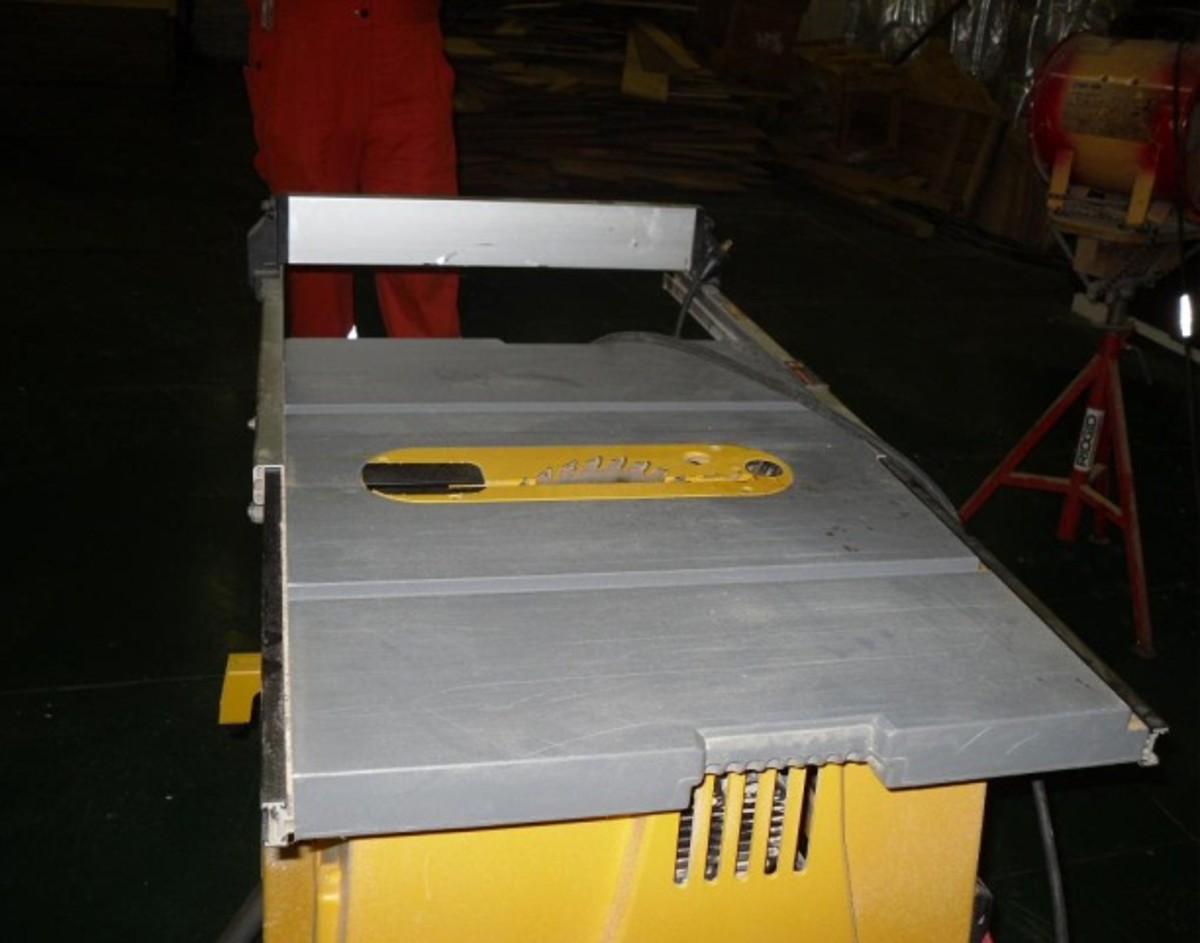
Unguarded bench saw
The following lessons were learnt:
- All power tools have the potential to cause serious injury if they are operated incorrectly and without the manufacturers’ approved and fitted safety devices.
- A risk assessment must be completed and filed prior to using any power tool. The assessment must take into consideration the following:
- the competence of the persons using the equipment
- the condition of the equipment being used
- the provision and proper functioning of adequate safety guards and cut-out devices such as emergency stops and barriers
- general working environmental conditions such as lighting
- availability and condition of any personal protective equipment
- Guards must always be fitted to equipment when designed to have them in place during operations.
- Power equipment should be operated in accordance with the procedures and rules set for their safe use.
- Full training, manuals and instructions should be available, and manuals and instructions should always be read and fully understood by even experienced operators.
- Complacency is a serious issue to be guarded against, especially in experienced personnel.
Members are also referred to IMCA safety promotional material:
- Watch your hands (pocket card)
- Use tools and equipment properly (poster)
IMCA Safety Flashes summarise key safety matters and incidents, allowing lessons to be more easily learnt for the benefit of the entire offshore industry.
The effectiveness of the IMCA Safety Flash system depends on the industry sharing information and so avoiding repeat incidents. Incidents are classified according to IOGP's Life Saving Rules.
All information is anonymised or sanitised, as appropriate, and warnings for graphic content included where possible.
IMCA makes every effort to ensure both the accuracy and reliability of the information shared, but is not be liable for any guidance and/or recommendation and/or statement herein contained.
The information contained in this document does not fulfil or replace any individual's or Member's legal, regulatory or other duties or obligations in respect of their operations. Individuals and Members remain solely responsible for the safe, lawful and proper conduct of their operations.
Share your safety incidents with IMCA online. Sign-up to receive Safety Flashes straight to your email.