Lifeboat davit sheave incident
- Safety Flash
- Published on 3 July 2003
- Generated on 7 April 2026
- IMCA SF 08/03
- 1 minute read
A Member has reported an incident involving a lifeboat davit sheave that occurred during ‘routine’ planned maintenance.
What happened?
On completion of tests, run according to the company’s standard procedures, personnel had re-boarded the vessel using the lifeboat embarkation ladder and the operation to recover the lifeboat to deck was commenced. The boat reached approximately 1 metre above the deck when a loud noise was heard. The operation was stopped immediately.
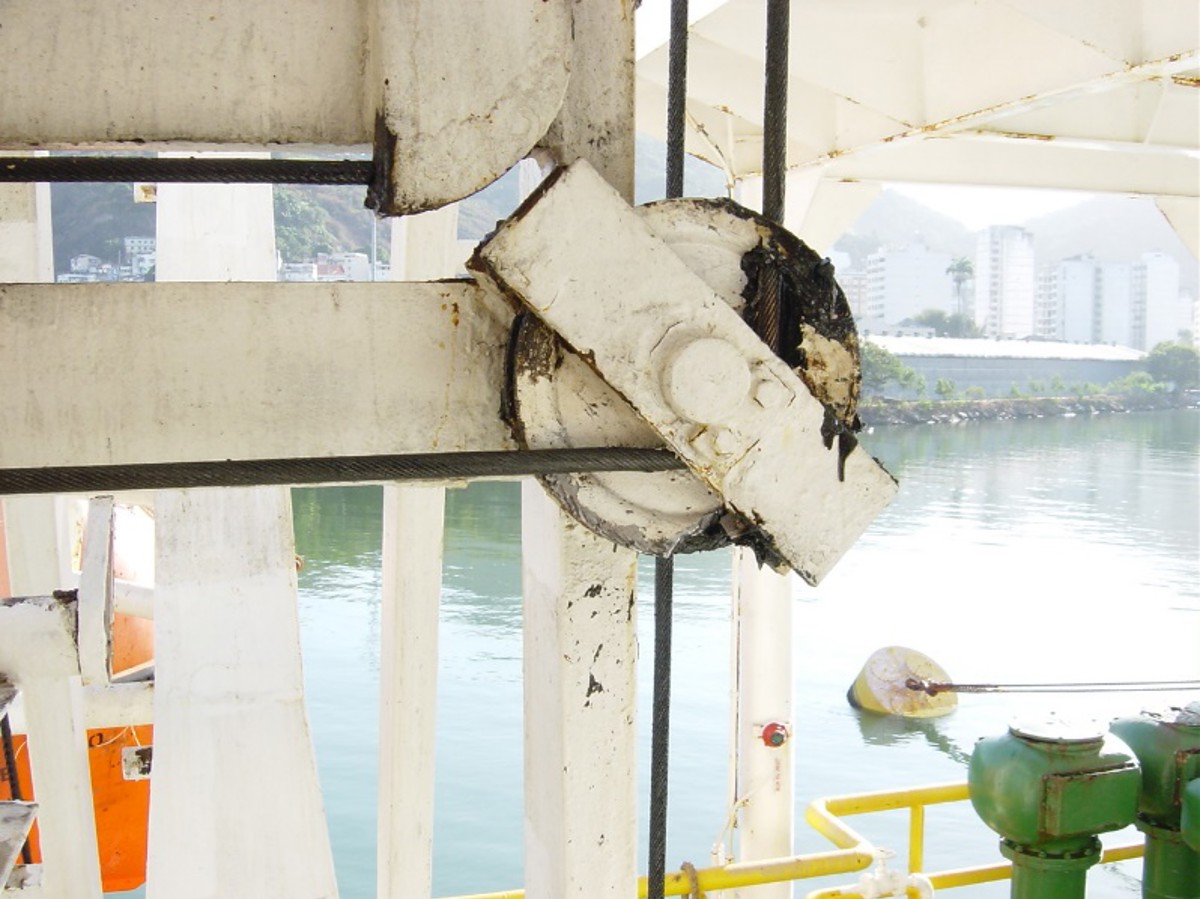
Close inspection revealed that one of the davit sheaves had disintegrated around its perimeter (circumference) and that this, in turn, had caused the falls wire to jump clear of the sheave and become trapped between the sheave face and sheave bracket on the davit structure (see figure).
IMCA Safety Flashes summarise key safety matters and incidents, allowing lessons to be more easily learnt for the benefit of the entire offshore industry.
The effectiveness of the IMCA Safety Flash system depends on the industry sharing information and so avoiding repeat incidents. Incidents are classified according to IOGP's Life Saving Rules.
All information is anonymised or sanitised, as appropriate, and warnings for graphic content included where possible.
IMCA makes every effort to ensure both the accuracy and reliability of the information shared, but is not be liable for any guidance and/or recommendation and/or statement herein contained.
The information contained in this document does not fulfil or replace any individual's or Member's legal, regulatory or other duties or obligations in respect of their operations. Individuals and Members remain solely responsible for the safe, lawful and proper conduct of their operations.
Share your safety incidents with IMCA online. Sign-up to receive Safety Flashes straight to your email.