NTSB: Dangerous engine failure – improper torquing
- Safety Flash
- Published on 1 April 2022
- Generated on 28 October 2026
- IMCA SF 08/22
- 3 minute read
The National Transportation Safety Board of the United States (NTSB) has published Marine Investigation Report 22/06 relating to a Diesel generator engine failure aboard a ferry in Puget Sound, Washington state, USA. The failure led to the ejection of components from the engine and resulted in a fire in the engine room. Damage was estimated at almost $4 million.
What happened?
In November 2020, the ferry was taken out of service for maintenance. During the maintenance period, two of the four main diesel engines, numbers 2 and 3, were overhauled. In February 2021, following the completion of engine overhauls, the vessel crew conducted engine tests. Alarms activated for the no. 3 main engine. Crew members found pieces of a cigarette lighter in the lube oil system. Technicians returned to inspect the engine and recover the pieces; they advised the vessel operator that it was acceptable to run the engine.
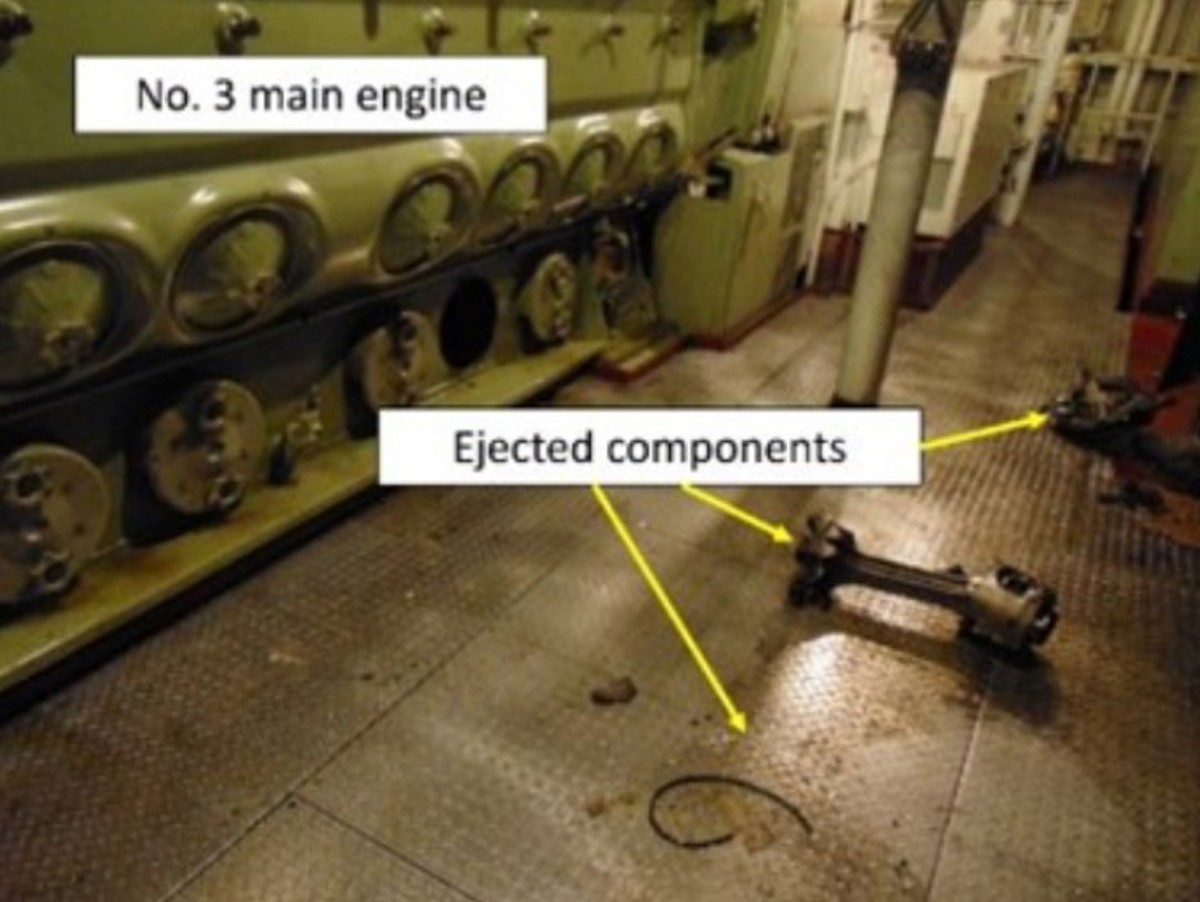
On April 22, while the vessel was conducting a post-maintenance sea trial in Puget Sound, the no. 3 main engine experienced a connecting rod assembly failure and ejected components that breached the crankcase, resulting in the ignition of hot pressurized gases that were released in the engine room.
What went right?
The crew effectively contained the spread of the fire by stopping all fuel supply and ventilation to the engine room and isolating the space. The fire self-extinguished before it could spread throughout the vessel. There were 13 crew on board and no passengers. No injuries or pollution were reported.
What went wrong?
NTSB investigation revealed that the probable cause of the mechanical failure of the no. 3 main engine was a connecting rod assembly that came loose and separated from the crankshaft due to insufficient tightening (torquing) of a lower basket bolt during the previous engine overhaul.
The NTSB has previously investigated other causalities caused by improperly torqued fasteners, including an engine room fire aboard the cruise ship Carnival Liberty in 2015, a fire aboard bulk carrier Nenita in 2016 and an engine failure on the offshore supply vessel Red Dawn in 2017.
Lessons learned
The NTSB notes that “When installing fasteners, personnel should use a calibrated torque wrench, follow the manufacturer’s recommended tightening guide and torque values, and verify that all required torque requirements have been completed. Under-torquing a fastener may cause excess vibration or allow the fastener to come loose, while over-torquing may lead to failure of the fastener or the machinery component being secured.”
Related Safety Flashes
-
IMCA SF 04/22
10 February 2022
-
IMCA SF 34/21
9 December 2021
-
IMCA SF 16/21
9 June 2021
IMCA Safety Flashes summarise key safety matters and incidents, allowing lessons to be more easily learnt for the benefit of the entire offshore industry.
The effectiveness of the IMCA Safety Flash system depends on the industry sharing information and so avoiding repeat incidents. Incidents are classified according to IOGP's Life Saving Rules.
All information is anonymised or sanitised, as appropriate, and warnings for graphic content included where possible.
IMCA makes every effort to ensure both the accuracy and reliability of the information shared, but is not be liable for any guidance and/or recommendation and/or statement herein contained.
The information contained in this document does not fulfil or replace any individual's or Member's legal, regulatory or other duties or obligations in respect of their operations. Individuals and Members remain solely responsible for the safe, lawful and proper conduct of their operations.
Share your safety incidents with IMCA online. Sign-up to receive Safety Flashes straight to your email.