Dropped bulk bag during loading operations
- Safety Flash
- Published on 5 November 2026
- Generated on 5 November 2026
- IMCA SF 19/26
- 2 minute read
A pallet within the bag punctured the material, causing multiple water packs (4.5kg each) to fall approximately 2.5m to the deck below. Exclusion barriers were in place and no personnel were exposed.
What happened?
A pallet within the bag punctured the material, causing multiple water packs (4.5kg each) to fall approximately 2.5m to the deck below. Exclusion barriers were in place and no personnel were exposed.
 |
 |
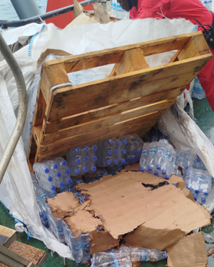 |
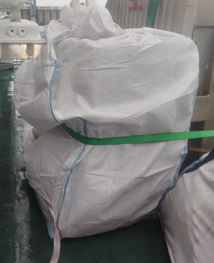
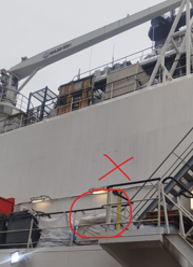
| Example of how lift bags are stored on deck. | X marks where the bag started to split. Circle marks where split bag was safely landed. | Split bag opened to transfer water bottles to new bag |
What went wrong?
The bag ripped because pallets were left in it. The pallets were not removed in accordance with company lifting procedures. This led to the rupture of the bag and the subsequent dropping of several packs of bottled water to the deck below.
- Existing lifting procedures were not followed, existing risk assessment was not complied with.
- The crew did not fully understand the risk that the bulk bag could rip and spill the contents if the pallet (which had sharp edges) was left in it.
- It was apparent that some members of the rigging crew (new to the vessel) were unfamiliar with the company lifting standards.
Lessons learned
- Inspect all lifts before lifting activities, specifically checking for items that could rupture/damage the integrity of the bulk bag, e.g. not just looking for damage.
- Good barrier management during lifting operations is imperative, including the lift path of loads. In this instance, no-one was in the line of fire.
- It needs to be clear that task duties and key risk controls are fully understood by those undertaking the task.
Related Safety Flashes
-
IMCA SF 12/19
28 May 2019
-
-
IMCA SF 10/20
17 March 2020
-
-
IMCA SF 20/20
6 July 2020
-
-
IMCA SF 22/25
4 December 2025
-

IMCA Safety Flashes summarise key safety matters and incidents, allowing lessons to be more easily learnt for the benefit of the entire offshore industry.
The effectiveness of the IMCA Safety Flash system depends on the industry sharing information and so avoiding repeat incidents. Incidents are classified according to IOGP's Life Saving Rules.
All information is anonymised or sanitised, as appropriate, and warnings for graphic content included where possible.
IMCA makes every effort to ensure both the accuracy and reliability of the information shared, but is not be liable for any guidance and/or recommendation and/or statement herein contained.
The information contained in this document does not fulfil or replace any individual's or Member's legal, regulatory or other duties or obligations in respect of their operations. Individuals and Members remain solely responsible for the safe, lawful and proper conduct of their operations.
Share your safety incidents with IMCA online. Sign-up to receive Safety Flashes straight to your email.