Failure of sea-fastening on the leg of a jack-up barge
- Safety Flash
- Published on 5 November 2026
- Generated on 5 November 2026
- IMCA SF 19/26
- 3 minute read
During a sea passage, prevailing sea conditions caused a jack-up barge to experience rolling and pitching motions.
What happened?
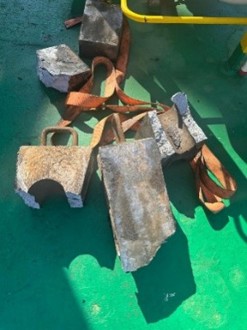
A sea-fastening stopper chock (wedge) installed between the jack-up leg and the jack house began to split and fail under dynamic loading. The failed chock sections were suddenly released under tension, and fragments were projected onto the main deck.
No personnel were present in the affected area at the time of the failure, and there were no injuries or property damage. The event was classified as a near miss with the potential for serious injury from flying debris.
There had been no visible indication of material failure prior to the installation of the chock.
What went right?
- The failure was promptly identified and reported.
- The vessel crew responded appropriately by securing the area and assessing the condition of the remaining sea-fastening arrangements.
- The event provided an opportunity to review sea-fastening arrangements and strengthen fleet-wide controls.
 |
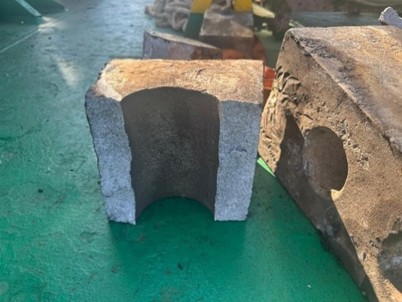 |
| Failed parts | |
What went wrong?
The stopper chock securing arrangement was not adequate to withstand the dynamic loads experienced during sea passage in the conditions encountered.
- The chocks were not properly secured to a suitable deck strong point to withstand the applied dynamic loads during sea passage.
- Inadequate identification of hazards relating to the securing of chocks during the sea passage.
- Tolerance of, or acceptance of, risk.
What were the causes of the incident?
- The securing arrangement was inadequate: It relied on a friction fit alone, with no positive restraint of the chock to a deck strong point. When dynamic loads split the wedge, there was nothing to retain the fragments, allowing them to become flying objects on deck.
- Hazard not identified: Inadequate identification of the hazards relating to securing of the chocks during the sea passage.
- Acceptance of risk: The condition and securing arrangement were accepted rather than challenged and corrected before departure.
What lessons were learnt?
Sea-fastening arrangements should be designed and verified to withstand expected dynamic loads during transit.
Friction fit alone should never be considered an adequate securing method for critical sea-fastening components - all stopper chocks should be positively secured to designated deck strong points.
Use secondary retention to prevent failed components from becoming flying or dropped objects.
What was done?
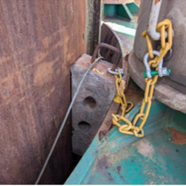
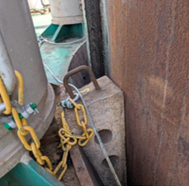
- Following the incident, the sea-fastening arrangement was reviewed and strengthened by introducing an additional securing arrangement already implemented on board. This arrangement incorporates two independent securing methods:
- Primary securing: Each stopper chock is individually secured to a designated deck strong point by chain, preventing movement or displacement during transit.
- Secondary securing: A steel wire is passed through all stopper chocks around the leg to provide additional retention. In the event of chock damage or failure, the wire prevents fragments from being released and becoming flying objects.
This arrangement provides redundancy within the sea-fastening system and reduces the potential for dropped or flying objects during sea passage following failure of an individual stopper chock. The securing arrangement has been verified and incorporated into routine inspections and pre-departure checks.
 |
 |
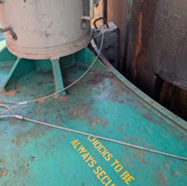 |
| Chain secured chock | Chain to strong point – wire through chock | Wire securing and deck stencil |
IMCA Safety Flashes summarise key safety matters and incidents, allowing lessons to be more easily learnt for the benefit of the entire offshore industry.
The effectiveness of the IMCA Safety Flash system depends on the industry sharing information and so avoiding repeat incidents. Incidents are classified according to IOGP's Life Saving Rules.
All information is anonymised or sanitised, as appropriate, and warnings for graphic content included where possible.
IMCA makes every effort to ensure both the accuracy and reliability of the information shared, but is not be liable for any guidance and/or recommendation and/or statement herein contained.
The information contained in this document does not fulfil or replace any individual's or Member's legal, regulatory or other duties or obligations in respect of their operations. Individuals and Members remain solely responsible for the safe, lawful and proper conduct of their operations.
Share your safety incidents with IMCA online. Sign-up to receive Safety Flashes straight to your email.