Engineer suffered burn injuries in engine room incident
- Safety Flash
- Published on 30 March 2021
- Generated on 15 October 2026
- IMCA SF 09/21
- 2 minute read
The Belgian Federal Bureau for the Investigation of Maritime Accidents (FEBIMA) has published its detailed and informative Report 2020/003688 “Report on the investigation into a serious injury on board” the capesize bulk carrier Mineral Temse in May 2020.
What happened?
An engineer suffered severe burns when parts of his hands, arms and legs were covered with hot sludge from the sludge discharge line of a switched-off fuel oil separator. The incident occurred when he opened the inspection plug of the sludge discharge line.
The engineer was wearing loose shorts and a t-shirt. The vessel was authorised to sail with an unmanned machinery space.
After first aid on board and telemedicine consultation, the vessel went to port and the engineer was transferred to hospital, where he was diagnosed with 12% total body surface area mixed partial thickness burns.
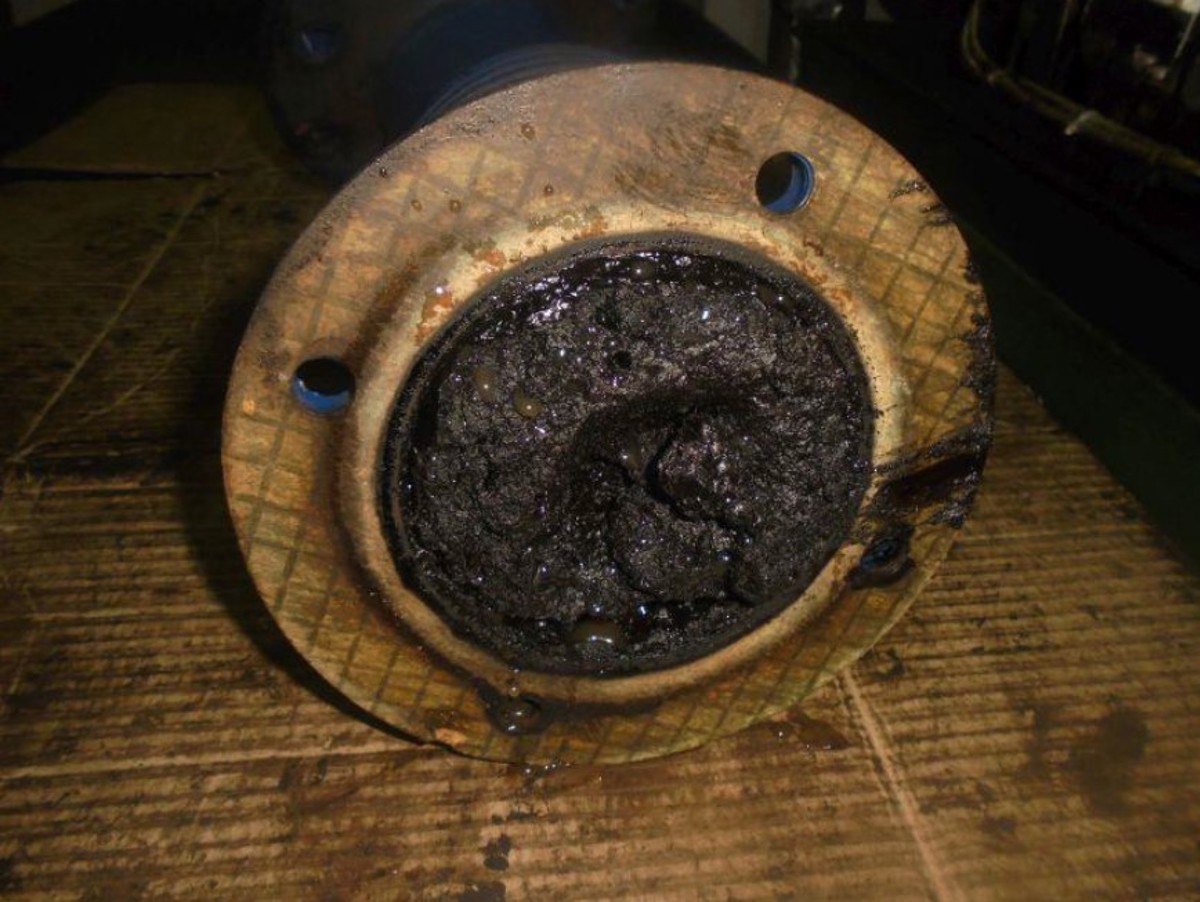
Completely blocked sludge discharge line

Legs of the Engineer covered in sludge
An engineer suffered severe burns when parts of his hands, arms and legs were covered with hot sludge from the sludge discharge line of a switched-off fuel oil separator. The incident occurred when he opened the inspection plug of the sludge discharge line.
The engineer was wearing loose shorts and a t-shirt. The vessel was authorised to sail with an unmanned machinery space.
After first aid on board and telemedicine consultation, the vessel went to port and the engineer was transferred to hospital, where he was diagnosed with 12% total body surface area mixed partial thickness burns.
What were the causes / why did it happen?
The report from FEBIMA concluded that:
- The heating and pressurising of the sludge in the discharge line in case of a complete blockade was not detected as a risk and so the inspection plug was opened very soon after the separator was switched off.
- Safety rules were not strictly followed outside the daily working hours in the engine room. The victim was not accompanied when inspecting the sludge discharge line and he was not protecting his skin with the necessary PPE. The hot and sticky sludge came into direct contact with the skin of the victim, aggravating the consequences of this accident.
Related Safety Flashes
-
IMCA SF 17/20
1 June 2020
-
-
IMCA SF 12/13
19 July 2013
-
IMCA SF 07/04
1 August 2004
IMCA Safety Flashes summarise key safety matters and incidents, allowing lessons to be more easily learnt for the benefit of the entire offshore industry.
The effectiveness of the IMCA Safety Flash system depends on the industry sharing information and so avoiding repeat incidents. Incidents are classified according to IOGP's Life Saving Rules.
All information is anonymised or sanitised, as appropriate, and warnings for graphic content included where possible.
IMCA makes every effort to ensure both the accuracy and reliability of the information shared, but is not be liable for any guidance and/or recommendation and/or statement herein contained.
The information contained in this document does not fulfil or replace any individual's or Member's legal, regulatory or other duties or obligations in respect of their operations. Individuals and Members remain solely responsible for the safe, lawful and proper conduct of their operations.
Share your safety incidents with IMCA online. Sign-up to receive Safety Flashes straight to your email.