Crew member trapped his left index finger in watertight door
- Safety Flash
- Published on 4 April 2023
- Generated on 26 October 2026
- IMCA SF 09/23
- 2 minute read
A fitter’s left index finger was pinched between the moving door edge and door frame causing small abrasions to the index finger.
What happened?
The incident occurred during testing of the watertight door following a visual alarm on the bridge which had indicated that a watertight door near one of the engine rooms was open.
The Engine control room was contacted and requested to investigate the door status. A fitter was sent to check the door. Upon arrival he noted that the door was closed; however, the audible alarm was going off, indicating that the door was open.
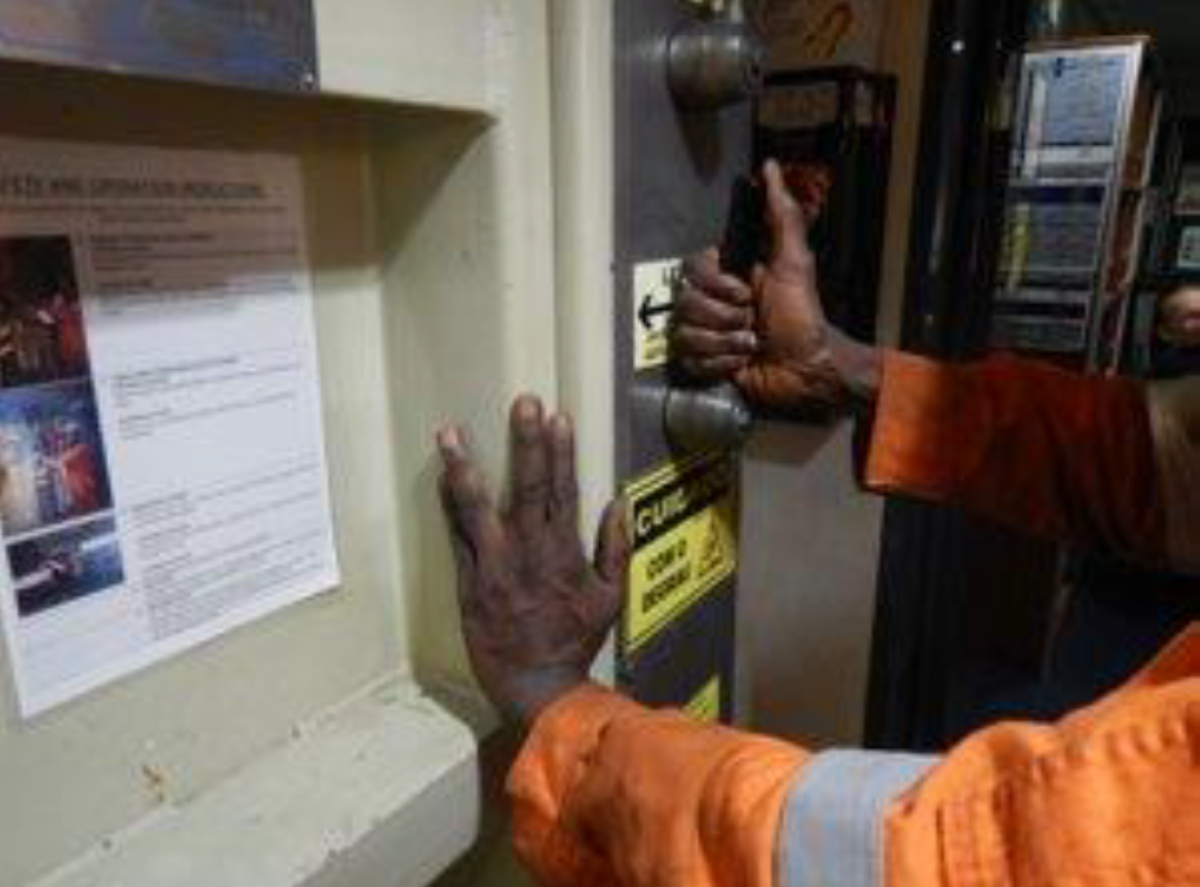
He began testing the door, which involved cycling it from closed to open. As he did so, his left hand was positioned flat on the moving door whilst his right hand was used to operate the hydraulic door lever.
His focus was on the locating pin and sensor where he believed the fault to be, and he didn’t realise his hand had moved into the line of fire. As he closed the door he got his finger caught between the moving door edge and door frame resulting in a minor injury.
Although the actual consequence of this case resulted in a minor injury, the potential consequences of incorrect conduct with watertight doors could have resulted in a serious injury.
What went wrong?
- The fitter’s extreme focus on fault finding caused him to miss the important fact that his hand was in the line of fire.
- There were other distractions such as high noise levels from the machinery space, the door alarm, and flashing light which could have contributed to his lapse of concentration.
- Our member notes a non-contributing factor was the routine practice of leaving watertight doors in the open position whilst at sea. This could result in a detention by Port State Control or more importantly the risk to the integrity of the vessel when at sea.
Lessons learned
- Controlling or modifying human behaviour is a difficult managerial challenge, which requires a commitment to safety, and the effective use of education, training, monitoring and enforcement.
Related safety flashes
-
IMCA SF 05/23
16 February 2023
-
-
IMCA SF 06/22
11 March 2022
-
-
IMCA SF
15 January 2016
IMCA Safety Flashes summarise key safety matters and incidents, allowing lessons to be more easily learnt for the benefit of the entire offshore industry.
The effectiveness of the IMCA Safety Flash system depends on the industry sharing information and so avoiding repeat incidents. Incidents are classified according to IOGP's Life Saving Rules.
All information is anonymised or sanitised, as appropriate, and warnings for graphic content included where possible.
IMCA makes every effort to ensure both the accuracy and reliability of the information shared, but is not be liable for any guidance and/or recommendation and/or statement herein contained.
The information contained in this document does not fulfil or replace any individual's or Member's legal, regulatory or other duties or obligations in respect of their operations. Individuals and Members remain solely responsible for the safe, lawful and proper conduct of their operations.
Share your safety incidents with IMCA online. Sign-up to receive Safety Flashes straight to your email.