UK MAIB: Leg injury while mooring
- Safety Flash
- Published on 3 June 2024
- Generated on 7 April 2026
- IMCA SF 11/24
- 2 minute read
During unmooring operations, a crew person got caught in the bight of a messenger line mooring rope and was injured.
What happened?
During unmooring operations, a crew person got caught in the bight of a messenger line mooring rope and was injured. The incident occurred when a vessel was being prepared for departure. The worker was on the mooring deck, using a messenger line around the mooring rope to guide it onto a winch drum. Another worker was operating the winch remotely, with limited visibility of the first worker’s position near the drum.
The messenger line suddenly snagged under the mooring rope and became wound onto the winch drum itself. Realising what had happened the injured person let go of the messenger line, but was unaware that it had formed a bight around their right leg. As the bight tightened, the injured person was pulled towards the winch drum and then dragged over it. The winch operator promptly stopped the winch. The injured person was disentangled from the messenger line and immediately taken ashore for medical treatment for a broken shin bone and other leg injuries.
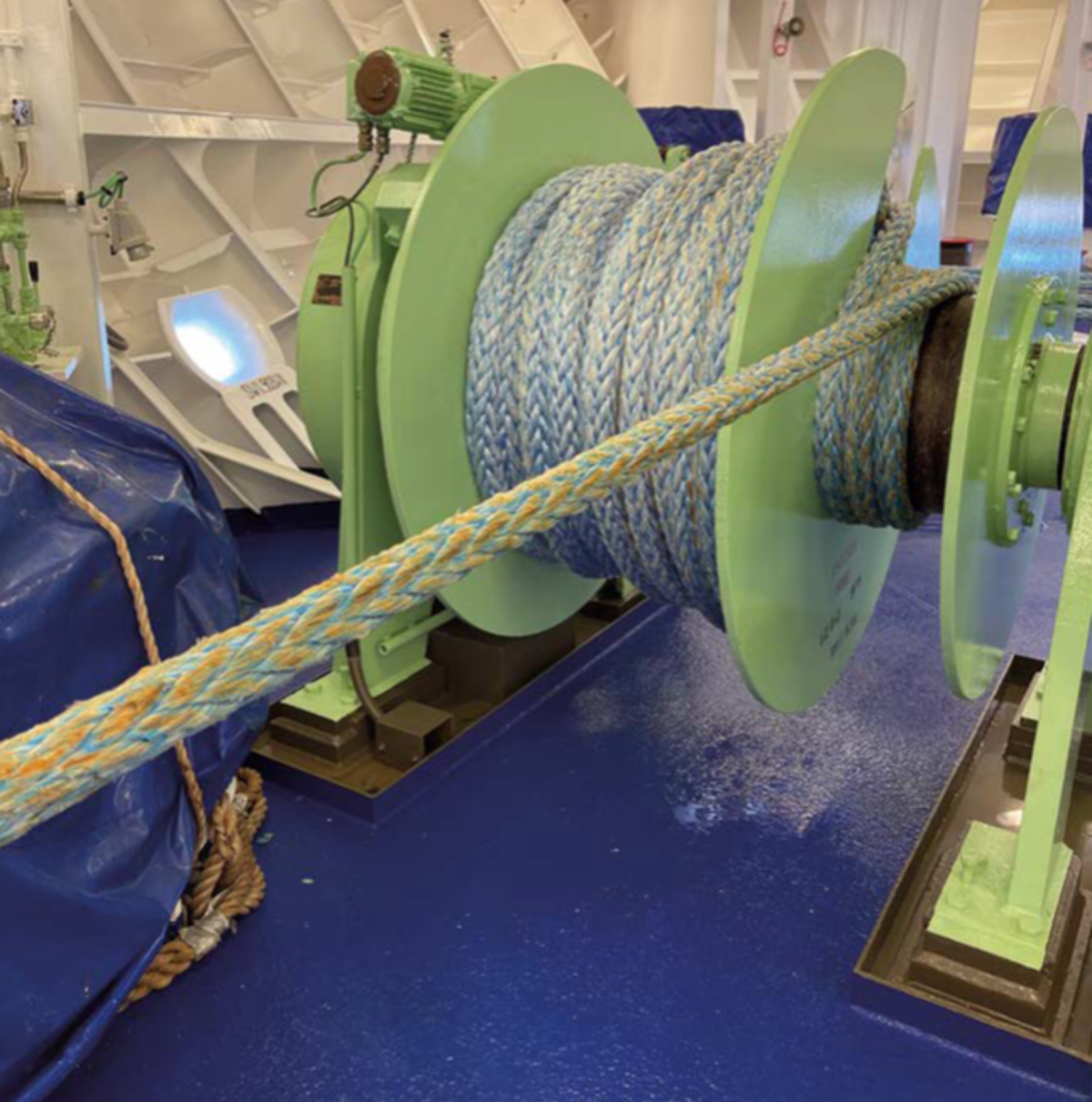
Winch drum
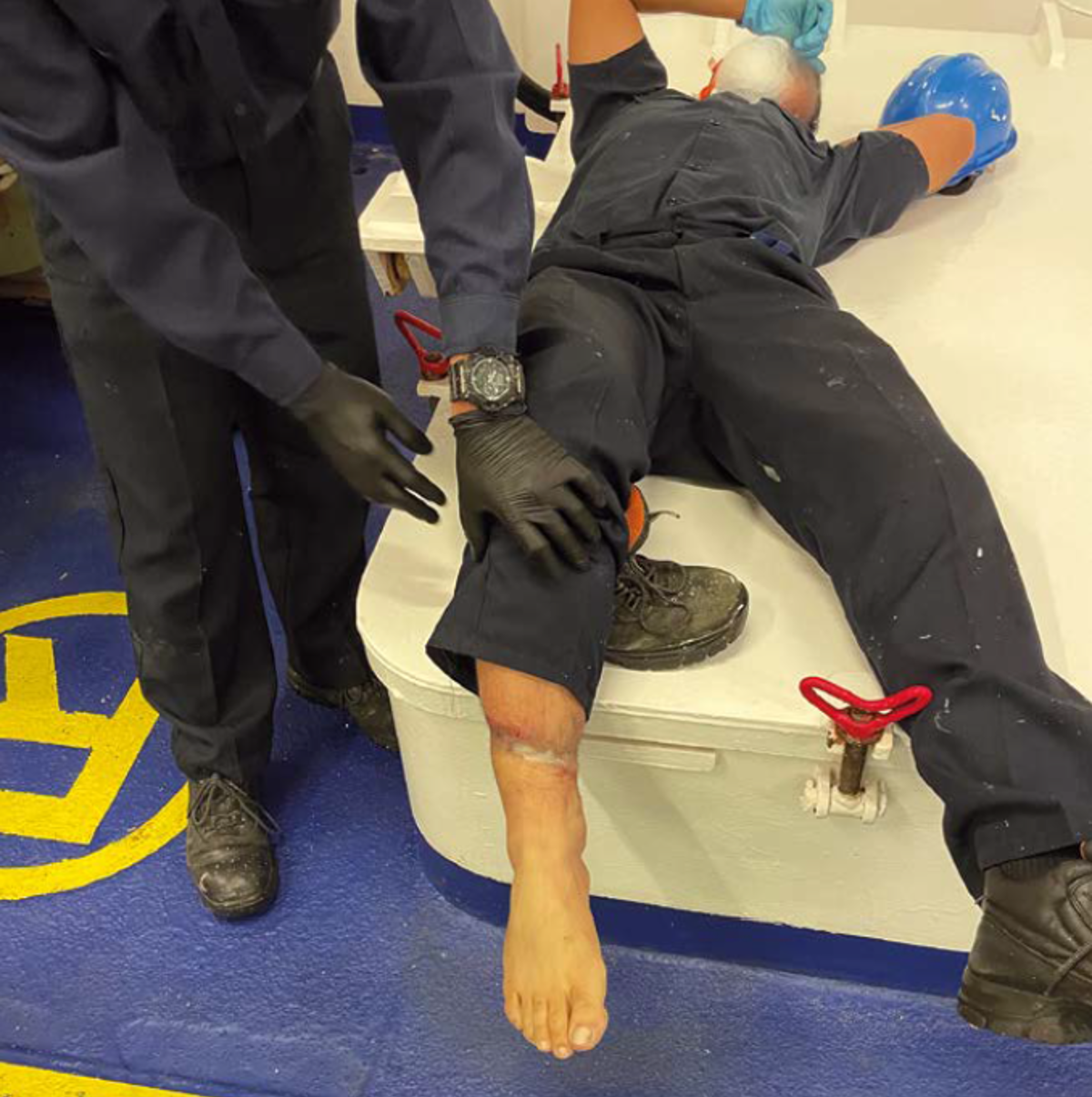
Injured person
What went wrong?
- The long messenger line used to guide the mooring rope was able to reach the deck and wrap itself around the worker’s leg, leading to the incident.
- The winch drum operator did not have clear “line of sight” to where the injured person was working.
Lessons
The MAIB noted:
- Exercise caution around moving machinery – maintain a safe distance.
- Avoid getting too close to rotating equipment and ensure that loose clothing or any objects that can become caught in it are kept clear.
- When operating equipment remotely, it is crucial to have clear visibility of the people and surroundings involved. Whilst remote control allows operators to move around the deck while operating machinery from a safe distance, such as outside snapback zones and clear of suspended loads, it is important to maintain a line of sight to monitor the working area effectively and to be able to communicate with colleagues to prevent incidents and respond promptly to any potential issues.
Related Safety Flashes
-
IMCA SF 16/19
5 July 2019
-
-
IMCA SF 16/13
17 October 2013

IMCA Safety Flashes summarise key safety matters and incidents, allowing lessons to be more easily learnt for the benefit of the entire offshore industry.
The effectiveness of the IMCA Safety Flash system depends on the industry sharing information and so avoiding repeat incidents. Incidents are classified according to IOGP's Life Saving Rules.
All information is anonymised or sanitised, as appropriate, and warnings for graphic content included where possible.
IMCA makes every effort to ensure both the accuracy and reliability of the information shared, but is not be liable for any guidance and/or recommendation and/or statement herein contained.
The information contained in this document does not fulfil or replace any individual's or Member's legal, regulatory or other duties or obligations in respect of their operations. Individuals and Members remain solely responsible for the safe, lawful and proper conduct of their operations.
Share your safety incidents with IMCA online. Sign-up to receive Safety Flashes straight to your email.