Near-miss: Dropped object: 6kg sledge hammer head
- Safety Flash
- Published on 1 November 2011
- Generated on 7 October 2026
- IMCA SF 12/11
- 2 minute read
A Member has reported an incident in which a 6kg hammer head fell 5 metres to an unmanned deck.
Whilst using the sledge hammer to dislodge a 600Te shackle connecting a 340Te wire, the hammer head came free of the wooden shaft when it was struck against the shackle pin, and it fell 5 m to the unmanned area below which had no barriers in place. There were no injuries.
On closer inspection, it was noted that there were a number of small indentations around the head and along the shaft, two hairline cracks at the head end of the hammer and a large open split at the user end of the handle. It was also noted that the lanyard used to secure the handle was an inadequate solution for the retention of tools used at height.
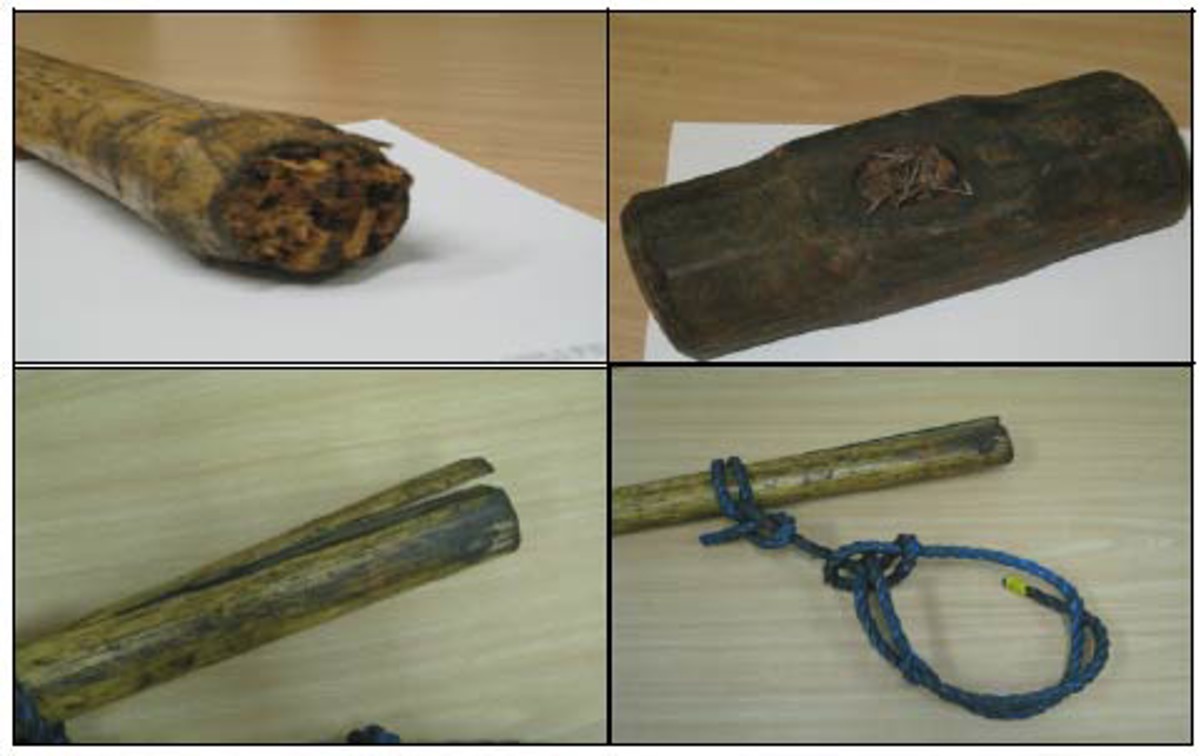
closer inspection of handle and hammer head
Following investigation, it was identified that there had been numerous other occasions where hammer heads had either been found loose or had come off during use.
In addition, several cases reported damaged shafts.
Lessons learnt
The following lessons were learnt:
- The inspection for damage of all hand tools should always be carried out prior to use and before returning to storage location.
- Hammer heads should be checked for security prior to use, ensuring heads are securely fixed to handle.
- Defective tooling should be removed from service and quarantined.
- Appropriate tool retention methods should be used when working at height with tools; different methods may be appropriate for tools of different weight.
- The tool lanyard connection point should either be supplied with the hammer, recommended by the tool manufacturer or be a recommended and approved lanyard manufacturer’s modification.
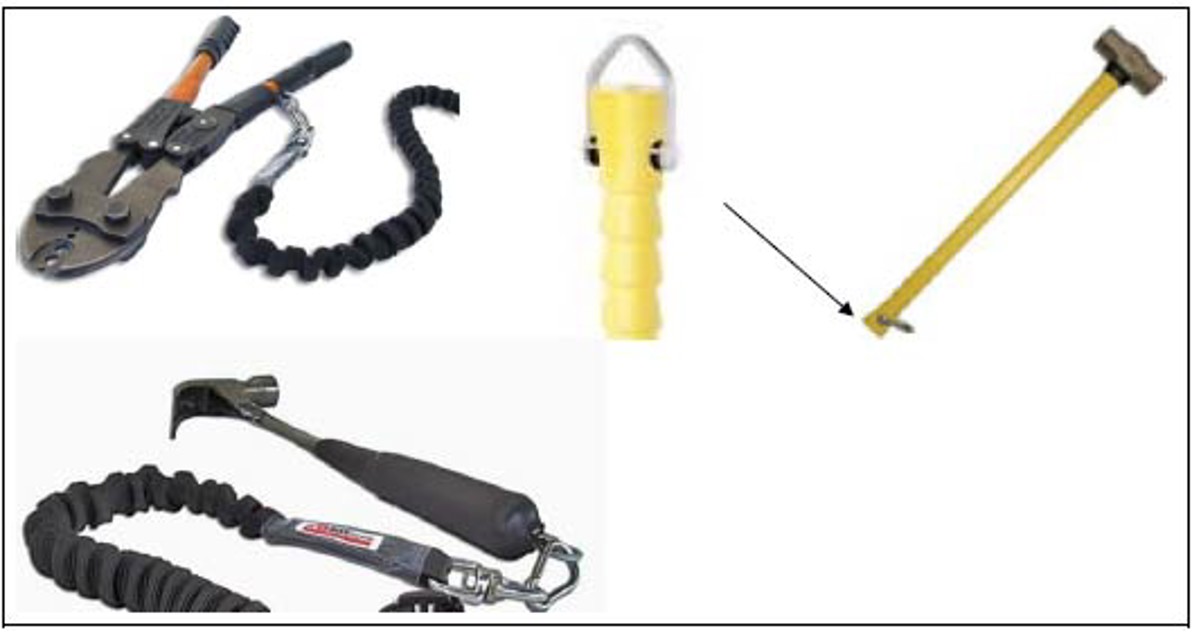
Some suggested tool lanyard arrangements
IMCA Safety Flashes summarise key safety matters and incidents, allowing lessons to be more easily learnt for the benefit of the entire offshore industry.
The effectiveness of the IMCA Safety Flash system depends on the industry sharing information and so avoiding repeat incidents. Incidents are classified according to IOGP's Life Saving Rules.
All information is anonymised or sanitised, as appropriate, and warnings for graphic content included where possible.
IMCA makes every effort to ensure both the accuracy and reliability of the information shared, but is not be liable for any guidance and/or recommendation and/or statement herein contained.
The information contained in this document does not fulfil or replace any individual's or Member's legal, regulatory or other duties or obligations in respect of their operations. Individuals and Members remain solely responsible for the safe, lawful and proper conduct of their operations.
Share your safety incidents with IMCA online. Sign-up to receive Safety Flashes straight to your email.