Two battery issues – Step Change
- Safety Flash
- Published on 28 May 2019
- Generated on 14 October 2026
- IMCA SF 12/19
- 3 minute read
UK Step Change has published two recent safety ‘moments’ relating to battery safety in two different battery chemistries – the first in a lead/acid battery, the second, in a lithium-ion battery.
Incident 1: Lifeboat Battery Explosion
Weekly maintenance on a lifeboat involved charging the 12V starter battery, conducting voltage checks and starting the lifeboat engine.
Following the charging and completion of voltage checks, the battery compartment hatch was closed, and the engine started. At this point the battery exploded.
Pieces of the battery and fluid were expelled from the compartment having been partially restricted by the closed hatch lid.
No-one was injured by the blast; the lifeboat itself was undamaged.
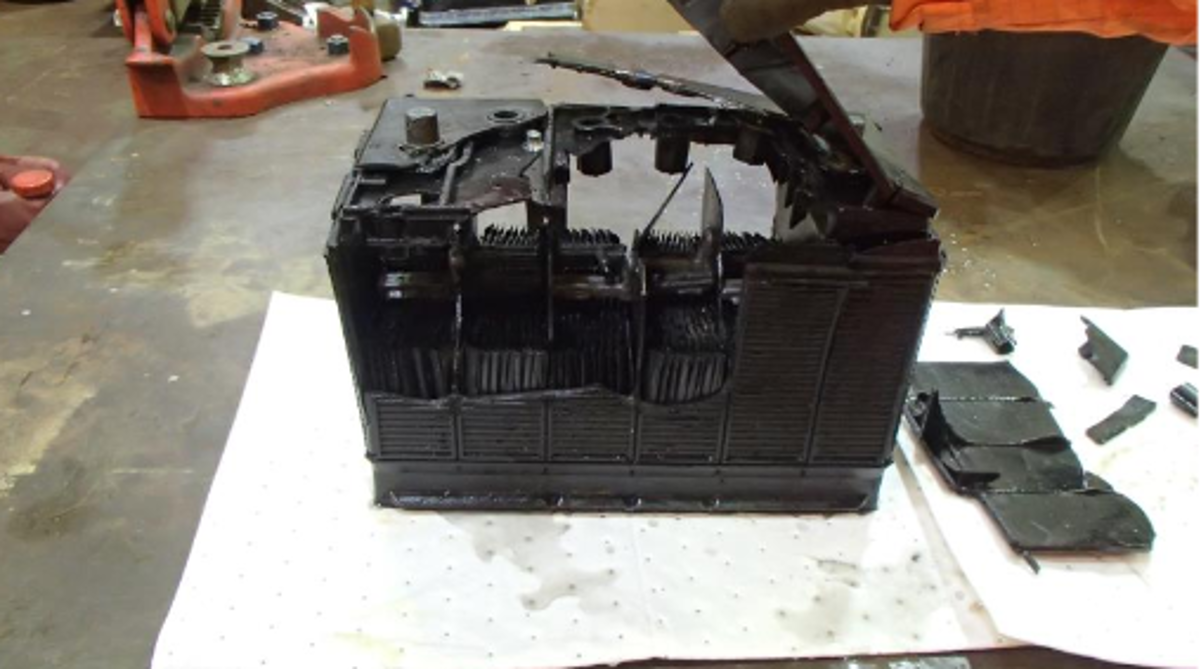
What went wrong
- The battery installed was a wet cell lead/acid type, described by its manufacturer as ‘maintenance free’, although it could be topped up with distilled water. The model of battery was noted as not suitable for ‘installation inside the vehicle’.
- The battery had been overcharged weekly for over a year.
- Work instructions were not clear with regard to charging voltage levels required.
What were the causes?
Overcharging caused a depletion of electrolyte within the battery and generation of an explosive mixture of hydrogen and oxygen gas. An internal electrical fault allowed for the ignition of this mixture upon start up.
What actions were taken? What lessons were learned?
- Ensure equipment is suitable for its intended use.
- Provide clear work instructions to avoid confusion.
- Ensure workforce has the correct core skills training/competency.
- Encourage the workforce to be assertive in and identifying and reporting operational discrepancies promptly to avoid inappropriate or unsafe conditions becoming the ‘norm’.
The full Step Change alert can be found here.
Incident 2: Lithium Ion Battery Overheated Following Exposure to Water
During a general fire alarm, a deluge system was activated and as a result, a piece of inspection equipment got soaked, causing the internal electronics to become saturated and short circuit.
Afterwards, the lithium-ion battery was removed and found to be overheating. Shortly thereafter, the battery started to smoke, and then catch fire.
Fortunately, the fire was controlled and extinguished immediately. However, the outcome could have been much worse.

The incident highlights the importance of protecting equipment from water ingress, along with the importance of ensuring that care is taken whenever equipment is being dried out following exposure to water.
See here for further details.
A wide range of safety incidents relating to batteries of all kinds, can be found in IMCA's Safety Flash Archive.
IMCA Safety Flashes summarise key safety matters and incidents, allowing lessons to be more easily learnt for the benefit of the entire offshore industry.
The effectiveness of the IMCA Safety Flash system depends on the industry sharing information and so avoiding repeat incidents. Incidents are classified according to IOGP's Life Saving Rules.
All information is anonymised or sanitised, as appropriate, and warnings for graphic content included where possible.
IMCA makes every effort to ensure both the accuracy and reliability of the information shared, but is not be liable for any guidance and/or recommendation and/or statement herein contained.
The information contained in this document does not fulfil or replace any individual's or Member's legal, regulatory or other duties or obligations in respect of their operations. Individuals and Members remain solely responsible for the safe, lawful and proper conduct of their operations.
Share your safety incidents with IMCA online. Sign-up to receive Safety Flashes straight to your email.