Failure of fall arresters
- Safety Flash
- Published on 22 September 2008
- Generated on 24 October 2026
- IMCA SF 14/08
- 1 minute read
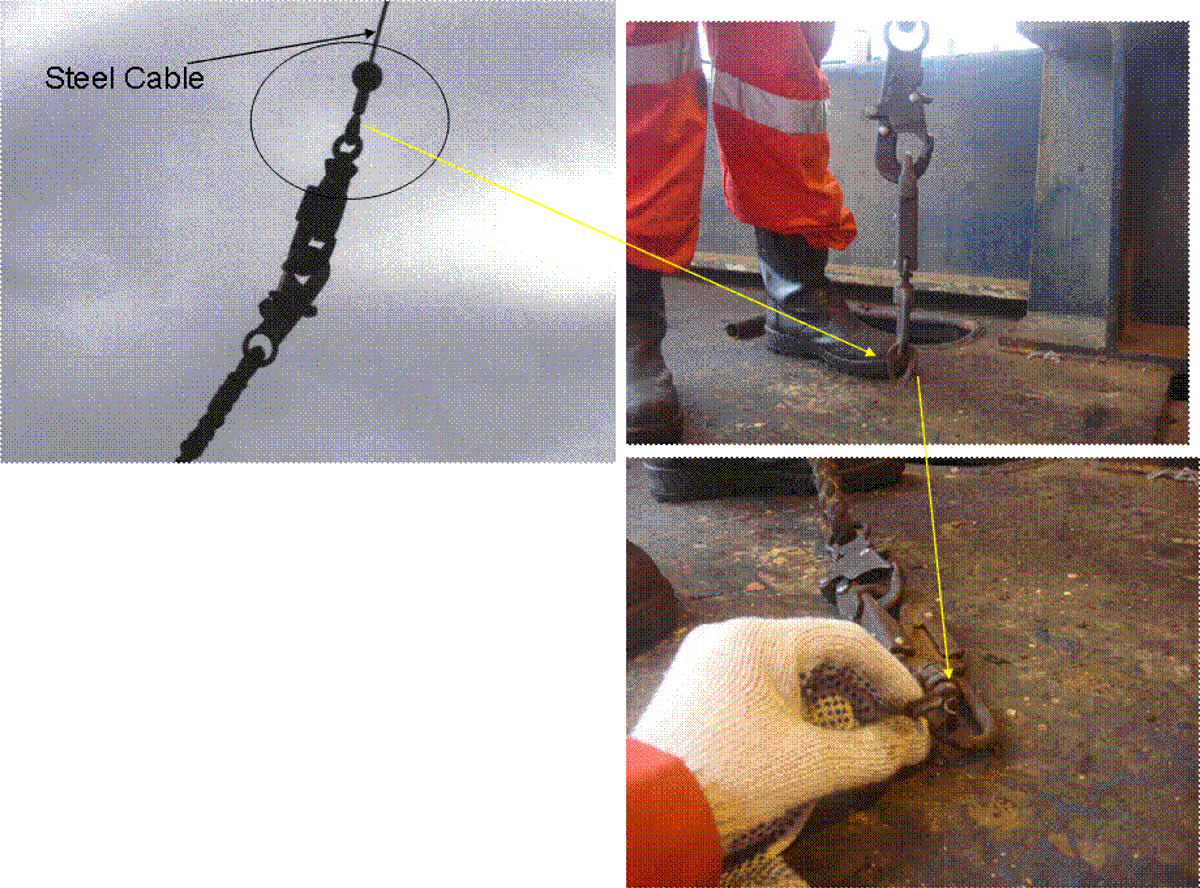
A Member has reported several incidents onboard vessels where fall arresters have been found to be defective.
What happened?
Although the incidents have not resulted in any injuries to personnel they may have had very serious consequences.
It is believed that the failure of the equipment was lack of inspection and/or maintenance. It is of utmost importance that appropriate maintenance and inspection of fall arrest equipment is carried out in accordance with the manufacturer’s instructions.
Members are recommended to remind vessel crews to go through the inspection and maintenance regime to ensure fall arrest equipment is maintained to a safe standard.
Below are pictures from one of the failed equipment:
IMCA Safety Flashes summarise key safety matters and incidents, allowing lessons to be more easily learnt for the benefit of the entire offshore industry.
The effectiveness of the IMCA Safety Flash system depends on the industry sharing information and so avoiding repeat incidents. Incidents are classified according to IOGP's Life Saving Rules.
All information is anonymised or sanitised, as appropriate, and warnings for graphic content included where possible.
IMCA makes every effort to ensure both the accuracy and reliability of the information shared, but is not be liable for any guidance and/or recommendation and/or statement herein contained.
The information contained in this document does not fulfil or replace any individual's or Member's legal, regulatory or other duties or obligations in respect of their operations. Individuals and Members remain solely responsible for the safe, lawful and proper conduct of their operations.
Share your safety incidents with IMCA online. Sign-up to receive Safety Flashes straight to your email.