Lost time injury (LTI): Trip incident
- Safety Flash
- Published on 7 August 2014
- Generated on 15 October 2026
- IMCA SF 14/14
- 2 minute read
A Member has reported an incident in which a crew member fell over a trip hazard on deck and broke both elbows as a result.
What happened?
The incident occurred on a vessel in dock. The injured person was walking towards the stern area to assist the other team members with the next task. En route, he attempted to step over a cargo strap. His foot caught on the strap; he tripped, lost balance and fell forwards, hitting the deck. He instinctively raised his arms in an attempt to lessen the impact of the fall, which resulted in him sustaining two broken elbows.
Our member’s investigation revealed the following:
- There were no barriers in place or marker tape to highlight the hazard. Additionally, there was a safe route around the hazard which could have been taken.
- Although trip hazards, generally, were highlighted in the Risk Assessment and in the Toolbox Talk, this hazard was not highlighted individually.
- Notwithstanding the lack of barriers and with a safe alternative route available, this incident included behavioural based safety characteristics, with two crew members choosing to step over the cargo strap, rather than take the safe route. A second crew member stepped over the strap, just before the injured person did, and was uninjured. Lack of an accident/incident does not demonstrate adequate control.
Our Member drew the following lessons:
- There were numerous failures, omissions and deliberate actions that led to the incident:
- Inadequate planning/risk assessment – without a cordon or other appropriate barriers/markers, this hazard presented an obvious risk, which was not specifically identified. Failure to adequately identify all hazards can result in accidents
- Inadequate safety controls/warning signs
- Lack of awareness/perception of risk
- Lack of attention/due care/poor work practice
- Poor decision-making/judgement
- Lack of adequate Toolbox Talk, Risk Assessment and Hazard Identification.
Crews should remember that even hazards that seem to present a trivial risk can result in serious injury, unless they are adequately controlled.
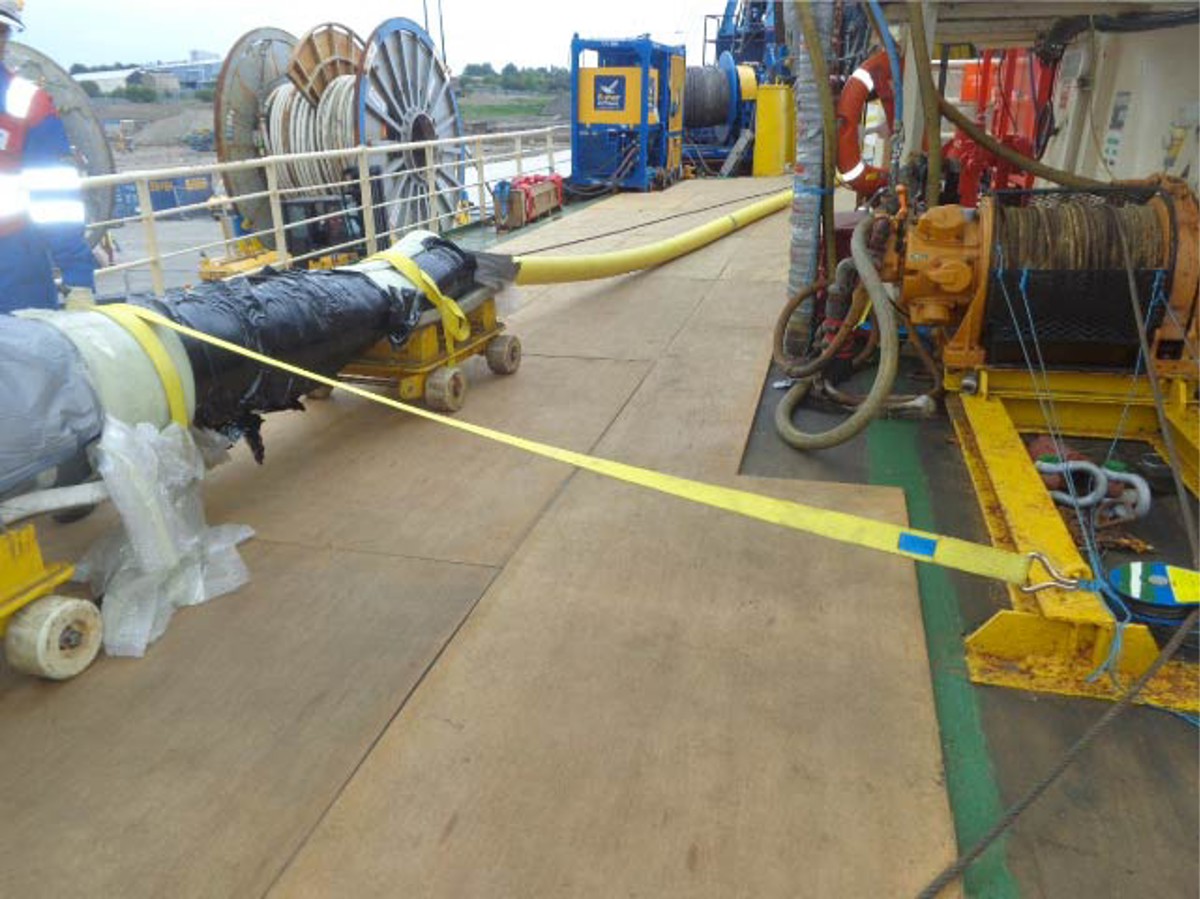
Deck and cargo strap
Related safety flashes
-
IMCA SF 04/09
2 April 2009
IMCA Safety Flashes summarise key safety matters and incidents, allowing lessons to be more easily learnt for the benefit of the entire offshore industry.
The effectiveness of the IMCA Safety Flash system depends on the industry sharing information and so avoiding repeat incidents. Incidents are classified according to IOGP's Life Saving Rules.
All information is anonymised or sanitised, as appropriate, and warnings for graphic content included where possible.
IMCA makes every effort to ensure both the accuracy and reliability of the information shared, but is not be liable for any guidance and/or recommendation and/or statement herein contained.
The information contained in this document does not fulfil or replace any individual's or Member's legal, regulatory or other duties or obligations in respect of their operations. Individuals and Members remain solely responsible for the safe, lawful and proper conduct of their operations.
Share your safety incidents with IMCA online. Sign-up to receive Safety Flashes straight to your email.