High potential near miss: Diving bell main lift wire connection failure
- Safety Flash
- Published on 12 August 2026
- Generated on 26 September 2026
- IMCA SF 14/26
- 4 minute read
There was a high potential near miss failure of the main lift wire connection (Swivel unit) on a saturation diving bell permanently installed on a DSV.
What happened?
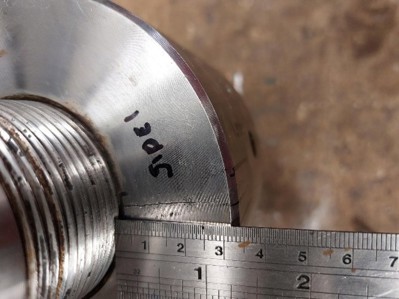
During routine annual maintenance activities, the top half of the Swivel unit was visually examined, and inspected using a Dye Pen. No issues were noted on the top eye bolt section whilst fitted to the Bell top. However, it became necessary to move the main swivel to the workshop, where it became clear there was a through-wall crack though one side of the Swivel unit.
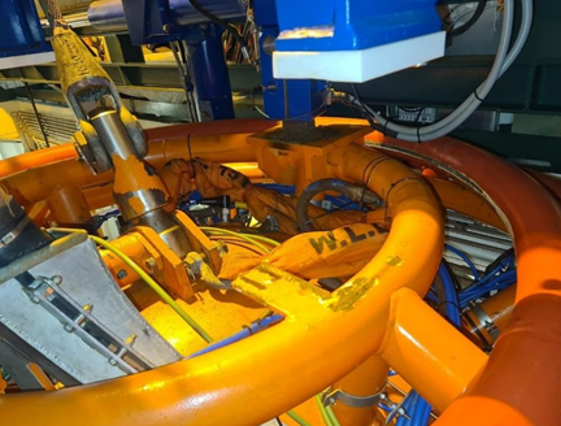 |
| Main Bell Wire with spelter socket, Connection Swivel and Bell Flanges, Overview |
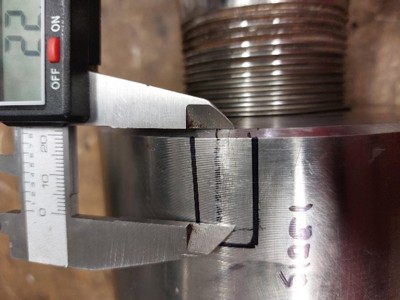
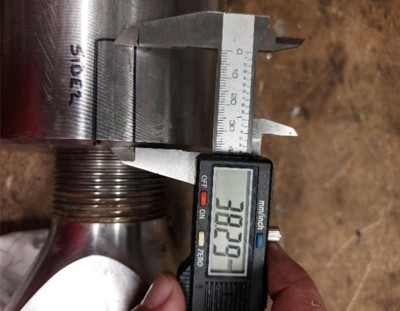
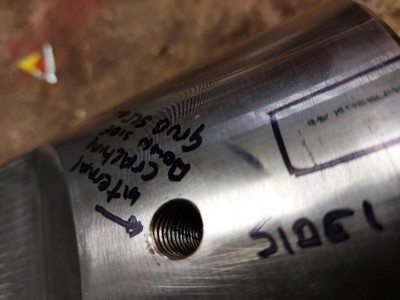
On further investigation another through-wall crack was noted on the opposite side of the unit. Crack propagation down sides 1 and 2 measured 22mm and 38mm respectively. Furthermore, the grub screw was removed and exposed what could be a possible full-length crack throughout the threaded area.
Further information:
Operational conditions at the time - non-operational due to maintenance period, preparing for load testing;
- There had been routine maintenance as per PMS, weekly non-operational testing of the LARS, six-monthly and annual load testing with DNV annual surveys (class renewal).
- New wires were installed January 2025.
- Minimal completed bell runs in 2024/2025, 118 with a maximum deployment depth of 65m.
- An additional bell run to 200m was completed to re-spool the main lift wire in November 2025.
- The bell system is regularly moved over the year to complete general maintenance and operational testing but is rarely launched through the moon pool.
- The vessel operates where temperatures and humidity are fairly constantly in the high 20°C to mid-30 °C range with high humidity, and no operational bell run or deployment had ended early due to adverse weather conditions. The operational conditions have been relatively benign.
- The bell is part of a built-in system and is not exposed to direct harsh environmental conditions.
- No available previous NDT NDE inspection reports have highlighted any cause for concern regarding anomalies or detected failures of the metallic structure of the Swivel unit.
- The swivel is not generally removed completely from the bell; the reason for removing it this time was due to misalignment of the spelter socket, swivel adjustment in situ was not possible, hence taking the swivel to the workshop to adjust. Third parties do their NDT in situ.
What went right?
- The defect was identified before a potential catastrophic failure.
- Given no spare available, a spelter socket was sourced and used as a replacement under discussions with Class and Manufacturer, reference to Management of Change procedures and engineering assessments.
What went wrong?
- A critical component (bell to main lift wire “swivel”) in a man-riding lift path failed and could have in theory resulted in catastrophic failure with resultant dropped bell during bell handling and diving operations.
- Company sourced a new unit which failed during OEM testing and could not be separated or turned post-test.
What was the cause?
The root cause is still under investigation.
Potential issues identified:
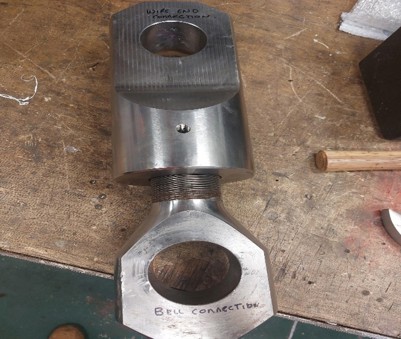
- The unit is made from two stainless steel components with a male threaded end feeding into a female (which is used for load bearing and rotational adjustment for alignment of the non-rotational wire and its socket if required).
- A grub screw is used to secure the orientation of the “swivel” unit and reacts on the threaded section.
- Stainless steel is renowned for galling but as to whether this has any bearing on the failure is not yet known.
Lessons and actions
- The swivel unit was taken out of the load path. The faulty component was sent to the manufacturer for investigation.
- A Management of Change process was used to facilitate change to an industry standard spelter socket in consultation with Class via the Manufacturer.
- Given this company has seen a failure of an in-service unit and a new unit under tests other options were sought using a standard spelter socket and shims. The inspection requirements may not have been exhaustive enough to have found the defect. This is under review.
- All in-service units of this type should be checked for defects as described here.
- Inspection regimes should be reviewed and enhanced if necessary. It may be worthwhile considering shortening periods between inspections until Manufacturer can establish a root case and any changes or modifications required.
 |
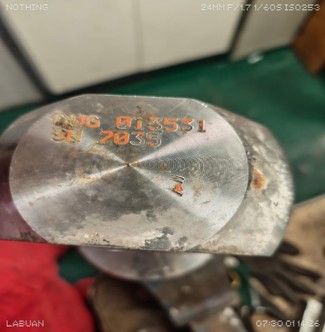 |
| Overall picture of the swivel unit | Stamping on the swivel unit |
 |
 |
| Side 1 Measured | Side 1 Thro’ wall defect |
 |
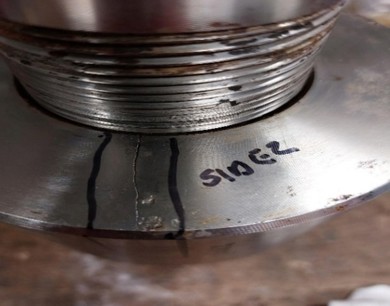 |
| Side 4 Measured | Side 2 Thro’ wall defect |
 |
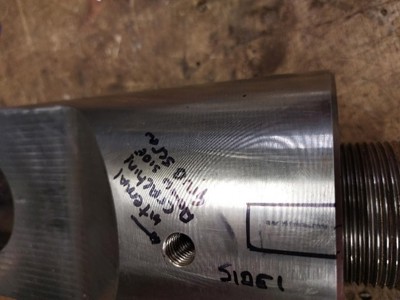 |
| Side 1 Defect grub screw hole | Side 1 Defect grub screw hole |
IMCA Safety Flashes summarise key safety matters and incidents, allowing lessons to be more easily learnt for the benefit of the entire offshore industry.
The effectiveness of the IMCA Safety Flash system depends on the industry sharing information and so avoiding repeat incidents. Incidents are classified according to IOGP's Life Saving Rules.
All information is anonymised or sanitised, as appropriate, and warnings for graphic content included where possible.
IMCA makes every effort to ensure both the accuracy and reliability of the information shared, but is not be liable for any guidance and/or recommendation and/or statement herein contained.
The information contained in this document does not fulfil or replace any individual's or Member's legal, regulatory or other duties or obligations in respect of their operations. Individuals and Members remain solely responsible for the safe, lawful and proper conduct of their operations.
Share your safety incidents with IMCA online. Sign-up to receive Safety Flashes straight to your email.