Spillage of methanol during cargo operations
- Safety Flash
- Published on 13 October 2015
- Generated on 21 October 2026
- IMCA SF 15/15
- 2 minute read
A Member has reported an incident in which the valve on a cargo tank was damaged, causing a leak of approximately 1000 litres of methanol.
What happened?
The incident occurred during cargo operations; an FPSO crane operator was lowering an empty methanol tank onto the deck of a support vessel. On lowering, the empty tank struck another full tank of methanol already on deck, causing damage to a valve, which caused the spill.
The Master of the support vessel immediately instructed the FPSO to remove the leaking tank and it was rigged for hoisting by the FPSO crane. Despite this request, the crane operator failed to lift off the leaking container and simply lowered it back to the deck. The crew of the support vessel responded immediately by deploying fire hoses and continuously dousing the deck area and leaking container, to disperse the spilt cargo.
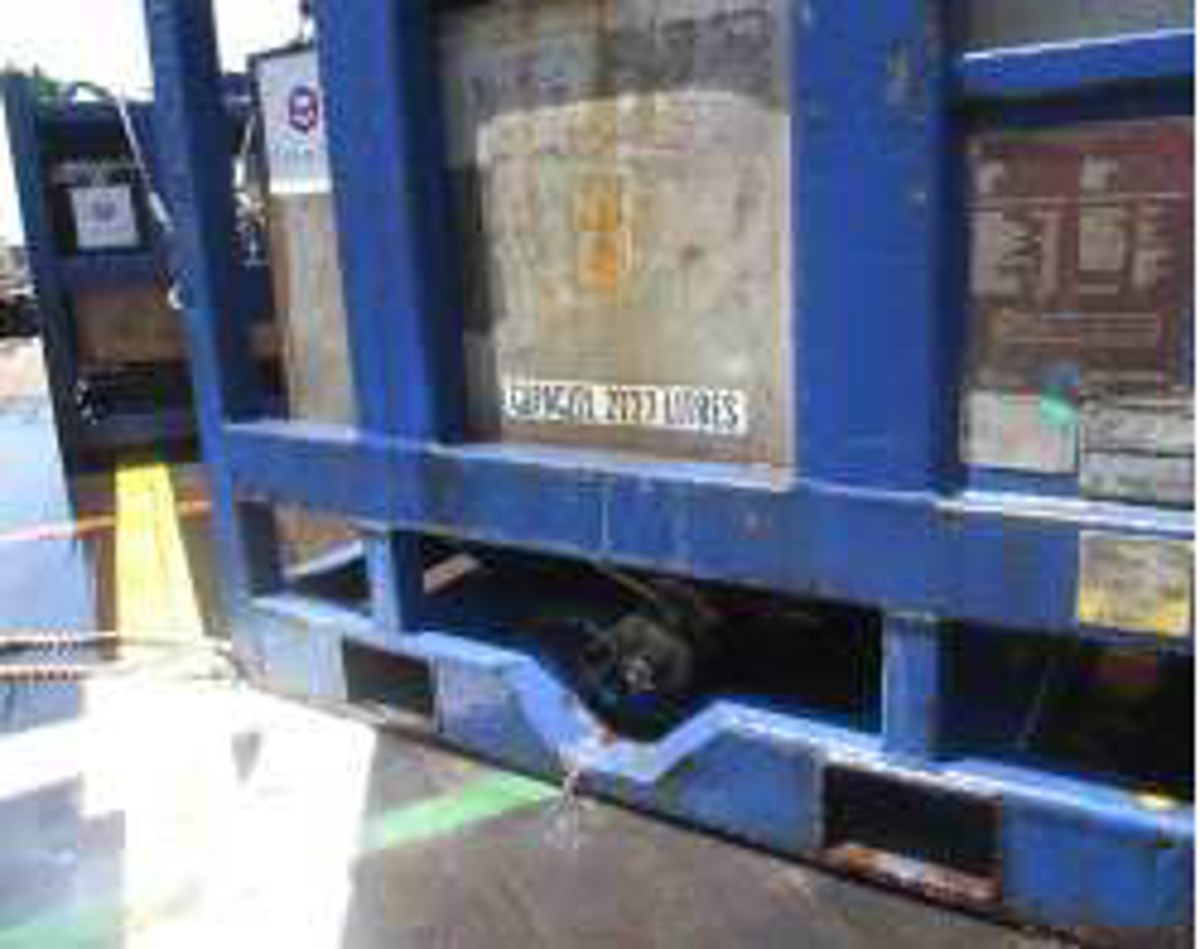
damaged leaking valve of the methanol tank after the incident
Our member noted the following:
- The crane operator on the FPSO failed to follow instructions given by the deck crew and Master at a critical moment.
- Existing procedures were not properly followed:
- The support vessel’s Dangerous Goods Certificate (DGC) did not allow for methanol cargo to be carried; this was not reviewed by vessel staff prior to cargo operations.
- There had not been a full review of the cargo's Safety Data Sheet (SDS ) before operations started.
- Had the officers on the support vessel correctly reviewed the necessary documents, they would have been able to pro-actively exercise the stop work policy and prevent this incident from occurring.
- The support vessel’s Dangerous Goods Certificate (DGC) did not allow for methanol cargo to be carried; this was not reviewed by vessel staff prior to cargo operations.
Actions
Our member’s crew took the following actions:
- Immediate request for assistance from Master to FPSO to remove the leaking container.
- Following aborted cargo lift, Master immediately departed the Safety Zone to safe distance.
- Immediate and effective action from deck crew to flush the deck with water, douse the tank and subsequently also flush the tank out until all traces of methanol had dispersed.
Lessons learnt
Key lessons learnt:
- Dangerous Goods Certificates and Safety Data Sheets should be reviewed on-board before starting cargo operations, to ensure that full compliance is assured at all times. In case of doubt, Masters should check with appropriate company authority ashore.
- In this case despite the identified failings and high potential to become a serious incident, the entire crew responded swiftly and effectively to prevent the incident escalating, highlighting the importance of good drills, exercises and emergency response awareness.
Related safety flashes
-
IMCA SF 09/15
23 June 2015
-
IMCA SF 11/08
23 June 2008
IMCA Safety Flashes summarise key safety matters and incidents, allowing lessons to be more easily learnt for the benefit of the entire offshore industry.
The effectiveness of the IMCA Safety Flash system depends on the industry sharing information and so avoiding repeat incidents. Incidents are classified according to IOGP's Life Saving Rules.
All information is anonymised or sanitised, as appropriate, and warnings for graphic content included where possible.
IMCA makes every effort to ensure both the accuracy and reliability of the information shared, but is not be liable for any guidance and/or recommendation and/or statement herein contained.
The information contained in this document does not fulfil or replace any individual's or Member's legal, regulatory or other duties or obligations in respect of their operations. Individuals and Members remain solely responsible for the safe, lawful and proper conduct of their operations.
Share your safety incidents with IMCA online. Sign-up to receive Safety Flashes straight to your email.