Failure of lifting padeye
- Safety Flash
- Published on 3 December 2008
- Generated on 21 October 2026
- IMCA SF 17/08
- 2 minute read
A Member has reported a near miss in which a member of an ROV team spotted that one padeye on the tether management system winch was at an unusual angle.
What happened?
After closer inspection by the ROV pilot technician it became clear that the padeye had peeled away from the box section of the winch.
Following investigation it was concluded that this was likely to have happened during a recent mobilisation and had gone unnoticed for some weeks. The shift supervisor was informed, who brought the matter up in the daily meeting the next morning.
The cause of the incident is thought to be incorrect design. The 30mm thick padeye is welded directly to the top of a box section made from 5mm thick steel. The load on the padeye goes directly into the unreinforced top surface of the box section. Under repeated loading the padeye had peeled back the top surface of the box section as shown in the photograph.
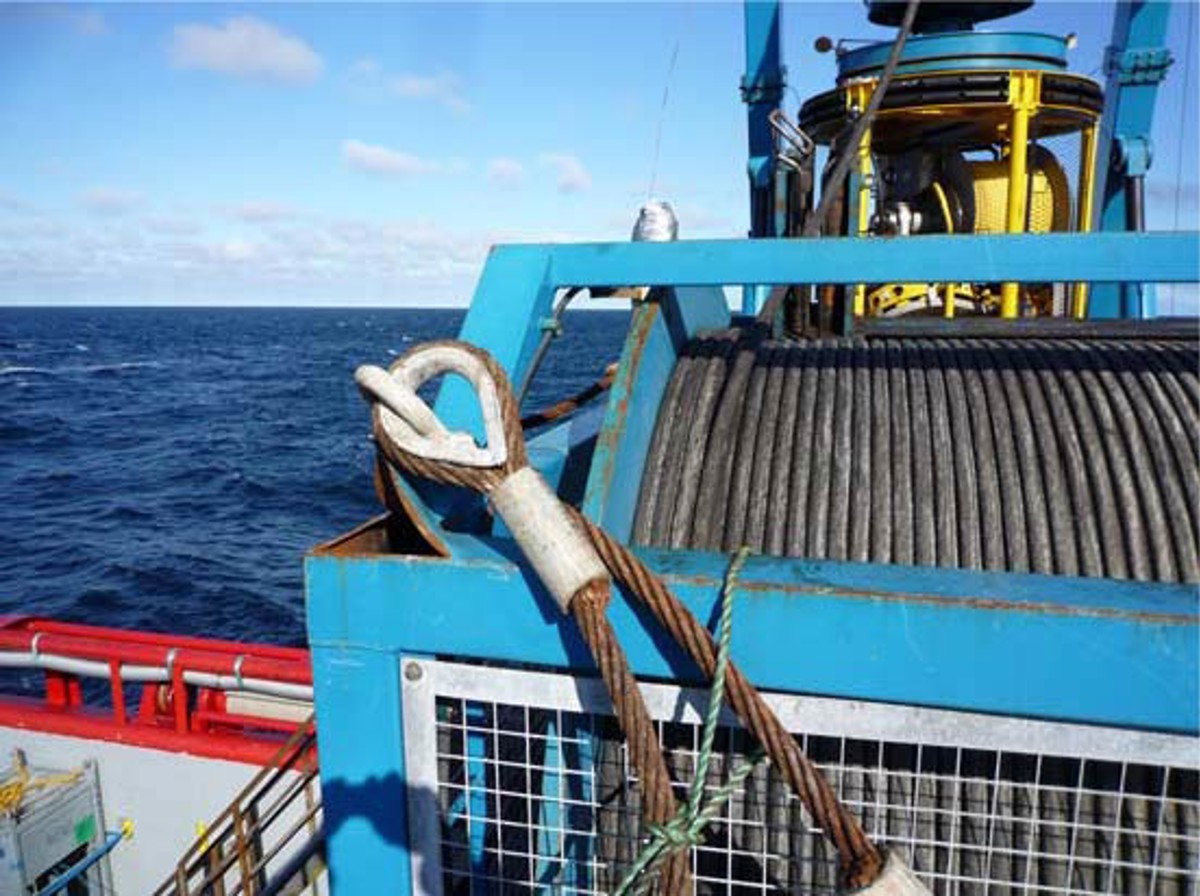
The following conclusions were drawn:
- When hiring such equipment it can be taken for granted that the equipment has been designed correctly particularly when the equipment is certified. This incident shows that certification is no guarantee that equipment is correctly designed or has been handled correctly.
- Personnel involved in lifting operations must always check the condition of the lifting lugs/padeyes and slings prior to and immediately after use. In this case the damaged padeye was not noticed until some days after the damage was caused.
- All equipment subject to lifting must be treated with caution, particularly equipment that is repeatedly mobilised.
- During lifting operations always be prepared for the possibility that the load could drop or an object could fall off. The safety rule stating that personnel are not to go under the load, not to lift the load over the top of personnel and to keep a safe distance at all times should be reinforced.
IMCA Safety Flashes summarise key safety matters and incidents, allowing lessons to be more easily learnt for the benefit of the entire offshore industry.
The effectiveness of the IMCA Safety Flash system depends on the industry sharing information and so avoiding repeat incidents. Incidents are classified according to IOGP's Life Saving Rules.
All information is anonymised or sanitised, as appropriate, and warnings for graphic content included where possible.
IMCA makes every effort to ensure both the accuracy and reliability of the information shared, but is not be liable for any guidance and/or recommendation and/or statement herein contained.
The information contained in this document does not fulfil or replace any individual's or Member's legal, regulatory or other duties or obligations in respect of their operations. Individuals and Members remain solely responsible for the safe, lawful and proper conduct of their operations.
Share your safety incidents with IMCA online. Sign-up to receive Safety Flashes straight to your email.