LTI: Injury to right wrist
- Safety Flash
- Published on 2 August 2017
- Generated on 7 April 2026
- IMCA SF 19/17
- 3 minute read
Someone using a power tool suffered a serious injury to the right wrist when the drill got out of control.
What happened?
Vessel engineers were installing a support frame for spray protection curtains around the evaporator in the engine room.
The task required the engineers, whilst working at height, to drill three 10mm holes in the frame and add the splash curtain to the support frame.
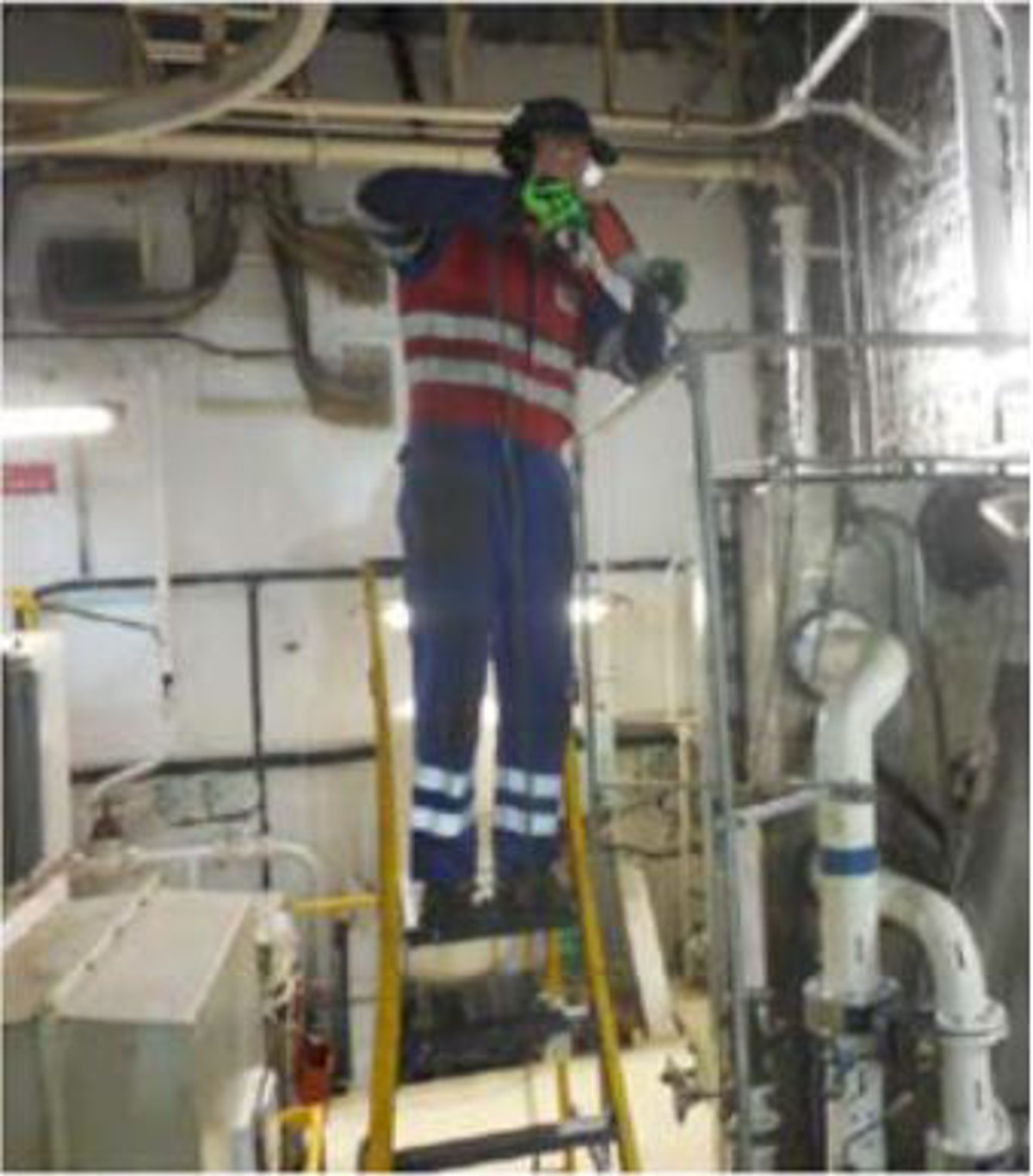
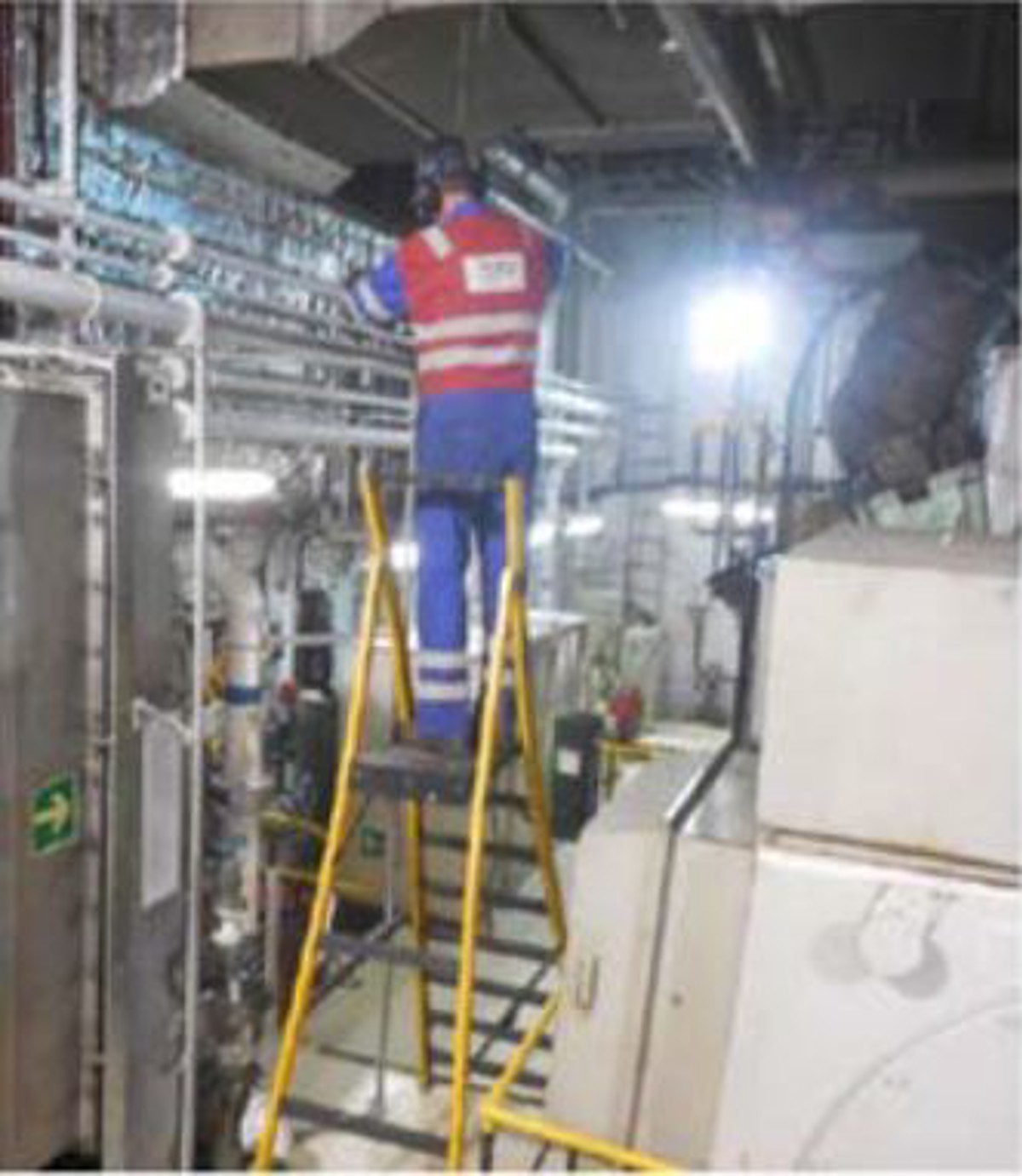
To access the support frame, a step ladder with a designated working platform was used. The injured person was working on the platform with a power drill. He was directing the drill with his right hand with his left hand on the supporting handle on the left-hand side of the drill. It is estimated that during the drilling of these holes, the drill was at an angle of approximately 45°.
During the drilling of a 10mm hole, the drill bit snagged within the metal tubing of the supporting frame, causing the pistol drill to kick back and spin in a clockwise direction. As the drill spun, the pistol grip was pulled from the engineer’s right hand. The pistol drill continued to rotate, then contacted his right wrist/forearm, causing a lost time injury (LTI).
What went wrong? What were the causes?
- There was a lack of active supervision. Supervisors should have a full understanding of safe systems of work, and thus be able to ensure that if the circumstances of an operation change, the team is able to respond correctly and recognise any new requirements in each situation.
- A causal factor was the fact that the task was being carried out at height, which made it difficult to drill the hole in the correct position. To attain this position the employee had to work in a position which caused the drill to snag.
- There was poor procedural and risk awareness surrounding the activity:
- Whilst a toolbox talk was conducted between the engineers carrying out the task, and this highlighted potential hand injuries and slip/trip hazards, no consideration was given to the increased height of the task or the use of power tools whist working from a ladder/platform.
- No permit to work (PTW) or job risk assessment (JRA) was considered necessary, as a similar task had been conducted previously. The engineers did not identify the difference in height between the previous task (180 cm) and the task in hand (293 cm).
- Whilst a toolbox talk was conducted between the engineers carrying out the task, and this highlighted potential hand injuries and slip/trip hazards, no consideration was given to the increased height of the task or the use of power tools whist working from a ladder/platform.
- The work was incorrectly planned and did not have to be done at height. Personnel failed to recognise they were working at height. Had the task been correctly planned and classified as work at height, the decision could have been made to pre-drill the holes at deck level, thus allowing the work party to attain the correct working position and potentially mitigating the snagging of the drill.
What lessons were learned? What actions were taken?
- Correct tools and equipment used in the wrong conditions can still result in an incident.
- Routine tasks can become hazardous when changes are not correctly managed.
- The step ladder with designated working platform should have had the handrails and securing chain in position (they were previously removed due to space required to store the ladders).
- Tasks requiring ladders, working platforms or alternate access solutions should be reviewed to determine if the appropriate level of work control is applied. Risk assessments and routine duties should be updated accordingly.
IMCA Safety Flashes summarise key safety matters and incidents, allowing lessons to be more easily learnt for the benefit of the entire offshore industry.
The effectiveness of the IMCA Safety Flash system depends on the industry sharing information and so avoiding repeat incidents. Incidents are classified according to IOGP's Life Saving Rules.
All information is anonymised or sanitised, as appropriate, and warnings for graphic content included where possible.
IMCA makes every effort to ensure both the accuracy and reliability of the information shared, but is not be liable for any guidance and/or recommendation and/or statement herein contained.
The information contained in this document does not fulfil or replace any individual's or Member's legal, regulatory or other duties or obligations in respect of their operations. Individuals and Members remain solely responsible for the safe, lawful and proper conduct of their operations.
Share your safety incidents with IMCA online. Sign-up to receive Safety Flashes straight to your email.