MSF: Potential dropped objects – nets or tarps to cover cargo?
- Safety Flash
- Published on 6 July 2020
- Generated on 10 October 2026
- IMCA SF 20/20
- 2 minute read
What happened?
Marine Safety Forum Safety Alert 20-04 describes a potential dropped object (PDO) during cargo operations. A wooden baton of the type often used to support covers attached to open topped Cargo Carrying Units (CCUs), was discovered jammed against the underside of a cargo basket.
Finding this PDO prompted the operator to carry out an assessment of the suitability and need for wooden batons on open top CCUs. Some of the assessment findings are noted here.
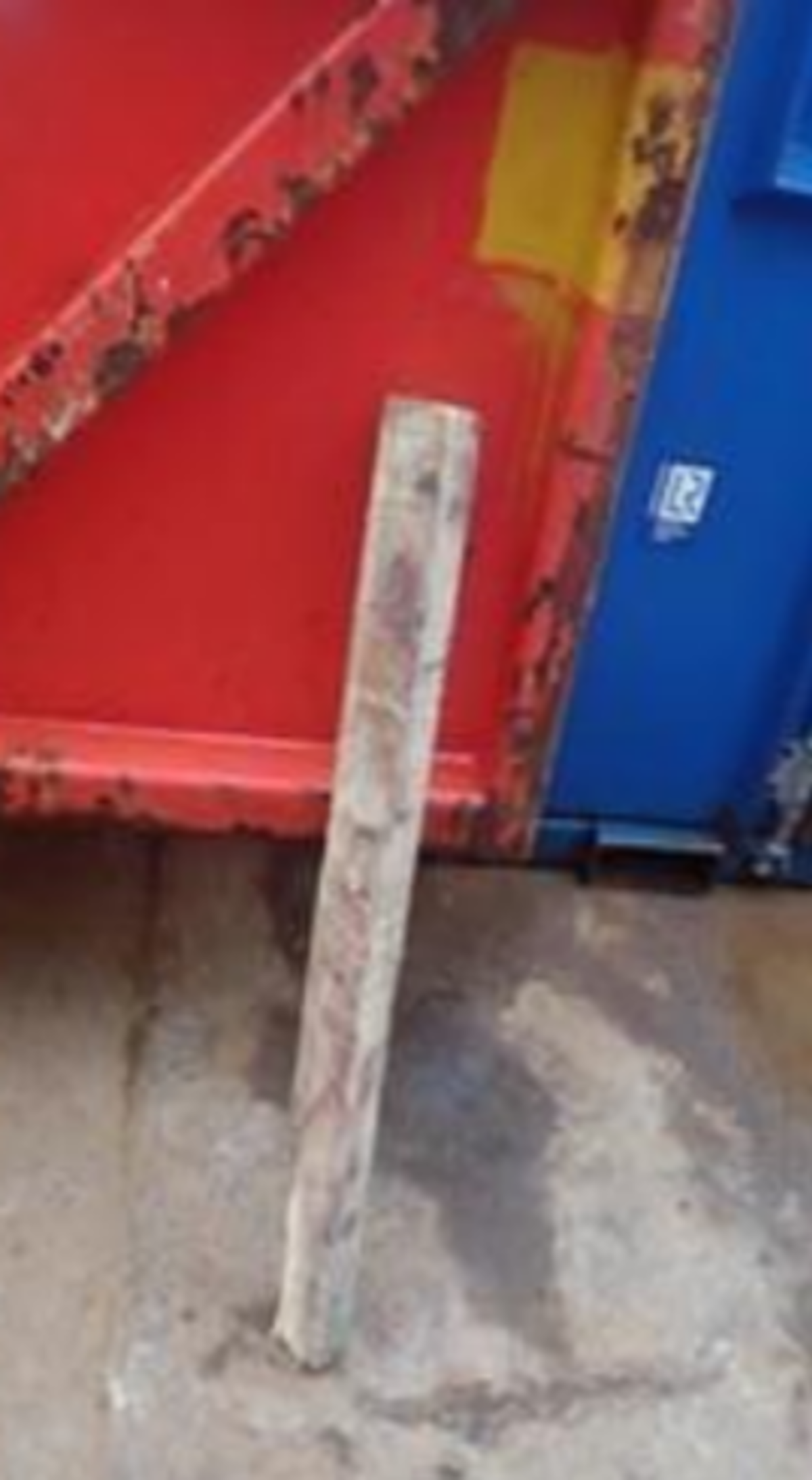
What were the causes? What went wrong?
- Wooden batons are normally used to support the tarpaulin cover used on open top CCUs.
- Wooden batons are only held in place by being jammed against the sides of the open top.
- There is generally no securing mechanism holding the wooden batons in place.
- Batons need to be ‘knocked out’ before heavy cargo is lifted from the CCU by crane.
- Knocking out batons from high sided CCUs can result in the baton falling onto the persons removing it.
These findings prompted another assessment comparing the use of tarpaulins versus the use of nets as top covers for CCUs, below are some of the assessment findings:
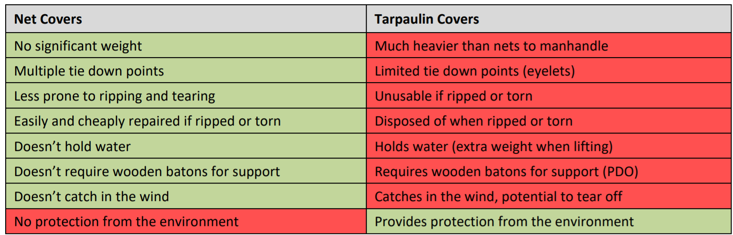
The MSF safety alert concluded:
"Tarpaulins and batons do have their uses when required for covering cargo, but their use should always be risk assessed and evaluated against other cover types which may be readily available.
"The risk assessment should include but not be limited to:
- the type of cargo and the effects of its exposure to the environment
- the manual handling issues that may be encountered by the end user
- consider the use of ‘cord strap’ or similar instead of wooden batons to support covers. (particularly on high sided open top units)."
See the full Marine Safety Forum Safety Alert 20-04.
IMCA Safety Flashes summarise key safety matters and incidents, allowing lessons to be more easily learnt for the benefit of the entire offshore industry.
The effectiveness of the IMCA Safety Flash system depends on the industry sharing information and so avoiding repeat incidents. Incidents are classified according to IOGP's Life Saving Rules.
All information is anonymised or sanitised, as appropriate, and warnings for graphic content included where possible.
IMCA makes every effort to ensure both the accuracy and reliability of the information shared, but is not be liable for any guidance and/or recommendation and/or statement herein contained.
The information contained in this document does not fulfil or replace any individual's or Member's legal, regulatory or other duties or obligations in respect of their operations. Individuals and Members remain solely responsible for the safe, lawful and proper conduct of their operations.
Share your safety incidents with IMCA online. Sign-up to receive Safety Flashes straight to your email.