CHIRP: Crew vigilance prevents mooring incident
- Safety Flash
- Published on 15 August 2023
- Generated on 20 October 2026
- IMCA SF 20/23
- 2 minute read
The Confidential Human Factors Incident Reporting Programme (CHIRP ) has shared an event in which the careful vigilance of vessel crew prevented a mooring incident
What happened?
The Confidential Human Factors Incident Reporting Programme (CHIRP) has shared an event in which the careful vigilance of vessel crew prevented a mooring incident.
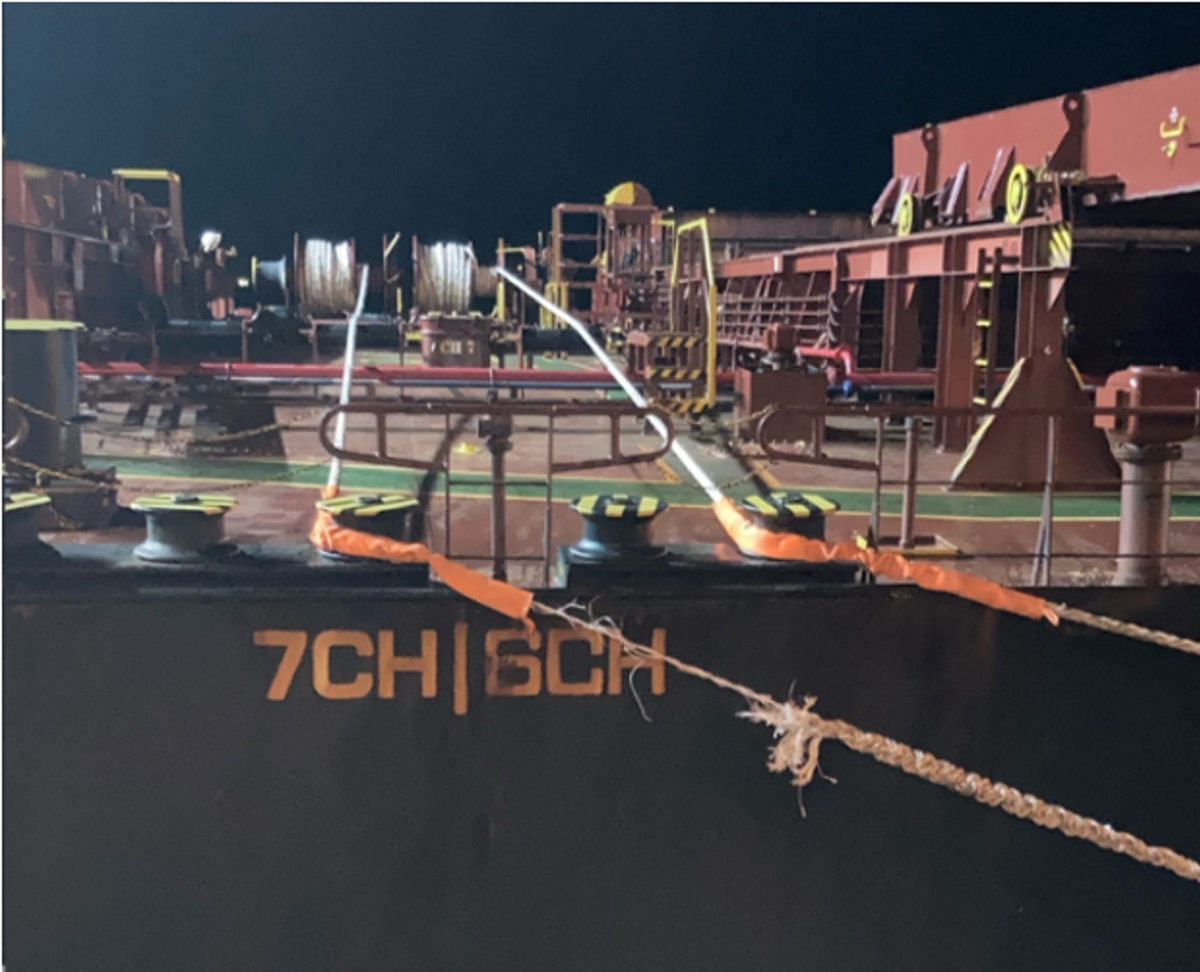
A long, low-amplitude swell was causing a steady yawing and rolling motion of up to around 1.2 m from the wharf on a 93,000-tonne deadweight bulk carrier alongside.
During this time, a forward spring line running over the edge of the shipside roller fairlead began interacting with another mooring line causing significant abrasion damage.
What went right?
- Good monitoring of the lines by the vessel crew picked up the damage.
- There was good communication on the vessel and between the vessel and the terminal.
- The lines were replaced and re-run by the ship’s crew before they parted.
What went wrong?
- CHIRP observed that “the design of the roller fairleads was not optimised to prevent contact with the sheer strake. Additionally, like many vessel spring lines, they can be susceptible to abrasion when environmental conditions at the port result in excessive movement.”
See the full report at MAIB report 13/2017 into failure of a mooring line on board the LNG carrier Zarga.
Lessons learnt
- The importance of good communication and good teamwork.
- Safety by design – CHIRP notes that many mooring fixtures and fittings are applied to the ship’s structure to meet compliance with the ship’s design requirements. Still, many are not properly designed to ensure that their directional lead is optimised to prevent abrasion of the line and maximising their resistance to the applied force on the line.
- How well do your mooring arrangements work?
- Do you have to use other rollers to obtain a better lead?
- How well do your mooring arrangements work?
Related Safety Flashes
-
IMCA SF 23/22
24 October 2022
-
-
IMCA SF 29/20
9 October 2020
-
IMCA SF 15/17
15 June 2017
-
IMCA Safety Flashes summarise key safety matters and incidents, allowing lessons to be more easily learnt for the benefit of the entire offshore industry.
The effectiveness of the IMCA Safety Flash system depends on the industry sharing information and so avoiding repeat incidents. Incidents are classified according to IOGP's Life Saving Rules.
All information is anonymised or sanitised, as appropriate, and warnings for graphic content included where possible.
IMCA makes every effort to ensure both the accuracy and reliability of the information shared, but is not be liable for any guidance and/or recommendation and/or statement herein contained.
The information contained in this document does not fulfil or replace any individual's or Member's legal, regulatory or other duties or obligations in respect of their operations. Individuals and Members remain solely responsible for the safe, lawful and proper conduct of their operations.
Share your safety incidents with IMCA online. Sign-up to receive Safety Flashes straight to your email.