Inappropriate automatic activation of fixed fire-fighting system
- Safety Flash
- Published on 14 October 2024
- Generated on 20 October 2026
- IMCA SF 20/24
- 2 minute read
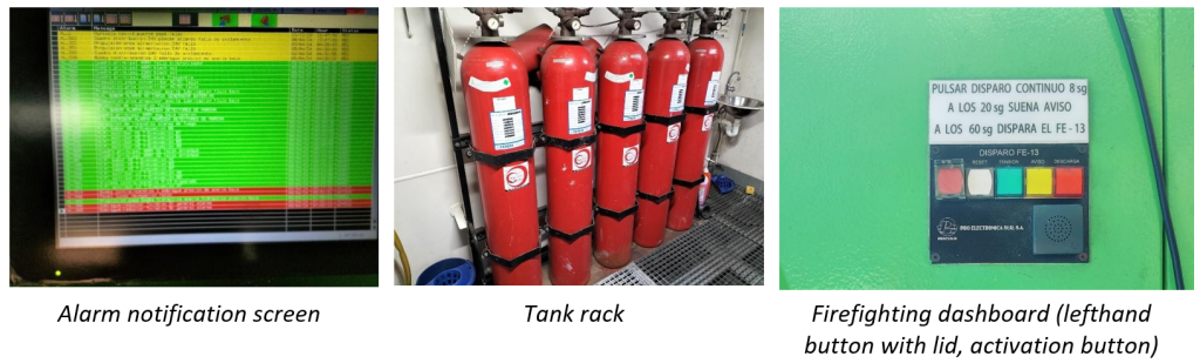
The firefighting system in the engine room automatically activated and all the gas in the tanks emptied.
What happened?
The fixed firefighting system in the engine room on a harbour tug automatically activated and all the gas in the tanks emptied. This occurred after two consecutive blackouts on the tug within 24 hours. No-one was harmed.
What went wrong?
- It was discovered that the firefighting system was activated by a sudden rise in battery voltage following the malfunction of the solenoid valve on the pilot cylinder, after the blackout.
- Our member considered that the low voltage (24v) electrical system in the tug may not have sufficient power to supply the critical equipment it was being used for.
- There was a lack of indication on the bridge or in the engine room regarding the operation of the electrical system; it was not possible to discern whether it was in emergency mode or normal operational mode.
Lessons to learn
- Check the functionality of vessels’ general emergency response systems:
- Review the ships’ electrical system, especially systems affecting critical equipment – is there sufficient current supplied to operate the system in all cases?
- Review blackout and emergency drill protocol in case of loss of power.
Members may wish to review the incident of the cargo vessel Dali hitting and destroying the bridge in Baltimore. A vessel blackout may have been one of the causal factors. IMCA hopes to make a safety flash on this incident available when a full report with findings is published.
Related Safety Flashes
-
IMCA SF 10/22
21 April 2022
-
IMCA SF 24/21
31 August 2021
-
IMCA SF 17/20
1 June 2020
IMCA Safety Flashes summarise key safety matters and incidents, allowing lessons to be more easily learnt for the benefit of the entire offshore industry.
The effectiveness of the IMCA Safety Flash system depends on the industry sharing information and so avoiding repeat incidents. Incidents are classified according to IOGP's Life Saving Rules.
All information is anonymised or sanitised, as appropriate, and warnings for graphic content included where possible.
IMCA makes every effort to ensure both the accuracy and reliability of the information shared, but is not be liable for any guidance and/or recommendation and/or statement herein contained.
The information contained in this document does not fulfil or replace any individual's or Member's legal, regulatory or other duties or obligations in respect of their operations. Individuals and Members remain solely responsible for the safe, lawful and proper conduct of their operations.
Share your safety incidents with IMCA online. Sign-up to receive Safety Flashes straight to your email.