COBRA bailout system – guidance note
- Safety Flash
- Published on 30 July 2021
- Generated on 21 October 2026
- IMCA SF 21/21
- 3 minute read
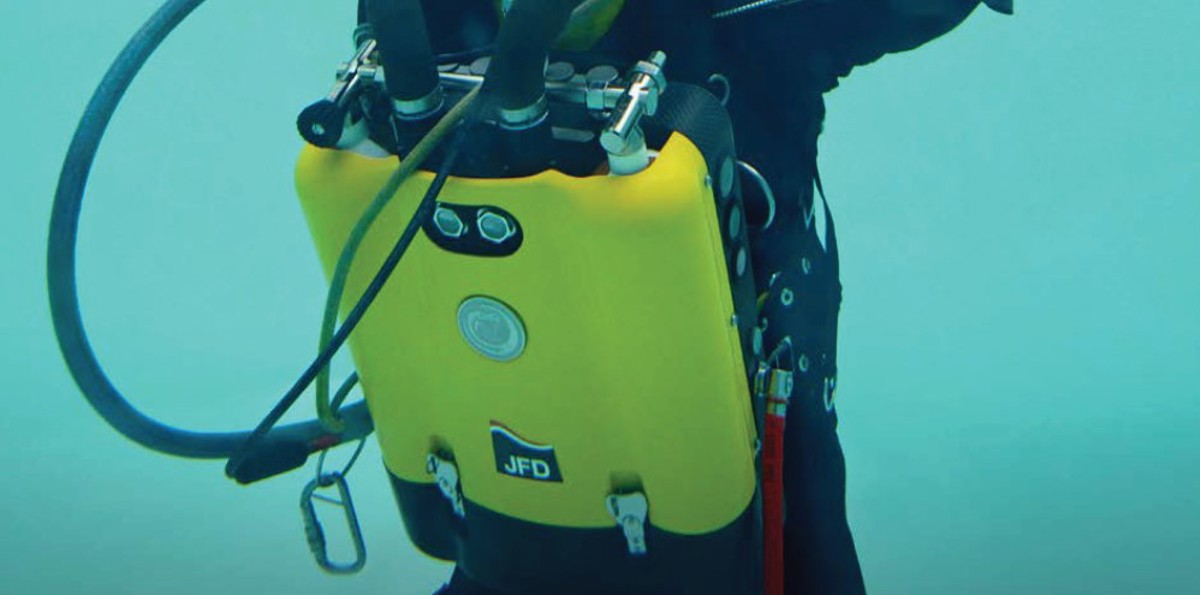
JFD has issued a COBRA guidance note relating to concerns regarding the suitability of the 2L composite cylinders contained within the set.
This note highlights to users, those reported concerns and the follow-on investigation that has been undertaken to demonstrate suitability of the composite cylinders for the application in COBRA.
What happened?
Users have reported blistering and flaking of the lacquer on the cylinder exterior, and premature, excessive corrosion on the exposed aluminium at the cylinder neck, as seen in these images:
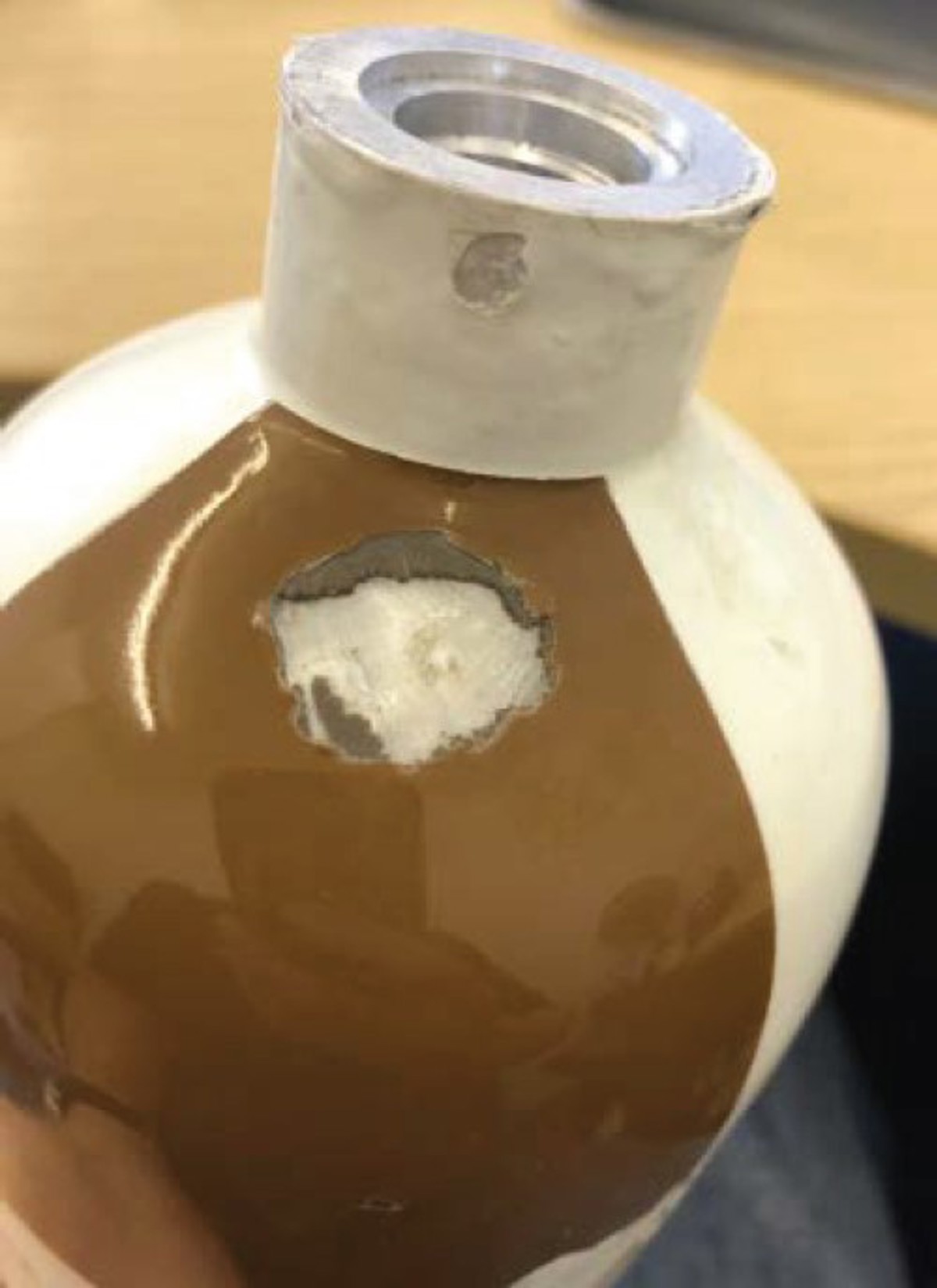
Flaking external lacquer
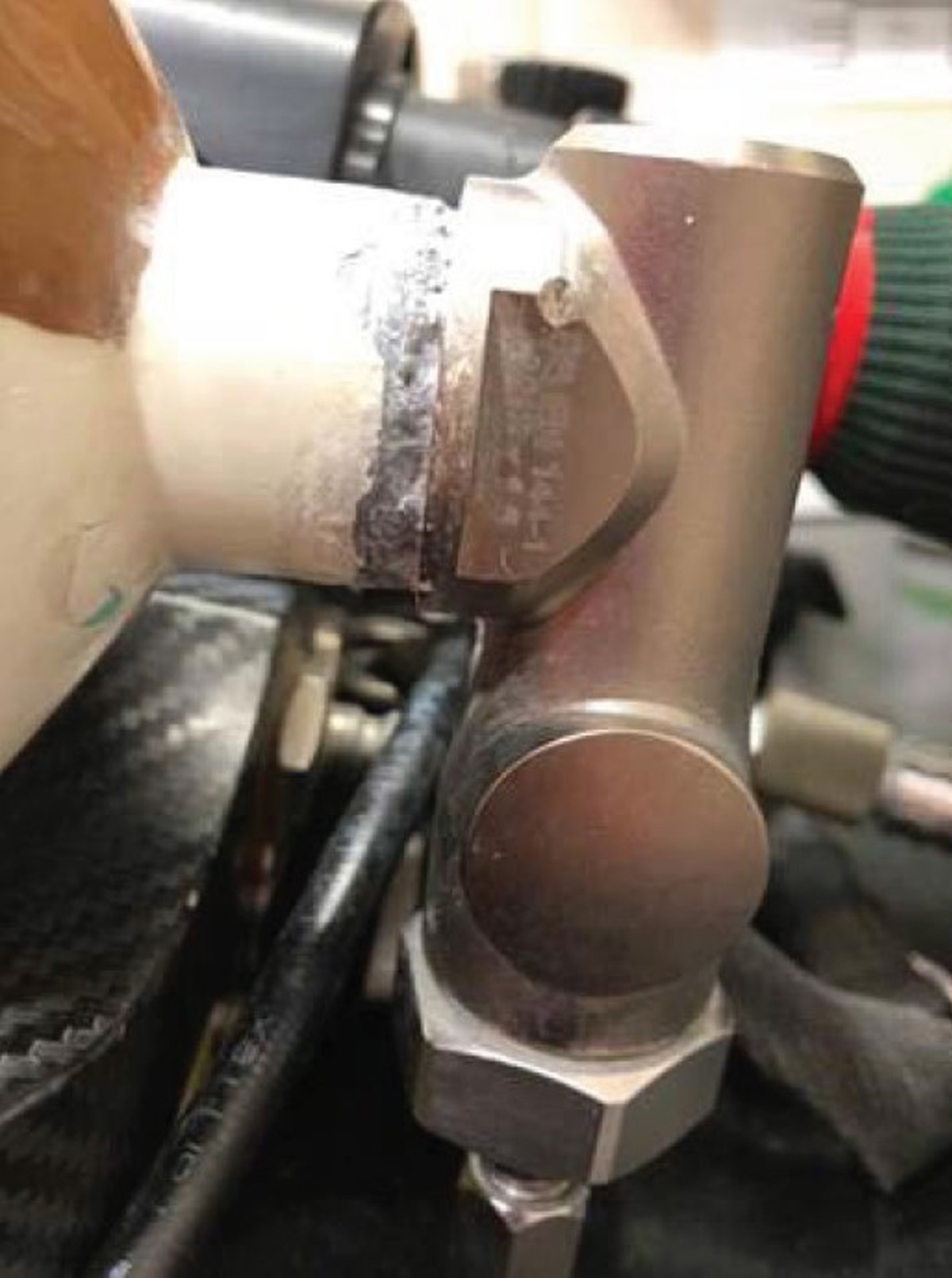
Excessive corrosion at cylinder neck
Actions taken
- Blistering and flaking
- JFD has investigated and worked closely with the cylinder manufacturer (Worthington Industries) who have categorically stated that flaking of the lacquer is a known but trivial characteristic of composite cylinders. The typical cause is due to air, which is trapped in the composite matrix during manufacture, being forced out during cylinder charging. It is thought that use in a hyperbaric environment can cause this issue to re-occur due to helium migrating under the lacquer over a period of time and then expanding when the set is removed from the dive system.
- The manufacturer has explicitly stated that the voids are too small to allow any water ingress at diving pressures.
- The manufacturer has also explicitly stated that these cylinders are suitable for the duty experienced by a COBRA set (surface, dry hyperbaric helium environment, diving, reasonably fast decompression out of system).
- JFD has investigated and worked closely with the cylinder manufacturer (Worthington Industries) who have categorically stated that flaking of the lacquer is a known but trivial characteristic of composite cylinders. The typical cause is due to air, which is trapped in the composite matrix during manufacture, being forced out during cylinder charging. It is thought that use in a hyperbaric environment can cause this issue to re-occur due to helium migrating under the lacquer over a period of time and then expanding when the set is removed from the dive system.
- Premature, excessive corrosion
- JFD carried out an evaluation of the cylinders in question which were certainly corroded beyond what was acceptable for the time in service and, in fact, subsequently failed inspection at an IDEST facility. JFD has contacted the manufacturer to investigate the possibility of a problem with this particular batch of cylinders. To date, the manufacturer has not responded with any information. Your ongoing understanding and support in this matter is much appreciated.
- Some COBRA sets have been in service for much longer periods without reported feedback of excessive corrosion, with the original cylinders still fitted, and others have had replacement cylinders after varying periods of time.
- JFD advises users to check the external condition of the COBRA cylinders every time the COBRA set is removed from the dive system for maintenance, recharging or any other reason. If the cylinder condition is deemed questionable, a replacement should be fitted and the cylinder inspected by an IDEST facility before re-use.
- Additionally, JFD are currently investigating the possibility of supplying a different brand of composite cylinder which has a stainless steel liner. This should eliminate all corrosion issues.
- JFD carried out an evaluation of the cylinders in question which were certainly corroded beyond what was acceptable for the time in service and, in fact, subsequently failed inspection at an IDEST facility. JFD has contacted the manufacturer to investigate the possibility of a problem with this particular batch of cylinders. To date, the manufacturer has not responded with any information. Your ongoing understanding and support in this matter is much appreciated.
For further information please contact Graeme Clark (Head of Commercial Products) Email: [email protected] Telephone: + 44 ( 0)7770553198
IMCA Safety Flashes summarise key safety matters and incidents, allowing lessons to be more easily learnt for the benefit of the entire offshore industry.
The effectiveness of the IMCA Safety Flash system depends on the industry sharing information and so avoiding repeat incidents. Incidents are classified according to IOGP's Life Saving Rules.
All information is anonymised or sanitised, as appropriate, and warnings for graphic content included where possible.
IMCA makes every effort to ensure both the accuracy and reliability of the information shared, but is not be liable for any guidance and/or recommendation and/or statement herein contained.
The information contained in this document does not fulfil or replace any individual's or Member's legal, regulatory or other duties or obligations in respect of their operations. Individuals and Members remain solely responsible for the safe, lawful and proper conduct of their operations.
Share your safety incidents with IMCA online. Sign-up to receive Safety Flashes straight to your email.