Grounding of bulk carrier Kuzma Minin at Falmouth
- Safety Flash
- Published on 12 November 2019
- Generated on 27 October 2026
- IMCA SF 26/19
- 2 minute read
The UK Marine Accident Investigation (MAIB) has published its report into the grounding of the Russian bulk carrier Kuzma Minin at Falmouth Bay, England, in December 2018.
What happened?
See here for the fuller MAIB report.
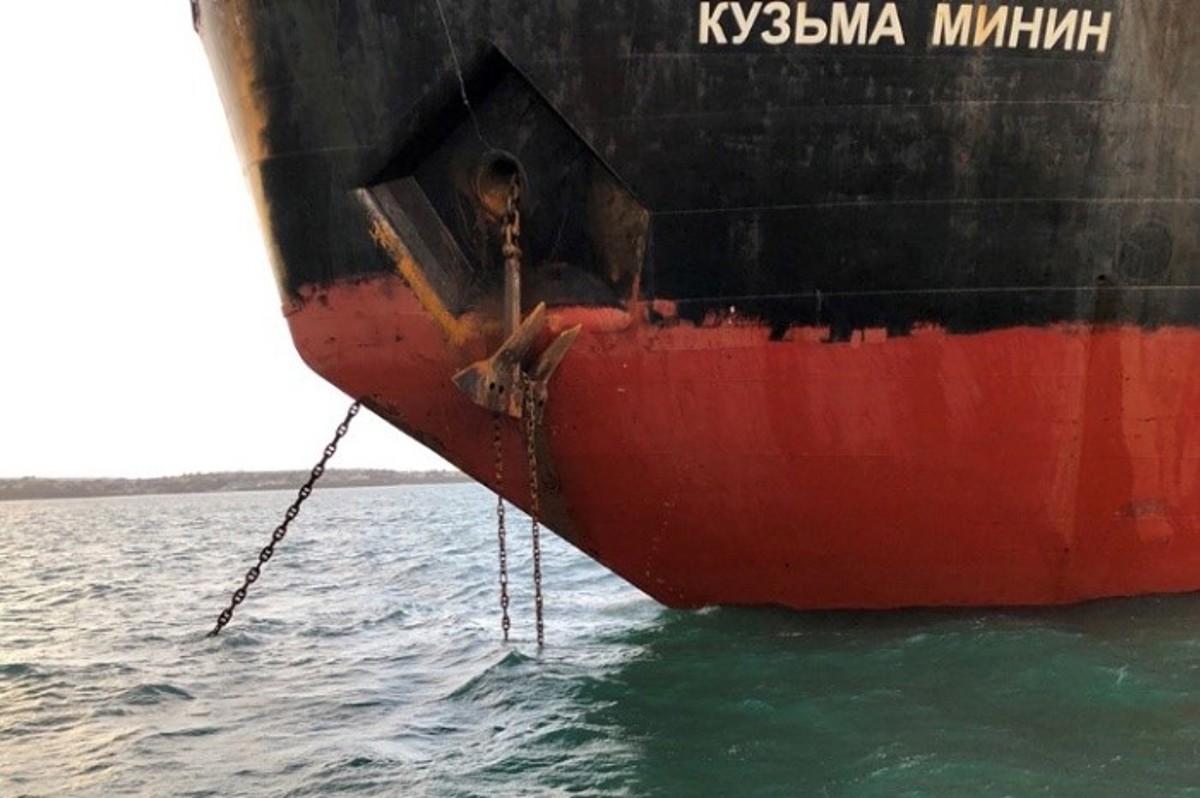
What went wrong?
Kuzma Minin ran aground after dragging its anchor and was successfully refloated on the next high water.
Damage included shell plate deformation and breached tanks. The vessel dragged its anchor in strong winds.
Although the movement towards the shore was quickly detected by the bridge watchkeeper, the actions taken to proceed to sea were interrupted by the anchor becoming fouled by a discarded length of anchor chain. As focus was turned to clearing the anchor, Kuzma Minin was blown towards the shore at a speed of over 2 knots.
Falmouth’s harbourmaster used local resources to refloat the vessel but concerns over Kuzma Minin’s lack of Protection and indemnity (P&I) insurance cover, and its owner’s lack of co-operation in appointing a salvor, caused unexpected pressures.
The financial situation of the owners meant that Kuzma Minin’s Master was unable to replenish bunkers and lube oil, which influenced his decision to remain at anchor on a lee shore when strong winds were forecast.
Kuzma Minin’s lack of P&I insurance led to concerns over responsibility for salvage payment, which hindered the appointment of experts and the ability to secure the services of an additional tug that was on passage nearby.
What lessons were learned?
Vessels should be adequately resourced to operate safely and in accordance with international conventions, taking into account the potential consequences of vessels having insufficient fuel and oils, and the statutory requirement to maintain P&I insurance.
Featured Safety Flashes
-
IMCA SF 32/16
29 November 2016
-
IMCA SF 07/16
31 March 2016
IMCA Safety Flashes summarise key safety matters and incidents, allowing lessons to be more easily learnt for the benefit of the entire offshore industry.
The effectiveness of the IMCA Safety Flash system depends on the industry sharing information and so avoiding repeat incidents. Incidents are classified according to IOGP's Life Saving Rules.
All information is anonymised or sanitised, as appropriate, and warnings for graphic content included where possible.
IMCA makes every effort to ensure both the accuracy and reliability of the information shared, but is not be liable for any guidance and/or recommendation and/or statement herein contained.
The information contained in this document does not fulfil or replace any individual's or Member's legal, regulatory or other duties or obligations in respect of their operations. Individuals and Members remain solely responsible for the safe, lawful and proper conduct of their operations.
Share your safety incidents with IMCA online. Sign-up to receive Safety Flashes straight to your email.