Near miss: Sudden loss of air from diver bail-out bottle
- Safety Flash
- Published on 15 September 2020
- Generated on 12 April 2026
- IMCA SF 27/20
- 2 minute read
What happened?
A diver was returning to the dive basket to be recovered when he heard a “popping” sound and realised his first-stage regulator appeared to have failed and the contents of his bail-out bottle were escaping.
His bail-out bottle contents went to zero. The diver was recovered to the surface without further incident.
The regulator maintenance history was as follows:
- A six-monthly full strip-down and full service of the regulator had been undertaken two months prior following the service manual. Our member noted that a full suite of all spares was carried for the regulator including all greases, and special service tools.
- A monthly service had recently occurred, where the regulator was opened, cleaned with fresh water, and had a diaphragm check and full function test.
What were the causes? What went wrong?
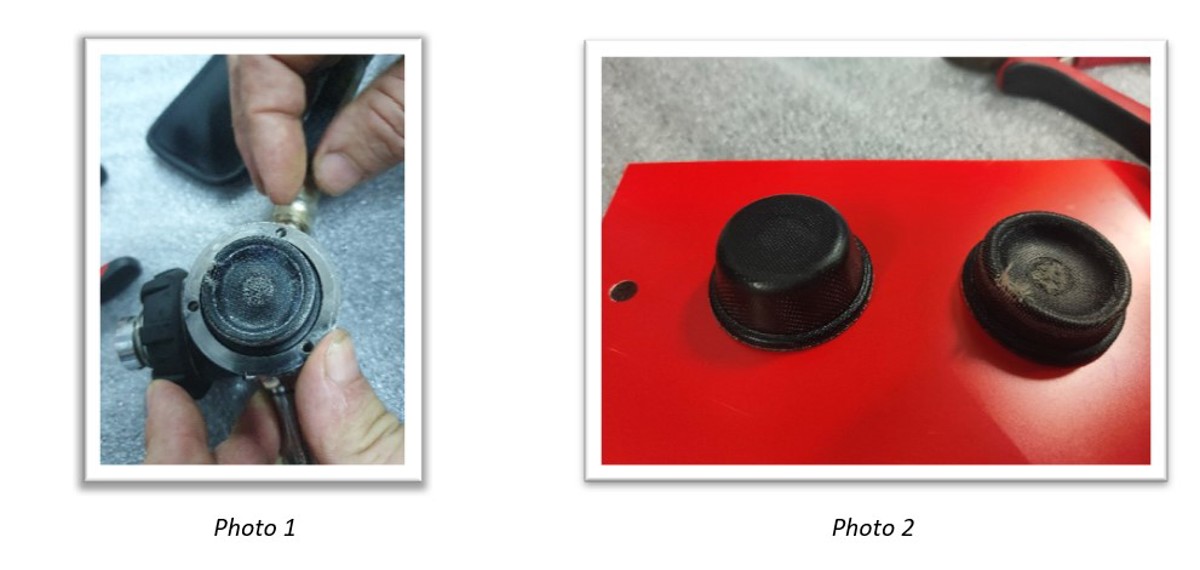
Investigation revealed that there had been a failure of a roll diaphragm from an Xstream first stage regulator attached to the diver’s bail-out bottle (Photo 1 below).
The regulator was stripped down to reveal worn structural fibres inside the diaphragm had weakened allowing a hole to form.
Photo 2 shows a comparison between the failed and new diaphragm. The damage can be seen on the right unit showing the exposed fibres.
Lessons learned
-
The roll diaphragm was inspected during the six-monthly maintenance and was deemed good enough quality to remain in service. Human judgement is subjective in deeming this part serviceable.
-
Our member noted that there was no clearly defined replacement criteria for the diaphragm; consideration was being given to replacing the part every six months.
Actions
- Follow manufacturer’s guidance;
- Enhanced company planned maintenance system to include that the roll diaphragm is to changed out in addition to the service kit items.
Related Safety Flashes
-
IMCA SF 08/19
25 April 2019
-
-
IMCA SF 14/09
2 October 2009
-
IMCA SF 09/02
1 September 2002

IMCA Safety Flashes summarise key safety matters and incidents, allowing lessons to be more easily learnt for the benefit of the entire offshore industry.
The effectiveness of the IMCA Safety Flash system depends on the industry sharing information and so avoiding repeat incidents. Incidents are classified according to IOGP's Life Saving Rules.
All information is anonymised or sanitised, as appropriate, and warnings for graphic content included where possible.
IMCA makes every effort to ensure both the accuracy and reliability of the information shared, but is not be liable for any guidance and/or recommendation and/or statement herein contained.
The information contained in this document does not fulfil or replace any individual's or Member's legal, regulatory or other duties or obligations in respect of their operations. Individuals and Members remain solely responsible for the safe, lawful and proper conduct of their operations.
Share your safety incidents with IMCA online. Sign-up to receive Safety Flashes straight to your email.