High potential near-miss: Failure in safety gate
- Safety Flash
- Published on 29 November 2016
- Generated on 22 November 2026
- IMCA SF 34/16
- 1 minute read
Step Change in Safety has published the following safety alert regarding a near miss incident in which there was a potentially very serious failure of a safety gate at height.
What happened?
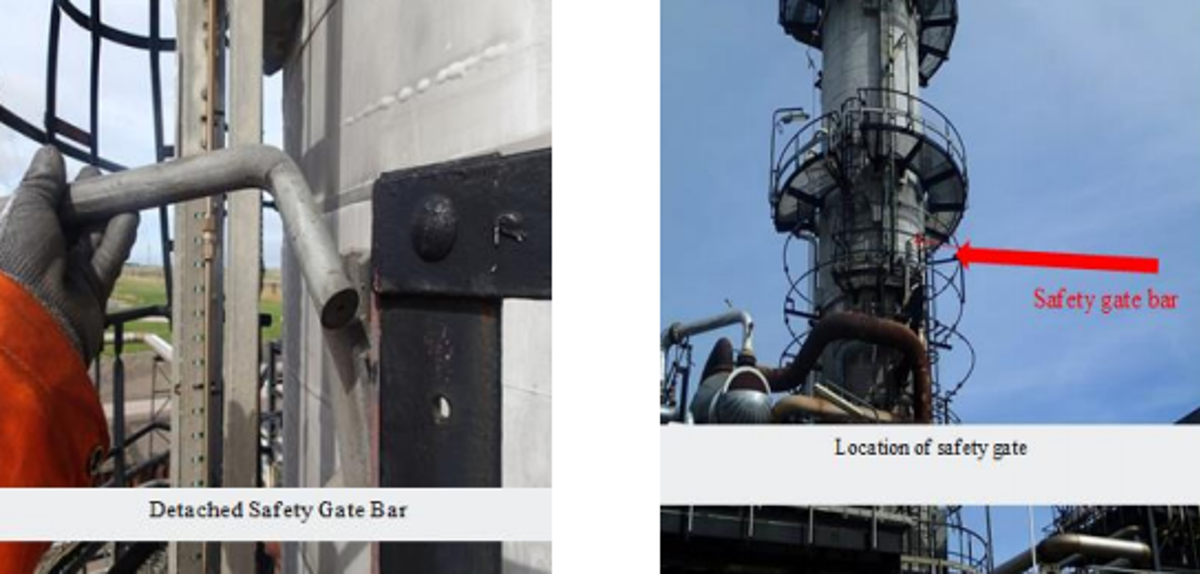
During a routine inspection, whilst stepping from a ladder onto a gantry, the crewman performing the inspection discovered that the safety gate bar was adrift from its hinge bracket. The crewman narrowly avoided a fall. He replaced the gate bar and immediately reported the event. There were no injuries.
What went wrong?
Investigation revealed that a retaining plate and bolt were missing due to the bolt working its way loose.
What actions were taken?
The bar was repaired immediately. Ongoing checks of all such safety gates took place to ensure they are functioning correctly and safely. In the long term, a review was arranged of the maintenance strategy of the safety gates.
The full report can be found at Step Change in Safety: Alerts & Moments.
Related Safety Flashes
-
IMCA SF 04/16
5 February 2016
IMCA Safety Flashes summarise key safety matters and incidents, allowing lessons to be more easily learnt for the benefit of the entire offshore industry.
The effectiveness of the IMCA Safety Flash system depends on the industry sharing information and so avoiding repeat incidents. Incidents are classified according to IOGP's Life Saving Rules.
All information is anonymised or sanitised, as appropriate, and warnings for graphic content included where possible.
IMCA makes every effort to ensure both the accuracy and reliability of the information shared, but is not be liable for any guidance and/or recommendation and/or statement herein contained.
The information contained in this document does not fulfil or replace any individual's or Member's legal, regulatory or other duties or obligations in respect of their operations. Individuals and Members remain solely responsible for the safe, lawful and proper conduct of their operations.
Share your safety incidents with IMCA online. Sign-up to receive Safety Flashes straight to your email.