Near-miss: Missing nut and split pin on shackle
- Safety Flash
- Published on 5 February 2015
- Generated on 27 September 2026
- IMCA SF 02/15
- 2 minute read
A Member has reported an incident in which rented lifting equipment was returned to the vendor (a winch supplier) with important parts missing.
What happened?
Rental equipment was returned to the winch supplier from a recent project, and the hydraulic winch set was delivered from the vessel with the split pin and nut missing from one of the 3.25Te shackles which were part of the winch lifting set.
When the equipment arrived at the supplier’s base on the back of a truck, the winch supplier offloaded the equipment safely via a forklift truck using the forklift pockets. They then carried out a visual inspection of the equipment and discovered the missing split pin and nut. No incident occurred, however, it is not known whether the lifting set was used in this degraded condition during vessel demobilisation, i.e. without the shackle being properly installed. This could have resulted in a dropped load incident. Additionally, there was the potential for a dropped object incident at the supplier’s base during offloading from the truck had the shackle bolt worked loose.
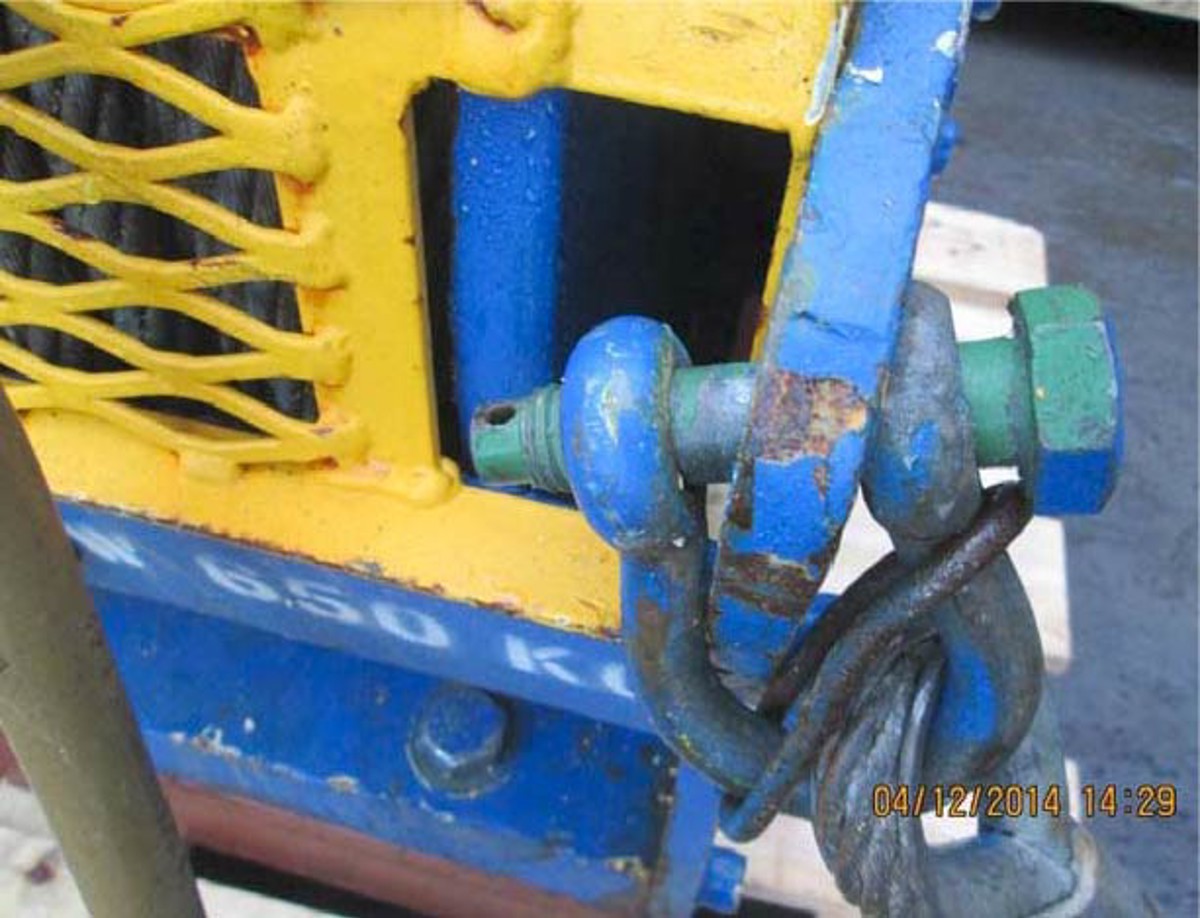
Condition in which lifting equipment was left – showing missing nut and split pin
Our member’s investigation noted the following:
- There was no evidence that the rigging arrangement was incorrect during the demobilisation of the equipment from the vessel. However, this could not be ruled out and therefore it was vital that the importance of carrying out rigging checks prior to lifting is reiterated.
- It was possible that the split pin and nut worked themselves loose as a result of vibration on the back of the truck during road transportation. This would indicate that either the split pin was incorrectly fitted, or was missing.
Our Member took the following actions:
- Subjected all rigging arrangements to a thorough visual inspection prior to carrying out any lifting, ensuring that split pins are securely in place to prevent nuts and bolts from working themselves loose.
- Ensured that lift supervisor inspects all loads thoroughly for potential dropped objects and to ensure correct rigging and slinging arrangements are in place and correctly secured.
- Reiterated importance of thorough visual checking of lifting equipment before use, before mobilisation and demobilisation.
Members should be aware of IMCA guidance and IMCA safety promotional material on lifting equipment, as follows:
- Guidelines for lifting operations
- Lifting operations, equipment (pocket cards, videos)
Related Safety Flashes
-
IMCA SF 01/13
18 January 2013
-
IMCA SF 05/11
29 June 2011
IMCA Safety Flashes summarise key safety matters and incidents, allowing lessons to be more easily learnt for the benefit of the entire offshore industry.
The effectiveness of the IMCA Safety Flash system depends on the industry sharing information and so avoiding repeat incidents. Incidents are classified according to IOGP's Life Saving Rules.
All information is anonymised or sanitised, as appropriate, and warnings for graphic content included where possible.
IMCA makes every effort to ensure both the accuracy and reliability of the information shared, but is not be liable for any guidance and/or recommendation and/or statement herein contained.
The information contained in this document does not fulfil or replace any individual's or Member's legal, regulatory or other duties or obligations in respect of their operations. Individuals and Members remain solely responsible for the safe, lawful and proper conduct of their operations.
Share your safety incidents with IMCA online. Sign-up to receive Safety Flashes straight to your email.