Crushed finger
- Safety Flash
- Published on 5 March 2009
- Generated on 27 September 2026
- IMCA SF 03/09
- 2 minute read
A Member has reported an incident during a dive support vessel transit from port to an offshore location, a diver sustained an injury to two fingers of his left hand.
What happened
The diver was in the aft transfer lock and was holding a chamber door open to allow a colleague to transit between the chamber and transfer lock. When holding the door open, another door in the aft transfer lock swung open, trapping the diver’s fingers between the two doors.
At the time of the incident, weather conditions winds were between force 7 and 8. The vessel was pitching and rolling heavily.
The diver received first aid inside the chamber from his colleagues.
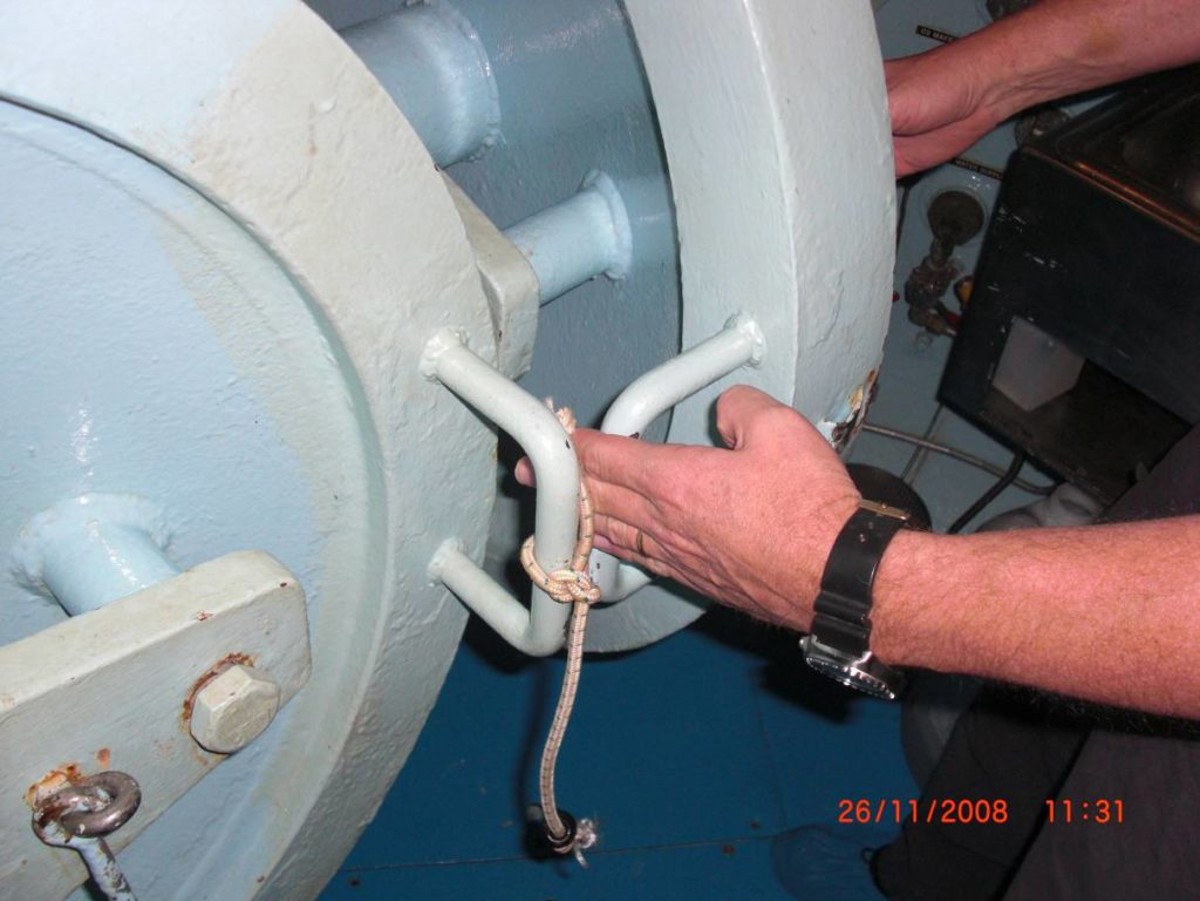
fig. 1: another door in the aft transfer lock swung open, trapping the diver’s fingers between the two doors
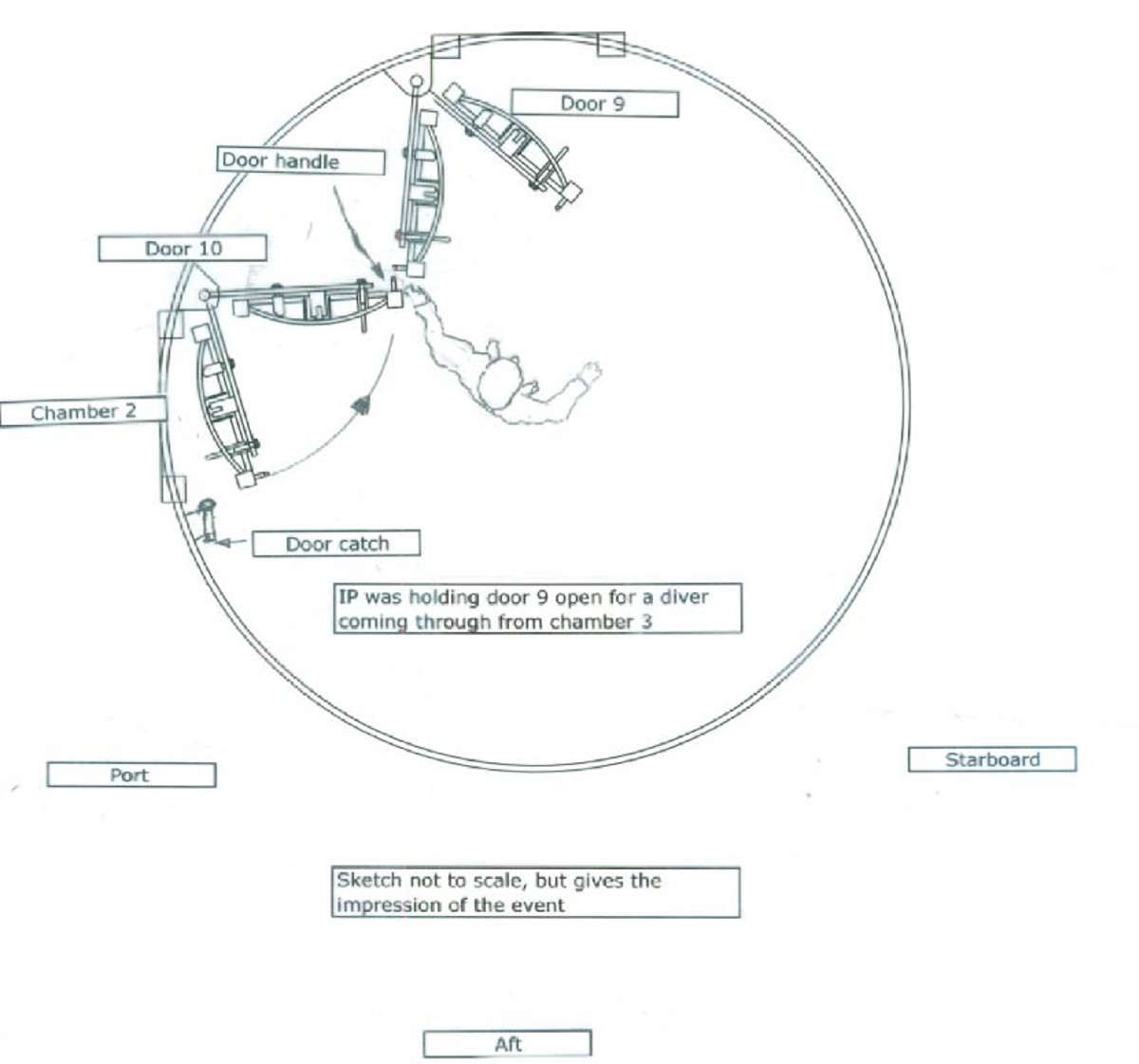
fig.2: overview of the incident
The diver was subsequently decompressed and the vessel returned to port.
On arrival in port the injured person was taken out of the dive chambers and transferred to a hyperbaric facility for further treatment and ‘bend’ watch.
The diver sustained crush injuries to his fingers, as well as the removal of both finger nails.
What were the causes?
After investigation, the immediate cause of the injury was attributed to uncontrolled opening of chamber door, trapping and crushing diver’s fingers between the two doors (refer to above schematic), with underlying causes as follows:
- Door spring tension was not enough to hold against uncontrolled door movement.
- No hooks were used; no door dampers were in place.
- No risk assessment had been carried out for the chamber with regard to a rough weather transit.
- The chamber door design and securing arrangement for chamber doors were poor.
- Chamber doors are heavy and cumbersome.
- Safety observation should have heightened diver awareness of hazards in chambers.
Lessons learnt
Members are reminded that they should consider the following:
- Carry out a risk assessment on all chamber door systems for potential uncontrolled movements.
- Test and set latching devices, particularly spring loaded latching devices, to an optimal tension for safety and ease of use.
- Be aware of the inherent dangers associated with operation and transit during bad weather.
- Adhere to diving chamber transit procedures.
IMCA Safety Flashes summarise key safety matters and incidents, allowing lessons to be more easily learnt for the benefit of the entire offshore industry.
The effectiveness of the IMCA Safety Flash system depends on the industry sharing information and so avoiding repeat incidents. Incidents are classified according to IOGP's Life Saving Rules.
All information is anonymised or sanitised, as appropriate, and warnings for graphic content included where possible.
IMCA makes every effort to ensure both the accuracy and reliability of the information shared, but is not be liable for any guidance and/or recommendation and/or statement herein contained.
The information contained in this document does not fulfil or replace any individual's or Member's legal, regulatory or other duties or obligations in respect of their operations. Individuals and Members remain solely responsible for the safe, lawful and proper conduct of their operations.
Share your safety incidents with IMCA online. Sign-up to receive Safety Flashes straight to your email.