Failure of remote control/emergency stop on rescue boat winch
- Safety Flash
- Published on 11 February 2021
- Generated on 8 September 2026
- IMCA SF 05/21
- 2 minute read
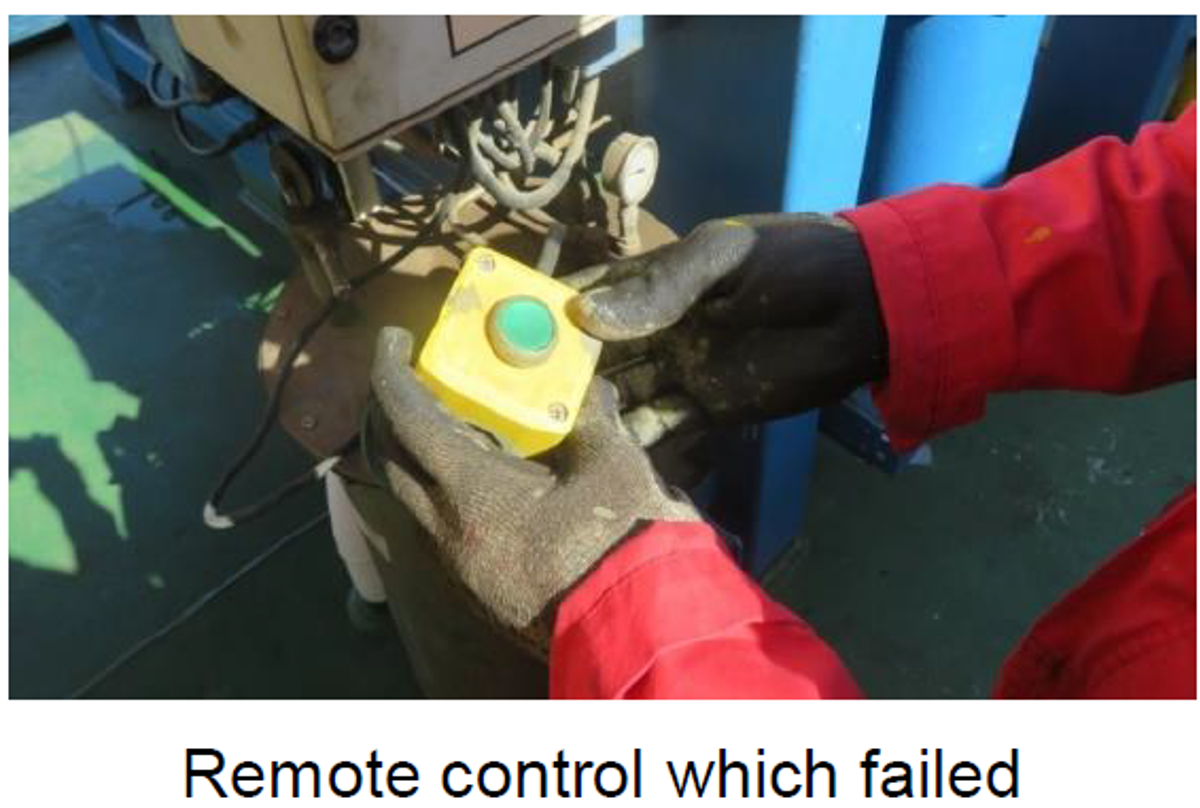
While completing the testing of a rescue boat, the Able Seaman (AB) started recovery of the boat to the davit using a remote control; but close to the final stowage position, the remote control failed and the limit switch did not activate as designed.
What happened?
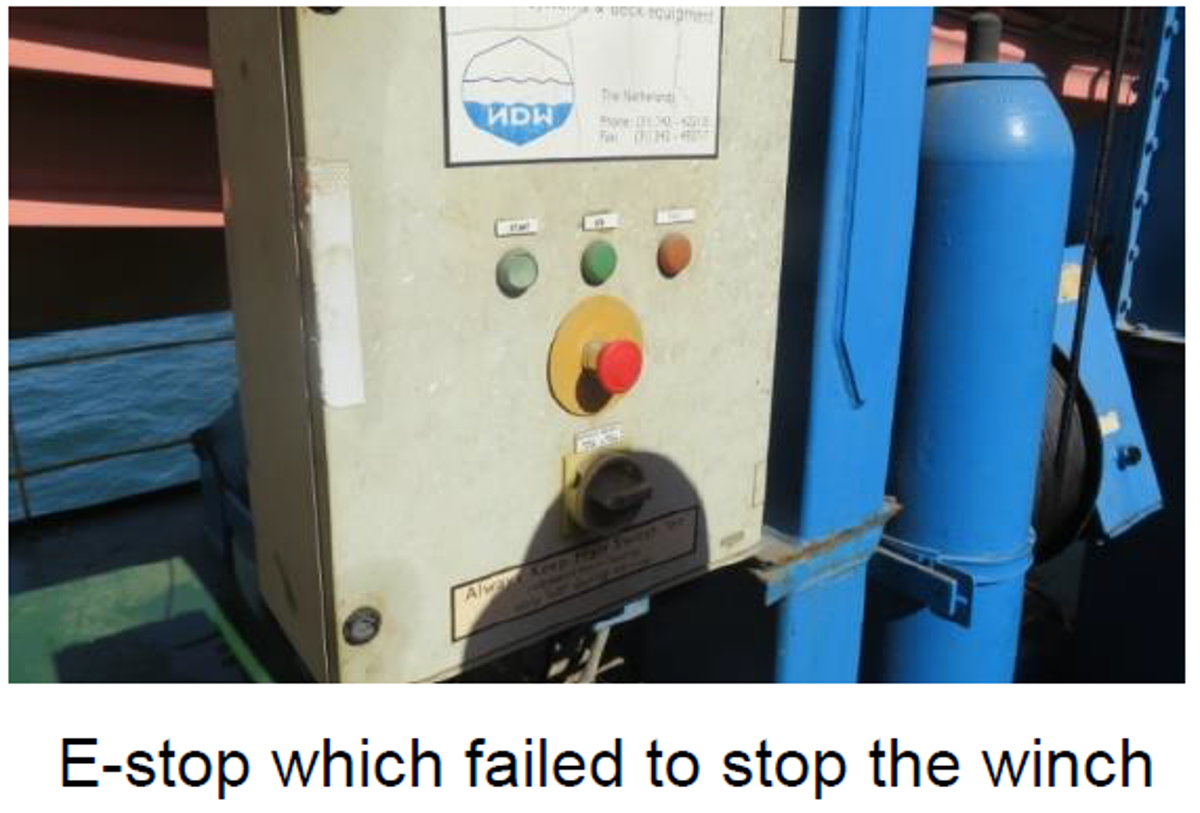
There was a failure of the winch remote control and emergency stop during recovery of the rescue boat to the davit.
The incident occurred on completion of rescue boat testing in good weather.
The personnel in the small boat were disembarked at sea level and used a ladder to access the main deck.
The AB started recovery of the boat using a remote control.
When close to the final stowage position the remote control failed and the limit switch did not activate as designed.
The main power supply switch was then operated to isolate the power supply to the winch.

What went wrong?
Testing revealed that the control circuitry for davit recovery was fully operational. However, the recovery was not automatically stopped by the limit switch. On inspection and disassembly of the contactor, it was found stuck, with contacts in the closed position. The system had undergone annual inspection by an approved independent inspector three weeks previously with the following notes:
- Remote control checked all OK.
- Davit fall wire sheave inspected.
- All electronics checked and found OK.
The most probable cause of failure was frequent intermittent use of the winch for fine adjustment of boat level to make it easier for crew to get into and out of the fast rescue craft. The davit winch was being repeatedly switched on and off for very short time intervals, which can cause the contacts to burn out.
Actions
- Ensure correct retrieval procedure is practised by all winch operators – limit switches should not be relied on to stop the recovery of craft.
- Confirm correct installation of components including limit/proximity switches for davit systems.
- Where limit/proximity switches have noted systems faults, inspection should be completed before further use.
- Ensure planned maintenance system covers regular function testing of emergency stop switches.
- Limit/proximity switches found to be at fault should be replaced. Replacement switches are not high cost items.
Related Safety Flashes
-
IMCA SF 10/20
17 March 2020
-
IMCA SF 25/16
3 October 2016
-
IMCA SF 02/15
5 February 2015
IMCA Safety Flashes summarise key safety matters and incidents, allowing lessons to be more easily learnt for the benefit of the entire offshore industry.
The effectiveness of the IMCA Safety Flash system depends on the industry sharing information and so avoiding repeat incidents. Incidents are classified according to IOGP's Life Saving Rules.
All information is anonymised or sanitised, as appropriate, and warnings for graphic content included where possible.
IMCA makes every effort to ensure both the accuracy and reliability of the information shared, but is not be liable for any guidance and/or recommendation and/or statement herein contained.
The information contained in this document does not fulfil or replace any individual's or Member's legal, regulatory or other duties or obligations in respect of their operations. Individuals and Members remain solely responsible for the safe, lawful and proper conduct of their operations.
Share your safety incidents with IMCA online. Sign-up to receive Safety Flashes straight to your email.