Mechanic got burns due to fire in portable generator
- Safety Flash
- Published on 22 January 2026
- Generated on 26 October 2026
- IMCA SF 02/26
- 2 minute read
During refuelling, petrol (gasoline) spilled around generator and ignited.
What happened?
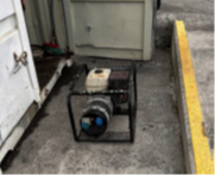
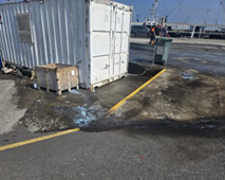
A marine mechanic went to the workshop container to refuel a portable generator intended for bilge cleaning tasks, as there was no electrical supply available at the dock. During the refuelling, petrol (gasoline) spilled around the generator, which was in poor condition and lacked rubber bushings. When the mechanic dragged the generator across the asphalt to clean the spill, friction produced a spark that ignited the fuel. Attempting to move the petrol (gasoline) can and close the door, he sustained minor burns on his right arm. Nearby workers promptly extinguished the fire and provided first aid.
 |
 |
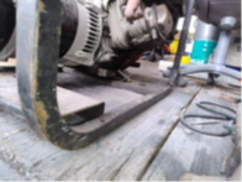 |
| Position of portable generator while refuelling | Area of work | Showing rubber bushings not present |
Why did it happen?
- There was a lack of procedure and risk assessment: The refuelling operation had no defined process, and associated risks were not identified or controlled.
- There should have been a designated area for this potentially hazardous activity. The refuelling was conducted without oversight and outside a safe, approved location.
- There was no easy access to firefighting equipment: The portable generator was positioned such that it was difficult to easily reach fire extinguishers.
- The equipment was in poor condition: The generator lacked rubber bushings, which could have prevented sparks being caused when it was dragged over concrete.
- Inadequate maintenance and housekeeping: General disorganization and lack of preventive maintenance contributed to unsafe conditions in the workshop.
IMCA Safety Flashes summarise key safety matters and incidents, allowing lessons to be more easily learnt for the benefit of the entire offshore industry.
The effectiveness of the IMCA Safety Flash system depends on the industry sharing information and so avoiding repeat incidents. Incidents are classified according to IOGP's Life Saving Rules.
All information is anonymised or sanitised, as appropriate, and warnings for graphic content included where possible.
IMCA makes every effort to ensure both the accuracy and reliability of the information shared, but is not be liable for any guidance and/or recommendation and/or statement herein contained.
The information contained in this document does not fulfil or replace any individual's or Member's legal, regulatory or other duties or obligations in respect of their operations. Individuals and Members remain solely responsible for the safe, lawful and proper conduct of their operations.
Share your safety incidents with IMCA online. Sign-up to receive Safety Flashes straight to your email.