Unsafe attempt to transfer between vessels with no gangway
- Safety Flash
- Published on 22 October 2026
- Generated on 22 October 2026
- IMCA SF 18/26
- 2 minute read
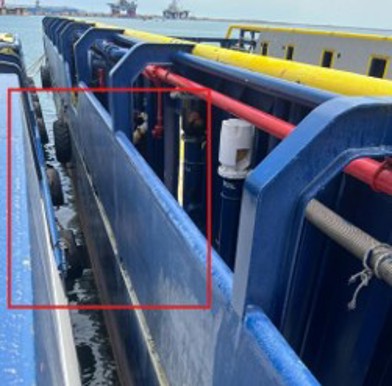
A crew member was observed attempting to transfer between two vessels alongside each other without using an approved gangway or designated means of access.
What happened?
The unsafe act was immediately stopped and the individual was reminded of the company's safe access requirements.
The attempted transfer was in clear view of both vessel bridges; however, no action was taken to stop the unsafe act or provide a safe means of access, indicating a lack of effective controls and a silent acceptance of unsafe behaviour. Although no injury occurred, the situation had the potential to result in a serious incident.
Why did it happen?
- Normalization of unsafe practices: Personnel underestimated the risks associated with transferring between vessels alongside one another that appeared to be stationary.
- Failure to follow procedures: Approved safe access requirements and vessel transfer procedures were not followed.
- Lack of intervention and supervision: The unsafe act was visible to personnel on both vessel bridges; however, no intervention took place and no approved gangway was provided.
- Weak safety ownership: There was a missed opportunity for the vessel team to challenge unsafe behaviour and reinforce safe working practices.
What do we learn?
- Never transfer between vessels without an approved means of access.
- Bridge teams and vessel leadership are responsible for ensuring safe access arrangements are in place before any transfer takes place.
- Let us not silently accept or tolerate unsafe activities. If an unsafe act is observed, immediate intervention is required.
- If a gangway or other approved access arrangement is not available, the transfer should not take place. Even when vessels are alongside, unexpected vessel movement due to tides, swell, passing traffic, or mooring adjustments can result in serious injuries, including slips, falls, crush injuries, or man-overboard incidents.
Members may wish to refer to:
Related Safety Flashes
-
IMCA SF 28/21
15 October 2021
-
-
IMCA SF 31/20
10 November 2020
-
-
IMCA SF 08/18
11 April 2018
-

IMCA Safety Flashes summarise key safety matters and incidents, allowing lessons to be more easily learnt for the benefit of the entire offshore industry.
The effectiveness of the IMCA Safety Flash system depends on the industry sharing information and so avoiding repeat incidents. Incidents are classified according to IOGP's Life Saving Rules.
All information is anonymised or sanitised, as appropriate, and warnings for graphic content included where possible.
IMCA makes every effort to ensure both the accuracy and reliability of the information shared, but is not be liable for any guidance and/or recommendation and/or statement herein contained.
The information contained in this document does not fulfil or replace any individual's or Member's legal, regulatory or other duties or obligations in respect of their operations. Individuals and Members remain solely responsible for the safe, lawful and proper conduct of their operations.
Share your safety incidents with IMCA online. Sign-up to receive Safety Flashes straight to your email.