Unsafe handling of gas cylinders
- Safety Flash
- Published on 17 March 2026
- Generated on 17 March 2026
- IMCA SF 05/26
- 2 minute read
A vessel’s Chief Mate noticed unsafe positioning of compressed gas cylinders on the quayside.
What happened?
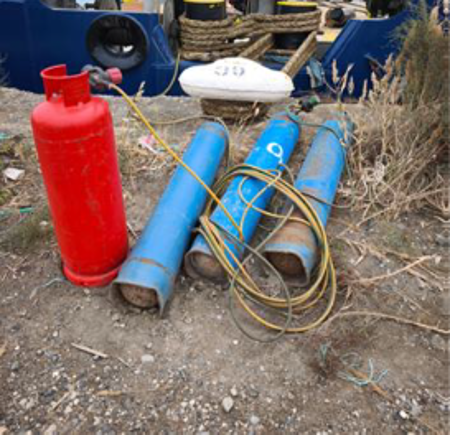
An AHTS vessel was alongside for maintenance activities being carried out by a third-party contractor. The vessel’s Chief Mate conducted a pre-job verification for planned hot work activities (gas cutting and welding), and noticed unsafe positioning of compressed gas cylinders on the quayside. The gas cylinders had been laid on the ground by the third-party contractor, without any racks or securing arrangements (one was stored vertically/unsecured), creating an unstable condition and increasing the risk of movement, impact, or damage.
Why did it happen?
- Making it easy to do things safely: If approved cylinder racks or securing devices had been provided or arranged by the third-party contractor, this would have meant the cylinders wouldn’t have needed to have been placed directly on the ground in an unsafe manner.
- Lack of awareness and competency: The third-party personnel did not fully understand hot-work safety requirements, particularly the correct positioning and securing of compressed gas cylinders.
- Perceived time pressure: The third-party workers felt pressure to hurry and finish the job, and thus bypassed required safety controls and proper securing of cylinders.
Lessons learned
- Gas cylinders should be placed in approved racks or restrained with suitable securing systems to prevent rolling, falling, or accidental impact.
- Upright positioning can actually be mandatory: In accordance with OSHA requirements (29 CFR 1926.350), compressed gas cylinders — including oxygen — must be kept upright and properly secured when not being transported or hoisted.
- Full communication and close working together with third-party contractors and their personnel, particularly during job planning and work order placement, would go a long way to ensuring this kind of thing does not recur.
- Are crew members afraid or unwilling to exercise “Stop Work Authority”? No-one stopped the job in this case. Crew need to feel able, when they see unsafe conditions, to stop the job immediately and report the issue for correction before work proceeds.
Related Safety Flashes
-
IMCA SF 22/20
24 July 2020
-
-
IMCA SF 18/18
23 August 2018
-
IMCA Safety Flashes summarise key safety matters and incidents, allowing lessons to be more easily learnt for the benefit of the entire offshore industry.
The effectiveness of the IMCA Safety Flash system depends on the industry sharing information and so avoiding repeat incidents. Incidents are classified according to IOGP's Life Saving Rules.
All information is anonymised or sanitised, as appropriate, and warnings for graphic content included where possible.
IMCA makes every effort to ensure both the accuracy and reliability of the information shared, but is not be liable for any guidance and/or recommendation and/or statement herein contained.
The information contained in this document does not fulfil or replace any individual's or Member's legal, regulatory or other duties or obligations in respect of their operations. Individuals and Members remain solely responsible for the safe, lawful and proper conduct of their operations.
Share your safety incidents with IMCA online. Sign-up to receive Safety Flashes straight to your email.