Precautions against jellyfish sting during diving operations
- Safety Flash
- Published on 10 November 2010
- Generated on 2 July 2025
- IMCA SF 07/10
- 2 minute read
A Member has reported that there has recently been a significant increase in the number of jellyfish in areas where previously few jellyfish had been encountered.
Our Member noted the following:
Apart from the obvious risk of stinging, there is evidence of further medical issues associated with diving in the vicinity of jellyfish. This has become an increased problem in summer months.
On contacting jellyfish, there is a tendency for particles of tentacles to become attached to the diver’s suit. If these particles are not removed during the cleaning process, ‘dust’ remains on the surface of the suit during the drying process and can become airborne when returned to the diving chamber. Some divers may be allergic to this and suffer ill-effects.
When diving in an area suspected of being populated with jellyfish, Members are encouraged to adopt a thorough cleaning ‘routine’ and to take the following additional precautions:
- Risk of jellyfish sting should be included in the job safety analysis (JSA) and risk assessments for diving tasks.
- Umbilical recovery should always be carried out using gloves.
- After locking out, dive suits should be pressure washed with fresh water and thoroughly rinsed.
- Dive suits may then be dipped in the cleaning tank, and not prior to pressure wash, as this will result in contaminating the tank.
- Consideration should be given to the use of over-suits which should be removed prior to re-entering the bell.
- Divers’ umbilicals should be visually inspected and scrubbed (as required) on entry to the bell.
- Ensure ship medic and diver medic technician (DMT) are made aware of jellyfish danger and understand first aid procedure.
- Prior to locking cleaned and dried suits into the system they should be checked for surface residue (normally in the form of a ‘white’ flaky coating). If present it should be cleaned to remove the contaminant.
If these cleaning processes are not adhered to, the contamination on the suits can become ‘atomised’ during the blow-down (into saturation) process resulting in atmospheric dust. Through consultation with experts involved in the study of jellyfish, it has become recognised that dried jellyfish particulates can be an irritant specifically resulting in coughing while others in the fishing industry have recognised that dried nets can also result in skin rash during periods where high levels of jellyfish have been encountered.
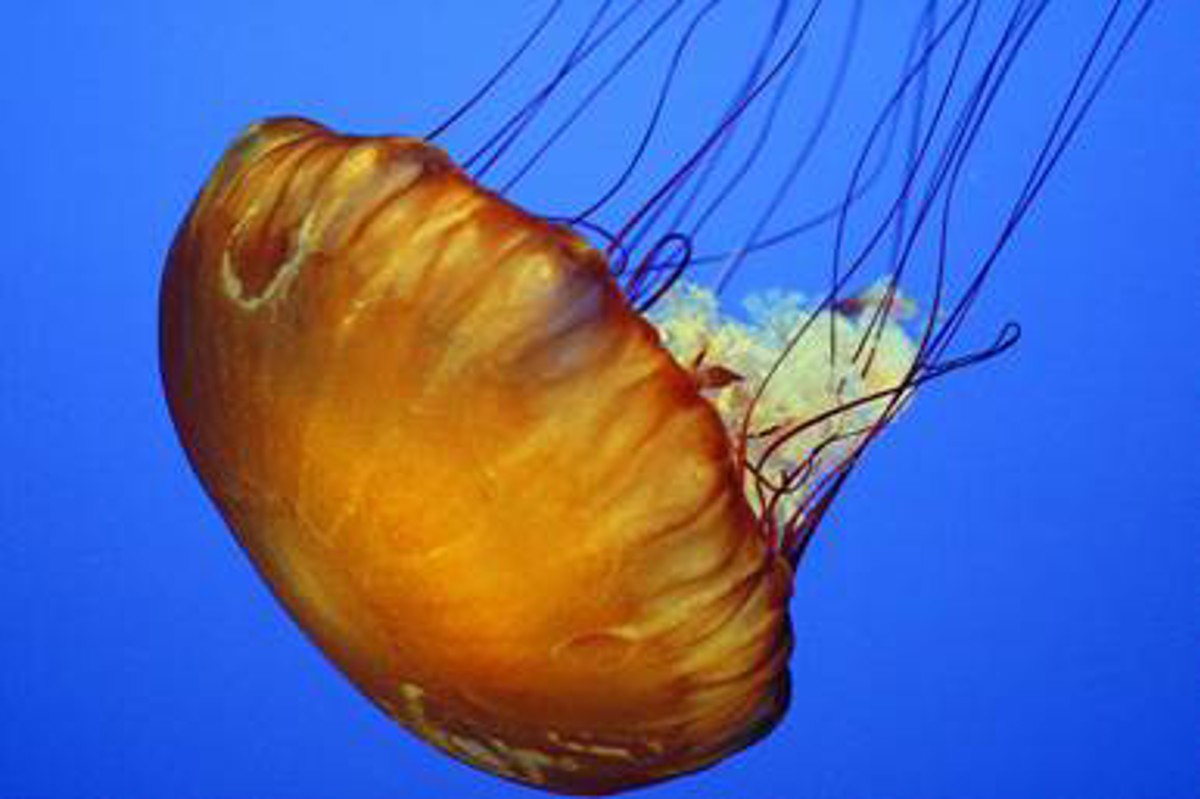
Jellyfish
IMCA Safety Flashes summarise key safety matters and incidents, allowing lessons to be more easily learnt for the benefit of the entire offshore industry.
The effectiveness of the IMCA Safety Flash system depends on the industry sharing information and so avoiding repeat incidents. Incidents are classified according to IOGP's Life Saving Rules.
All information is anonymised or sanitised, as appropriate, and warnings for graphic content included where possible.
IMCA makes every effort to ensure both the accuracy and reliability of the information shared, but is not be liable for any guidance and/or recommendation and/or statement herein contained.
The information contained in this document does not fulfil or replace any individual's or Member's legal, regulatory or other duties or obligations in respect of their operations. Individuals and Members remain solely responsible for the safe, lawful and proper conduct of their operations.
Share your safety incidents with IMCA online. Sign-up to receive Safety Flashes straight to your email.