Line of fire: deck tugger wire failure
- Safety Flash
- Published on 4 March 2021
- Generated on 18 October 2026
- IMCA SF 07/21
- 2 minute read
Personnel were standing in line of fire during recovery of a Back-Fill Plough when a chain sling failed, and the rigging recoiled across the deck.
What happened?
A tugger wire connected to a tow wire and chain sling, unexpectedly came under tension, the chain sling failed, and the rigging recoiled.
The incident occurred when a technical fault in the plough made it necessary to recover it to deck. The deck foreman requested the tugger wire operator to provide adequate tugger wire slack, which was then provided. The intention was to haul the tugger wire up the deck with the main winch.
This intention was not clearly communicated to, nor was it understood by, the tugger winch operator or the deck crew. The tension on the chain sling rapidly increased, it failed, and the released rigging recoiled and narrowly missed the personnel in line of fire. The chain sling contacted a deck plate which dissipated much of the energy.
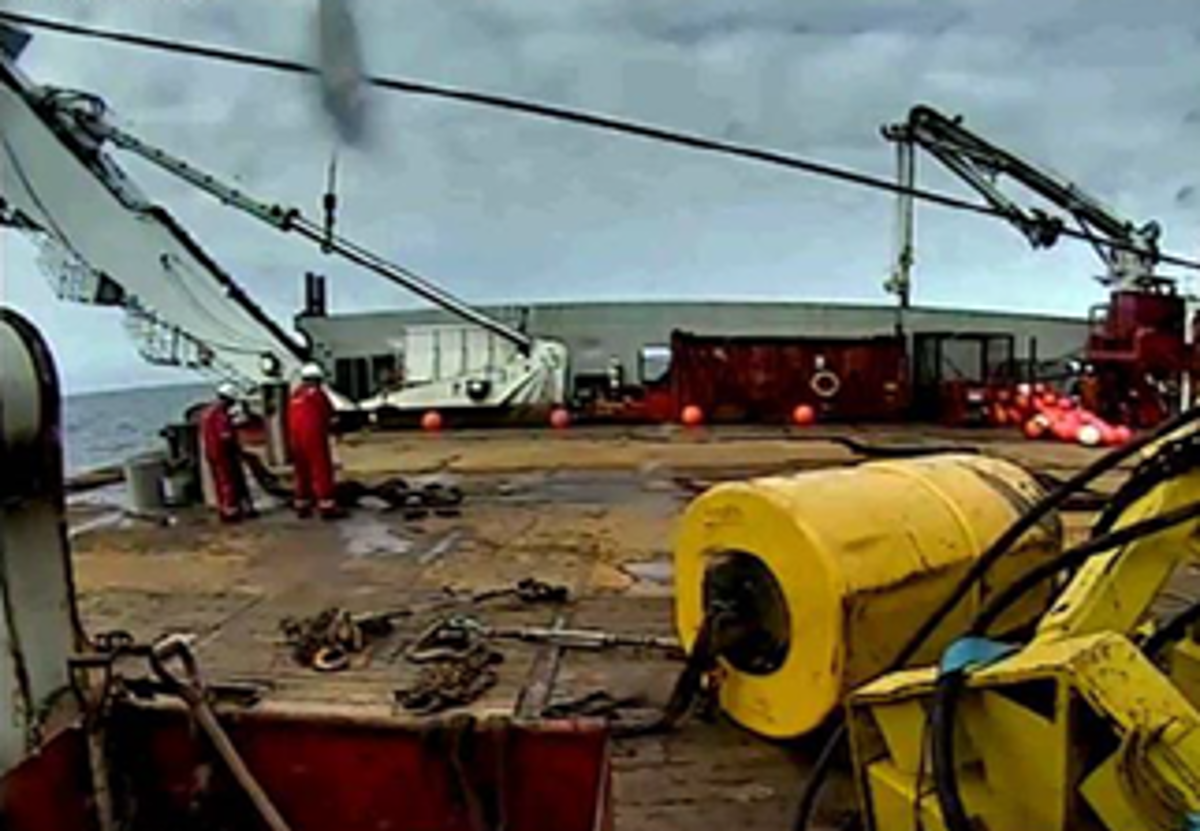
Deck crew immediately before tugger wire snaps
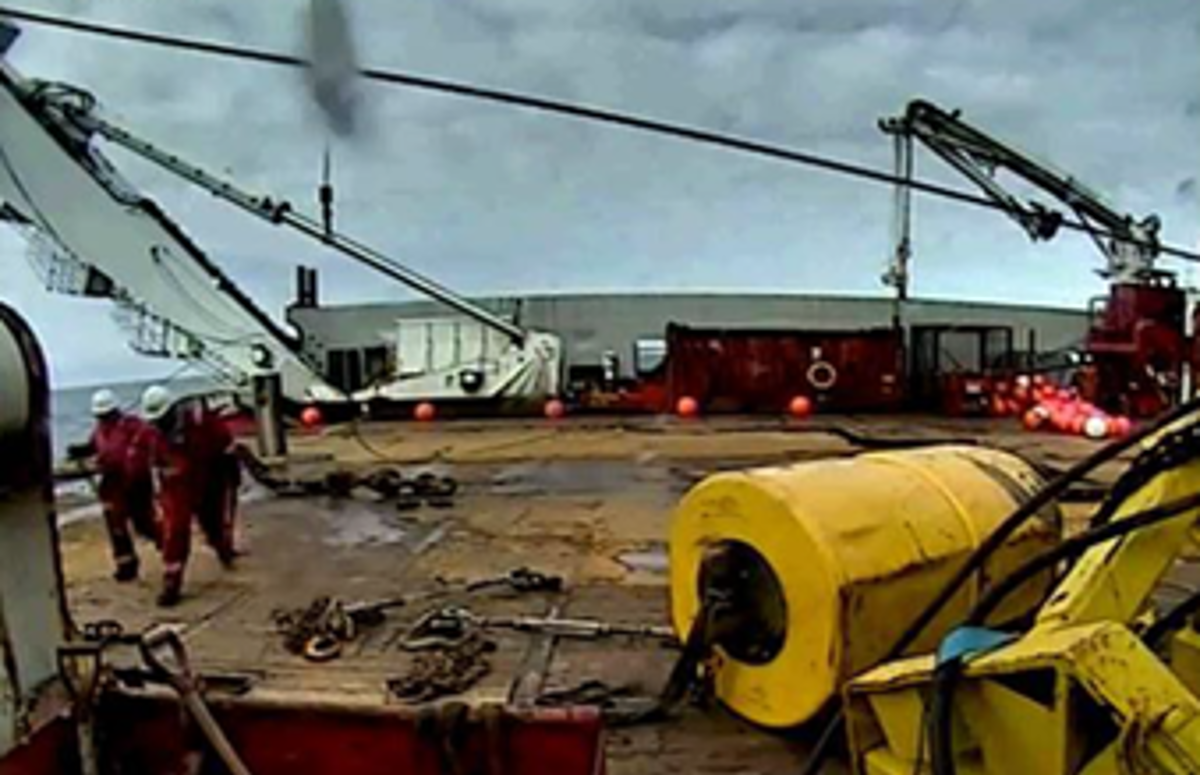
Deck crew getting out of the line of fire as tugger wire snaps
What went wrong?
- There was no opportunity taken to have a time-out to discuss the change in task plans when moving from the launch of the plough to its recovery.
- There were inconsistencies between shifts, and inadequate documentation, between marine crew and project personnel, of who exactly was responsible for deck operations.
- The change in the “standard” practice of manually pulling the tugger wire up the deck was not communicated to all parties involved, and the consequence of the change was neither evaluated nor understood.
- There was a failure to follow the risk assessment which required a “Clear Deck Policy” when using tuggers and spooling with personnel positioned in a safe zone.
Actions
- Ensure a toolbox talk (TBT) is conducted when moving from one task plan to another so that all parties involved in the operation are aware of their roles and responsibilities.
- Supervise compliance with approved procedures or perform a Management of Change process before making any deviations from a procedure.
- Reinforce the need for clear, concise communication and always confirming everyone understands the next activity.
- Ensure personnel are fully aware of the risks from being in the line of fire of wires or chains under tension and that they are clear on the safe areas they must remain within. This should be a key part of the TBT.
Related Safety Flashes
-
IMCA SF 02/21
4 January 2021
-
IMCA SF 34/20
16 December 2020
-
-
IMCA SF 14/14
7 August 2014
IMCA Safety Flashes summarise key safety matters and incidents, allowing lessons to be more easily learnt for the benefit of the entire offshore industry.
The effectiveness of the IMCA Safety Flash system depends on the industry sharing information and so avoiding repeat incidents. Incidents are classified according to IOGP's Life Saving Rules.
All information is anonymised or sanitised, as appropriate, and warnings for graphic content included where possible.
IMCA makes every effort to ensure both the accuracy and reliability of the information shared, but is not be liable for any guidance and/or recommendation and/or statement herein contained.
The information contained in this document does not fulfil or replace any individual's or Member's legal, regulatory or other duties or obligations in respect of their operations. Individuals and Members remain solely responsible for the safe, lawful and proper conduct of their operations.
Share your safety incidents with IMCA online. Sign-up to receive Safety Flashes straight to your email.