MSF: Multiple LTIs - Vessel gangway fell from quay causing injuries
- Safety Flash
- Published on 16 May 2025
- Generated on 11 April 2026
- IMCA SF 09/25
- 3 minute read
The Marine Safety Forum has published Safety Alert 25-01 relating to an incident in which the gangway of a container vessel detached from the quayside injuring five workers.
What Happened?
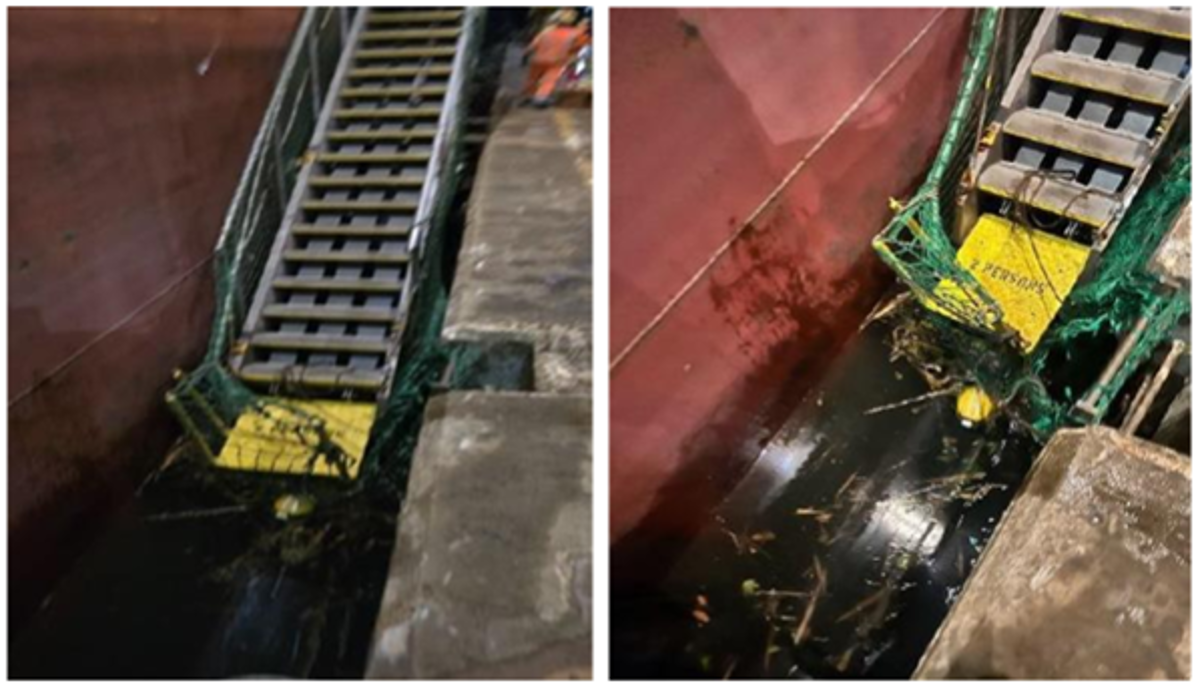
Four of the injuries were recorded as “over-seven-day injuries”, while one was classified as minor. Movement of the vessel on a tidal berth resulted in the vessel’s gangway resting partially over the quayside ladder void. As the five workers were ascending the gangway, the gangway moved from the quay wall, swinging back to the side of the vessel and dropping approximately 2-3 metres below the quay wall (images below). Consequently, the five workers fell, one of them, at the bottom of the gangway falling into the water, another being caught in the gangway netting and the other three falling onto the gangway itself. The worker in the water was recovered via the quayside ladder, first aiders attended the scene, three of the crew were sent to hospital and two sent home. There were subsequent discussions between port officials and the Chief Mate about the vessel and its crew.
What went wrong?
· Tidal movement of the vessel caused the gangway to move position, and the gangway roller encroached on the ladder void, causing it to be less stable.
· Vessel gangway procedure requiring supervision at all times, was not followed. At the time of incident, the gangway hoist wires were slack enough to for the gangway to drop approximately three metres.
· Markings on the quayside, around the ladder were faded and of insufficient colour and size to raise awareness of potential quayside hazard.
· The injured person was not wearing his chinstrap when going up the gangway resulting in him losing his helmet during the fall into the water, where he narrowly missed striking the quayside fender.
· A large painted sign showing the maximum load of the gangway was faded.
· There was no life buoy present at the lower part of the gangway supplied by the vessel as per local regulations.
The MSF made the following suggestions:
· Position vessel gangways away from ladder voids.
· Review operations to ensure that written procedures are followed in practice.
· All employees must wear PPE correctly.
· All signs on the vessel and on the gangway should be clear in providing information regarding maximum load, capacity and potential hazards.
· Carry out pre-work gangway and vessel checks before work starts and at suitable intervals throughout.
· Encourage the use of stop work authorities if unsafe situations are observed.
· Review markings for quayside hazards such as ladder voids to ensure they are suitable.
Related Safety Flashes
-
IMCA SF 28/23
6 December 2023
-
-
IMCA SF 02/23
11 January 2023
-
-
IMCA SF 28/22
13 December 2022
IMCA Safety Flashes summarise key safety matters and incidents, allowing lessons to be more easily learnt for the benefit of the entire offshore industry.
The effectiveness of the IMCA Safety Flash system depends on the industry sharing information and so avoiding repeat incidents. Incidents are classified according to IOGP's Life Saving Rules.
All information is anonymised or sanitised, as appropriate, and warnings for graphic content included where possible.
IMCA makes every effort to ensure both the accuracy and reliability of the information shared, but is not be liable for any guidance and/or recommendation and/or statement herein contained.
The information contained in this document does not fulfil or replace any individual's or Member's legal, regulatory or other duties or obligations in respect of their operations. Individuals and Members remain solely responsible for the safe, lawful and proper conduct of their operations.
Share your safety incidents with IMCA online. Sign-up to receive Safety Flashes straight to your email.