Uncontrolled movement of cargo
- Safety Flash
- Published on 23 July 2026
- Generated on 10 November 2026
- IMCA SF 13/26
- 2 minute read
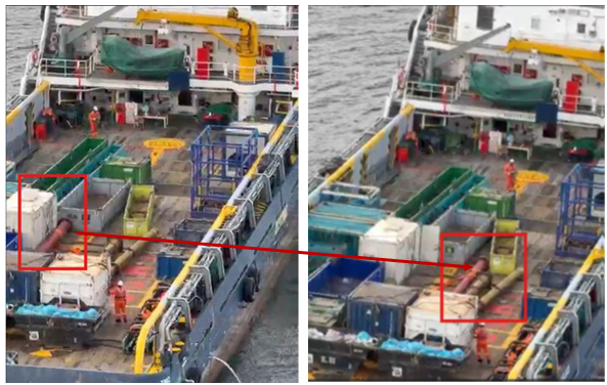
During offshore cargo operations alongside a rig, a single pipe loaded on deck shifted due to vessel motion and swell conditions.
What happened?
The pipe rolled over the wooden stopper arrangement, damaging a cargo container door and creating a potential risk to nearby personnel. The crew quickly secured the pipe with additional ratchet lashings and adjusted the vessel’s heading to reduce rolling. No injuries, pollution, or loss of containment occurred.
Why did it happen?
- The pipe was stowed mid-deck without any direct restraint or a dedicated cargo basket/container. Existing securing arrangements using stoppers/chocks appeared as inadequate for the prevailing sea conditions.
- Cargo securing arrangements were not verified against actual and potential sea state conditions before lifting occurred.
What can we learn?
- Cylindrical cargo like pipes – stuff that can roll - should always be treated as high-risk for rolling and shifting during offshore operations. Secondary securing methods should be applied immediately after placement, not only after movement is observed.
- Ensure there is effective cargo planning, risk assessment, communication, and continuous reassessment of cargo security during changing weather and swell conditions.
- Regular inspection of lashings and securing arrangements is necessary throughout cargo operations.
- If necessary, if things look unsafe, remember you have the authority to stop the job, fix the problem and then continue once things are safe.
Related Safety Flashes
-
IMCA SF 07/19
18 April 2019
-
IMCA SF 18/14
25 November 2014
IMCA Safety Flashes summarise key safety matters and incidents, allowing lessons to be more easily learnt for the benefit of the entire offshore industry.
The effectiveness of the IMCA Safety Flash system depends on the industry sharing information and so avoiding repeat incidents. Incidents are classified according to IOGP's Life Saving Rules.
All information is anonymised or sanitised, as appropriate, and warnings for graphic content included where possible.
IMCA makes every effort to ensure both the accuracy and reliability of the information shared, but is not be liable for any guidance and/or recommendation and/or statement herein contained.
The information contained in this document does not fulfil or replace any individual's or Member's legal, regulatory or other duties or obligations in respect of their operations. Individuals and Members remain solely responsible for the safe, lawful and proper conduct of their operations.
Share your safety incidents with IMCA online. Sign-up to receive Safety Flashes straight to your email.