Lost time injury (LTI) to leg
- Safety Flash
- Published on 22 December 2009
- Generated on 15 September 2026
- IMCA SF 18/09
- 2 minute read
A Member has reported an incident in which a sub-contractor’s employee suffered a leg injury which was categorised as a lost time injury (LTI).
What happened?
Whilst working on offloading a vessel, the sub-contract employee’s left leg above the ankle was pinned between a shifting spreader bar frame and a freight container located adjacent to the spreader bar frame.
While one of the seven spreader bars was being lifted and in the air the remaining bars shifted, causing the frame to slide approximately one metre (40 inches) towards the freight container where the employee was standing.
Hydraulic power packs were used to help free the trapped employee, who was taken to the local hospital. The employee suffered a hairline fracture of the left ankle and the incident was categorised as an LTI.
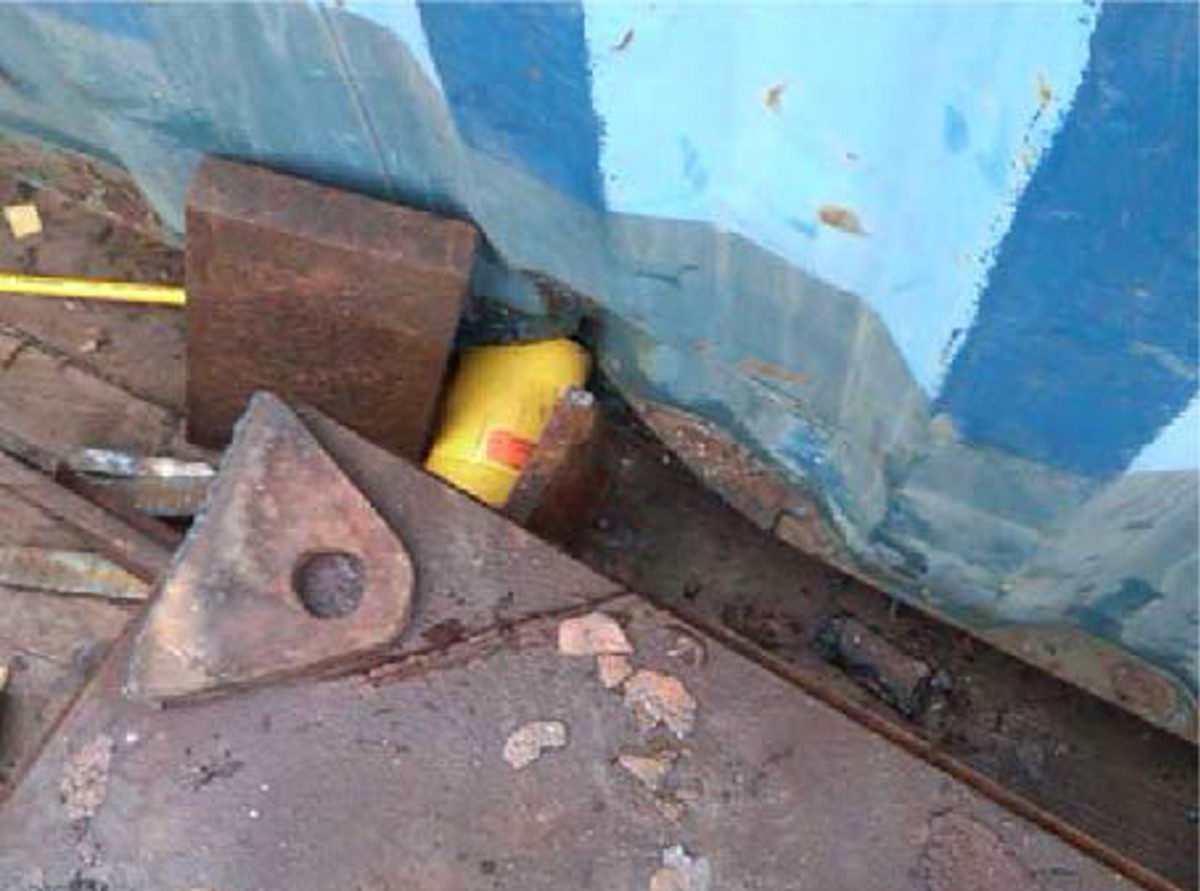
injured person’s ankle was trapped between yellow spreader bars and blue freight container
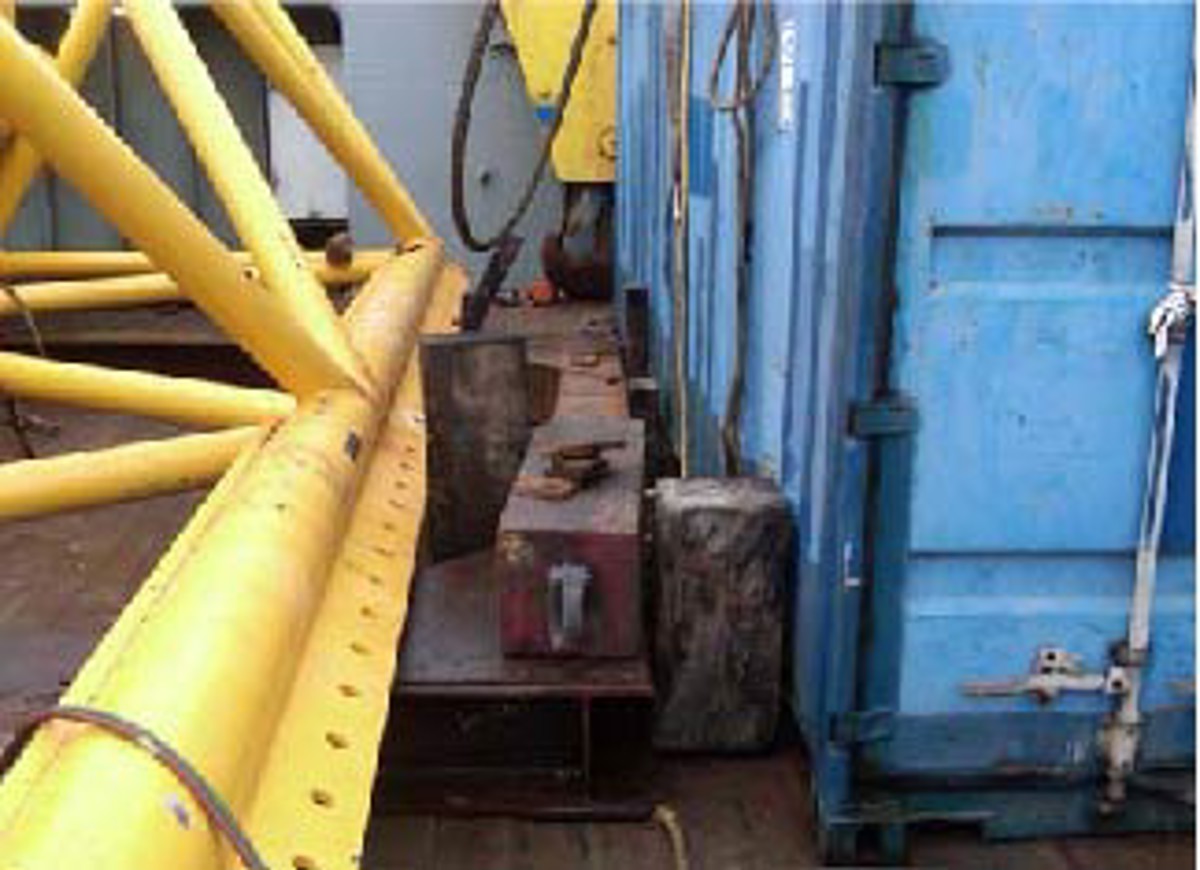
injured person’s ankle was trapped between yellow spreader bars and blue freight container
What were the causes?
Following investigation, the company noted that:
- The supervisor in charge did not follow in-house job safety analysis procedures.
- The sub-contractor personnel were not required to follow in-house job safety analysis procedures.
- The sub-contractor did not provide the specified fully trained personnel but rather a general labourer.
Actions
The company implemented the following actions to prevent recurrence:
- Installation of clips to secure the load frames to the deck and installed additional safety stops on the load frames to hold the spreader bars from moving.
- Audit of training records of all sub-contractor personnel in order to ensure that personnel without proven competence or proper training were not accepted for work.
- The sub-contractor was asked to provide full training for all contract personnel, which should be:
- appropriate to the work being performed
- compliant with local regulatory safety standards
- fully verifiable through testing.
- appropriate to the work being performed
- Senior leadership would provide clear guidance to supervisory personnel that safety processes and procedures could not be cut short.
IMCA Safety Flashes summarise key safety matters and incidents, allowing lessons to be more easily learnt for the benefit of the entire offshore industry.
The effectiveness of the IMCA Safety Flash system depends on the industry sharing information and so avoiding repeat incidents. Incidents are classified according to IOGP's Life Saving Rules.
All information is anonymised or sanitised, as appropriate, and warnings for graphic content included where possible.
IMCA makes every effort to ensure both the accuracy and reliability of the information shared, but is not be liable for any guidance and/or recommendation and/or statement herein contained.
The information contained in this document does not fulfil or replace any individual's or Member's legal, regulatory or other duties or obligations in respect of their operations. Individuals and Members remain solely responsible for the safe, lawful and proper conduct of their operations.
Share your safety incidents with IMCA online. Sign-up to receive Safety Flashes straight to your email.