High potential near-miss: Incompatible pillar valve assembly
- Safety Flash
- Published on 20 December 2013
- Generated on 1 July 2026
- IMCA SF 18/13
- 2 minute read
A Member has reported a high potential near miss incident, in which there was a failure of a pillar valve in a diver’s bailout set.
What happened?
The incident occurred during preparation for diving operations, requiring three twin bailout sets. Upon completion of assembling the three bailout sets, two sets were charged with a gas mix of He/02 (80/20%) to 300 bar. The first two twin sets were filled with no concerns being noted. Filling was undertaken in accordance with industry standards and company procedures.
The third bailout to be charged was attached to the charging whip, secured and bailout opened. The Haskell supply valve was opened to decant the gas mix into the twin bailout set. The bailout was equalised to approximately 130 bar. The filling process was undertaken to fill the third twin set to the required pressure for diving operations.
A small leak was detected at the charging whip connection to the bailout. This resulted in the repositioning of the bailout in the charge tank, so that the twin bailout set was submerged. This action was undertaken to assist in the cooling of the twin bailout and in the detection of leaks. Within less than two minutes there was a loud explosion/release of gas from the charging tank. The gas supplied was immediately isolated. Upon inspection it was identified that the pillar valve failed to hold the content of the cylinder.
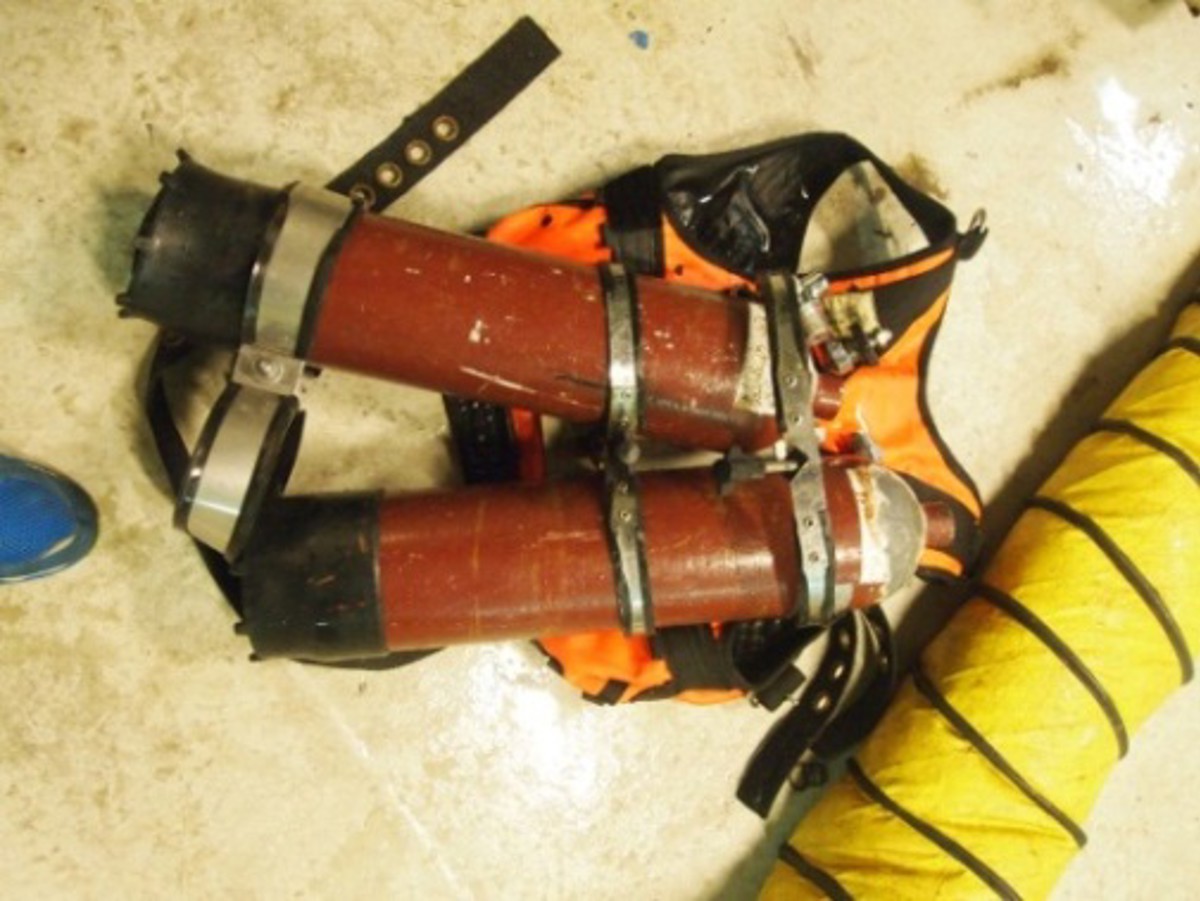
twin bailout after incident
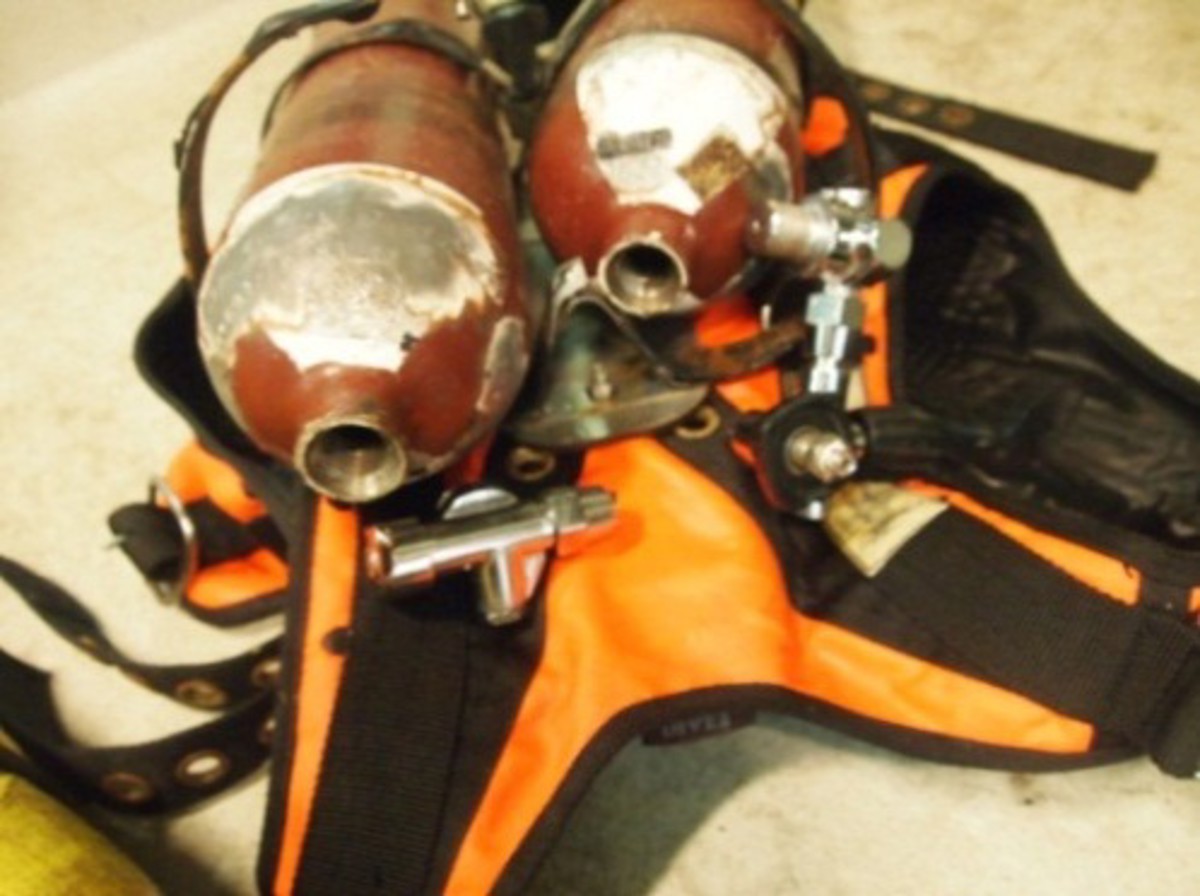
broken manifold assembly
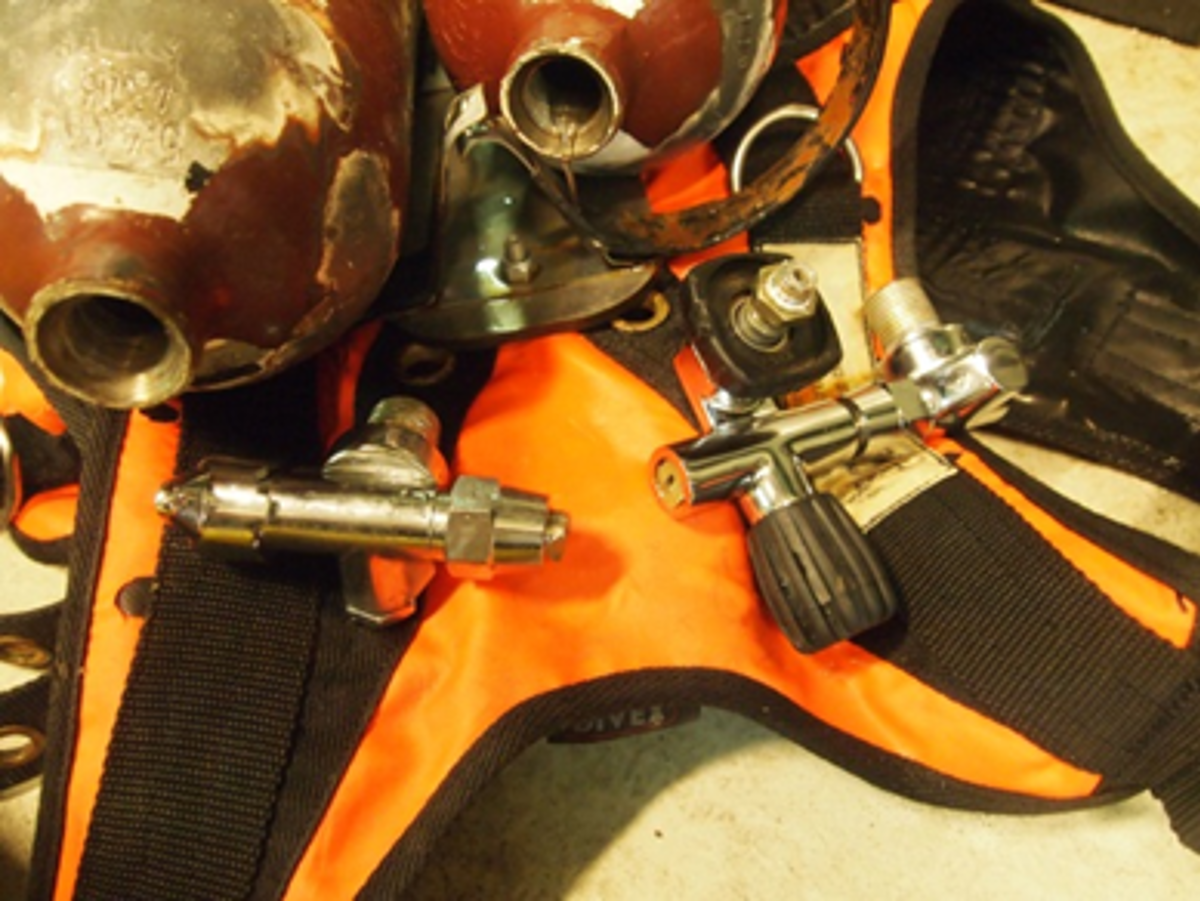
broken assembly
What were the causes?
Our Member’s investigation noted the following:
- Different types of cylinders (imperial and metric) were being used on the same job site.
- There was no management of change (MOC) process undertaken, to change pillar valve to twin manifold configuration.
- Additional force was applied to insert new pillar valve (no inspection undertaken as to why there was a resistance).
Actions
Our Member took the following corrective actions:
- Replacing bailout cylinders with metric only.
- Vessel technicians to be supplied with a precision measuring instrument (for measurement of thread patterns).
- Training to be undertaken by dive team / project department pertaining to the use of MOC.
- Implement system that ensures only metric thread cylinders and components used.
- Marking of all metric and imperial parts and cylinders to be undertaken for ease of identification.
IMCA Safety Flashes summarise key safety matters and incidents, allowing lessons to be more easily learnt for the benefit of the entire offshore industry.
The effectiveness of the IMCA Safety Flash system depends on the industry sharing information and so avoiding repeat incidents. Incidents are classified according to IOGP's Life Saving Rules.
All information is anonymised or sanitised, as appropriate, and warnings for graphic content included where possible.
IMCA makes every effort to ensure both the accuracy and reliability of the information shared, but is not be liable for any guidance and/or recommendation and/or statement herein contained.
The information contained in this document does not fulfil or replace any individual's or Member's legal, regulatory or other duties or obligations in respect of their operations. Individuals and Members remain solely responsible for the safe, lawful and proper conduct of their operations.
Share your safety incidents with IMCA online. Sign-up to receive Safety Flashes straight to your email.