Accidental activation of emergency stop during saturation diving operations
- Safety Flash
- Published on 23 August 2019
- Generated on 23 October 2026
- IMCA SF 20/19
- 2 minute read
Emergency stop buttons were accidentally activated on a vessel engaged in Saturation Diving Operations in the 500m zone. This caused the Starboard Voith Schneider Propulsion (VSP) System to trip out.
What happened?
Much happened in a single minute: at 09:27:00 DPOs noticed that a warning light on the Starboard Voith Control Station and Engine Room Control were immediately informed. At 09:27:05 the Starboard VSP System stopped working but the vessel maintained its position. At 09:27:14 there was a DP “Yellow” alarm. At the same time, Dive Control was informed and started to return their Divers to the bell, and the Vessel Master and the client came to the Bridge.
Divers were safely recovered, and the vessel moved off-site and outside the 500m zone. There were no injuries or harm done. The Starboard VSP System took a little under an hour to bring back online.
What went wrong?
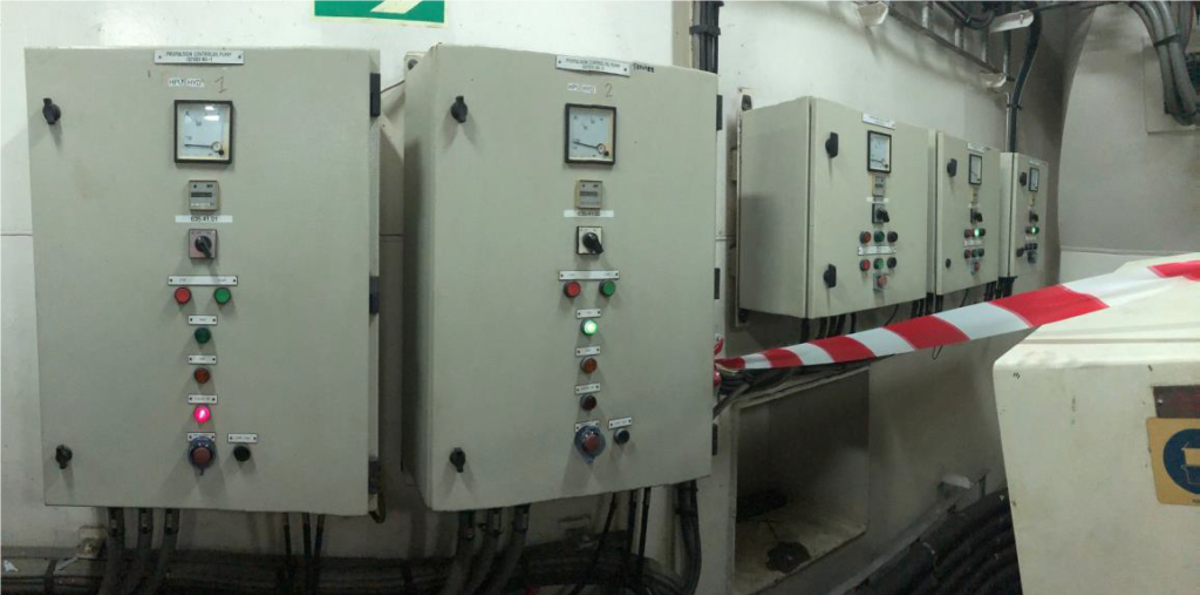
The VSP tripped out because both lube oil pumps stopped. Investigation revealed that the pumps were found to have stopped because both the emergency stop buttons for the pumps had been activated.
What were the causes?
There were no protective covers on the emergency stop buttons. The buttons were inadvertently pressed by engine room crew lacking situational awareness. In this case, the control panels were located in a narrow access passageway.
What actions were taken? What lessons were learned?
- Improve situational awareness of all crew and improve/reiterate shipboard familiarisation.
- Be reminded of position of emergency stop buttons, especially in small alleyways or spaces where there are risks of accidental activation.
- Install covers on all emergency stop buttons.
- More thorough job safety analysis (JSA) and toolbox talks (TBT) to be carried out covering any routine maintenance activities in engine spaces.
Related Safety Flashes
-
IMCA SF 04/14
4 April 2014
-
IMCA SF 17/08
3 December 2008
IMCA Safety Flashes summarise key safety matters and incidents, allowing lessons to be more easily learnt for the benefit of the entire offshore industry.
The effectiveness of the IMCA Safety Flash system depends on the industry sharing information and so avoiding repeat incidents. Incidents are classified according to IOGP's Life Saving Rules.
All information is anonymised or sanitised, as appropriate, and warnings for graphic content included where possible.
IMCA makes every effort to ensure both the accuracy and reliability of the information shared, but is not be liable for any guidance and/or recommendation and/or statement herein contained.
The information contained in this document does not fulfil or replace any individual's or Member's legal, regulatory or other duties or obligations in respect of their operations. Individuals and Members remain solely responsible for the safe, lawful and proper conduct of their operations.
Share your safety incidents with IMCA online. Sign-up to receive Safety Flashes straight to your email.