MAIB: Grounding of general cargo vessel Kaami
- Safety Flash
- Published on 30 July 2021
- Generated on 22 September 2026
- IMCA SF 21/21
- 2 minute read
The UK Marine Accident Investigation Branch (MAIB) has published Accident Investigation Report 7/2021 into the running aground of a cargo vessel in March 2020
What happened?
The general cargo vessel Kaami ran aground on a shoal in the Little Minch, on the west coast of Scotland.
The crew was safely evacuated and the vessel was later refloated by salvors.
There were no injuries or pollution but the vessel was declared a constructive total loss and was later scrapped.
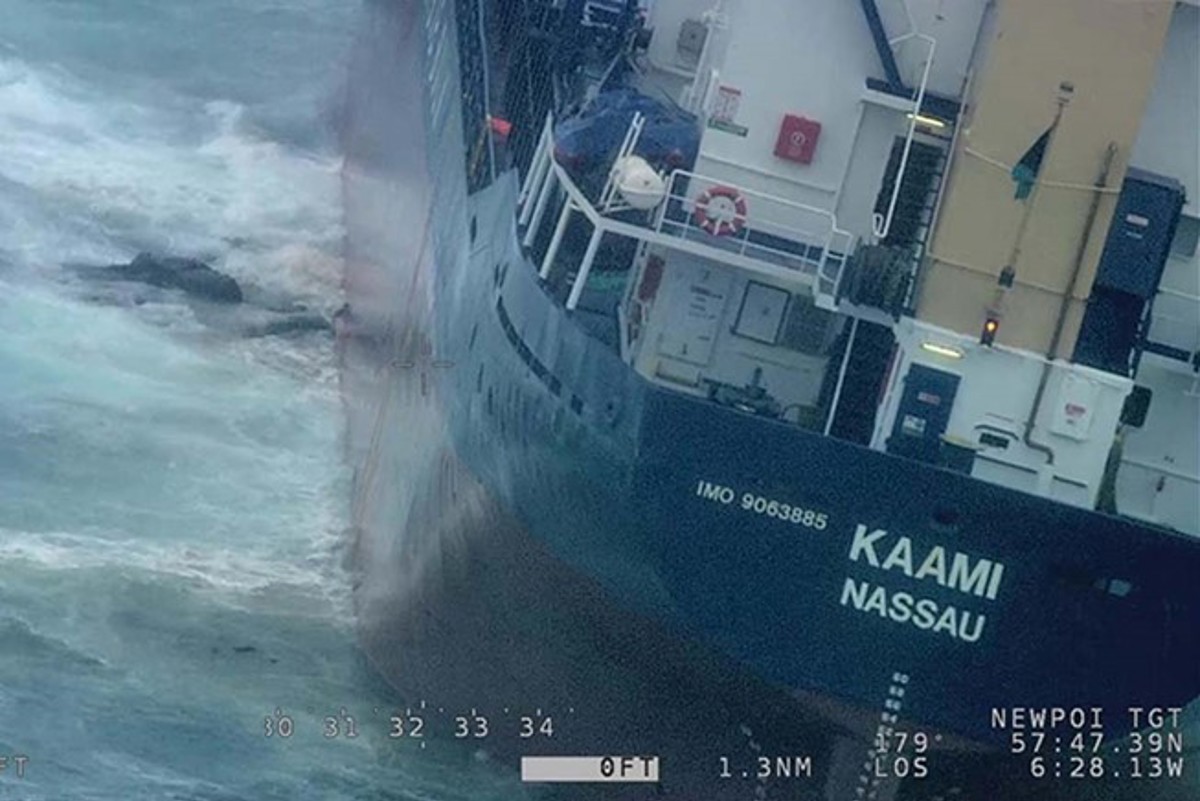
The general cargo vessel Kaami ran aground on a shoal in the Little Minch, on the west coast of Scotland
What went wrong?
The MAIB investigation found that the crew’s voyage planning procedures and passage monitoring did not identify the grounding hazard presented by the shoal, even after verbal warning from a local fishing boat. (IMCA emphasis).
More specifically:
- Training was not adequate: mandatory generic and type-specific training for the electronic chart display and information (ECDIS) system were not successful in providing the crew with the skills and knowledge necessary to use the vessel’s ECDIS safely.
- Although the vessel was crewed in accordance with Flag State requirements, the on-board operation did not allow adequate opportunity for the chief officer to plan the voyage and for his plan to be checked and verified by a second member of the bridge team – as was required by the vessel’s safety management system.
- The safety management system did not provide adequate safeguards for voyage planning and ECDIS use, and the vessel operator’s internal auditing program did not identify shortfalls in voyage planning and ECDIS use.
Actions
Following the accident, actions have been taken by the ship’s managers as well as the UK Maritime and Coastguard Agency (MCA). The recommendations to the ship’s managers were to:
- review the number of watchkeepers on its vessels with the aim of minimising the hazards associated with fatigue
- improve the guidance given in its safety management systems on the effective use of ECDIS and of bridge lookouts
- enhance company ability to conduct internal navigation audits.
Related Safety Flashes
-
IMCA SF 30/20
23 October 2020
-
IMCA SF 17/16
30 June 2016
-
IMCA SF 07/16
31 March 2016
IMCA Safety Flashes summarise key safety matters and incidents, allowing lessons to be more easily learnt for the benefit of the entire offshore industry.
The effectiveness of the IMCA Safety Flash system depends on the industry sharing information and so avoiding repeat incidents. Incidents are classified according to IOGP's Life Saving Rules.
All information is anonymised or sanitised, as appropriate, and warnings for graphic content included where possible.
IMCA makes every effort to ensure both the accuracy and reliability of the information shared, but is not be liable for any guidance and/or recommendation and/or statement herein contained.
The information contained in this document does not fulfil or replace any individual's or Member's legal, regulatory or other duties or obligations in respect of their operations. Individuals and Members remain solely responsible for the safe, lawful and proper conduct of their operations.
Share your safety incidents with IMCA online. Sign-up to receive Safety Flashes straight to your email.