UK HSE: Crane boom collapse
- Safety Flash
- Published on 27 February 2024
- Generated on 16 October 2026
- IMCA SF 05/24
- 2 minute read
The UK HSE has fined an offshore drilling company after the catastrophic collapse of a crane boom.
See here for the press release.
What happened?
The HSE reported: “Nobody was hurt in the incident on 31 March 2016 but a chaotic scene ensued after the collapse of the Rowan Gorilla VII’s boom, with flying debris damaging a nearby vessel, whipping a hose out of control before it ruptured, leaving a cloud of cement dust.”
The event occurred as crew were preparing to recover a faulty submersible pump. As the crane operator raised the boom to clear one of the three legs of the installation, the boom failed catastrophically and collapsed. Three of the four boom sections fell to sea between the rig and the supply vessel alongside which was pumping dry cement to the rig via a flexible hose. The crane’s auxiliary hook, cables, components, and rig debris landed on the deck of the supply vessel. The boom tip snagged the flexible hose, dragging it below the sea surface, causing it to rupture and whip back onto the deck of the vessel engulfing it in fine cement dust.
Although no one was injured, there were at least five employees on and around the crane at the time of the collapse and thirteen crew onboard the supply vessel.
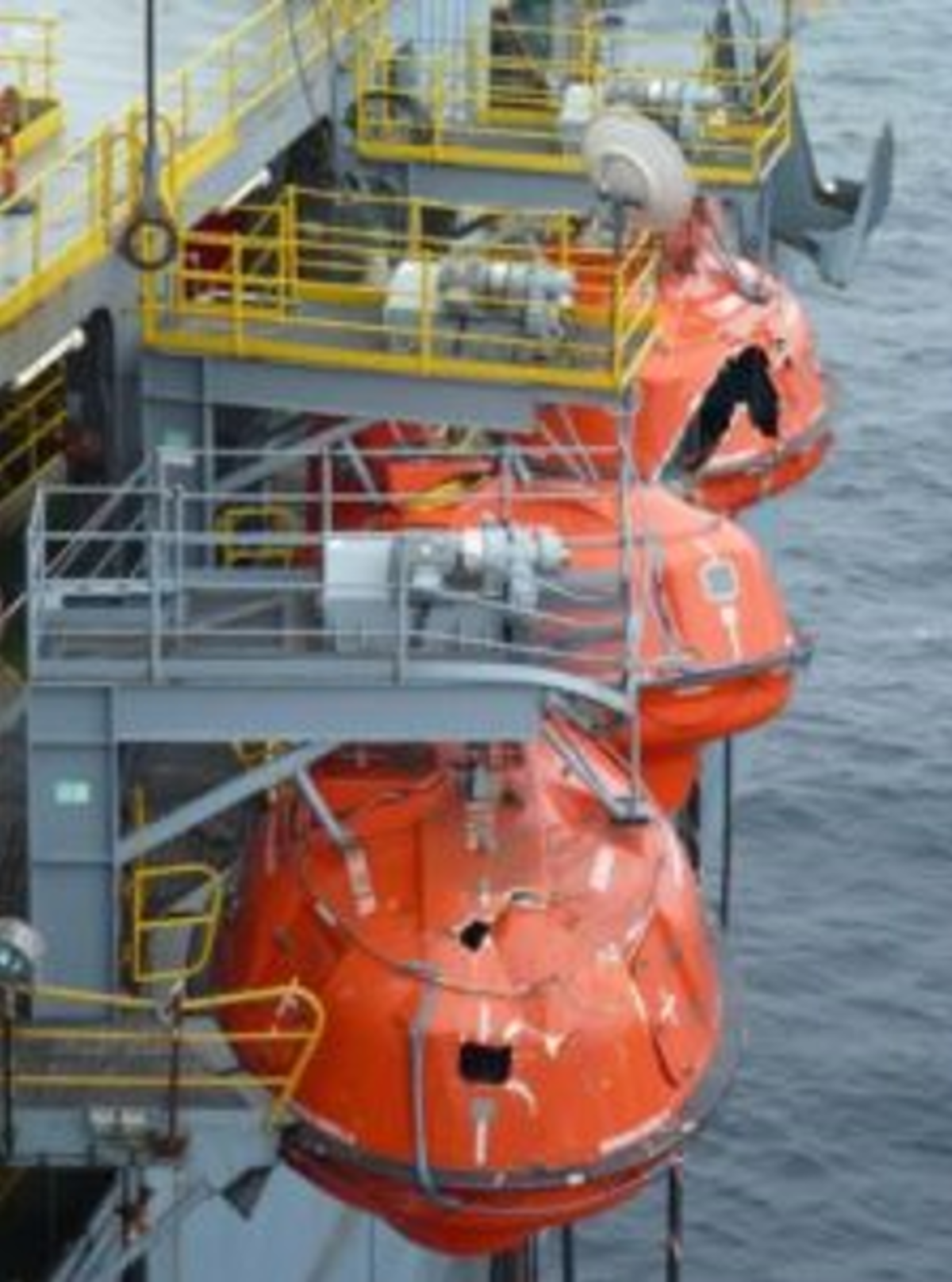
Damage to the lifeboats following the collapse
What went wrong?
Investigation found that:
- The immediate cause of the crane collapse was that a limit switch had not been checked. The limit switch, designed to prevent the crane boom being raised to the point of mechanical failure, had not been correctly set.
- Safety mechanisms, designed to prevent inadvertent operation of the slew, hoist, and boom joystick controls in the port bow crane cabin had all been overridden to prevent them returning to their locked neutral position.
The HSE inspector noted that “…the circumstances leading to the collapse of the crane were years in the making and symptomatic of a defective safety management system that allowed those conditions to exist and persist. This was quite simply an accident waiting to happen and illustrates the vital importance of maintaining and testing crane limit switches to ensure they will always provide the intended level of protection.”
Related Safety Flashes
-
IMCA SF 07/11
19 July 2011
-
IMCA SF 09/19
3 May 2019
-
-
IMCA SF 28/22
13 December 2022
-
-
IMCA SF 32/16
29 November 2016
IMCA Safety Flashes summarise key safety matters and incidents, allowing lessons to be more easily learnt for the benefit of the entire offshore industry.
The effectiveness of the IMCA Safety Flash system depends on the industry sharing information and so avoiding repeat incidents. Incidents are classified according to IOGP's Life Saving Rules.
All information is anonymised or sanitised, as appropriate, and warnings for graphic content included where possible.
IMCA makes every effort to ensure both the accuracy and reliability of the information shared, but is not be liable for any guidance and/or recommendation and/or statement herein contained.
The information contained in this document does not fulfil or replace any individual's or Member's legal, regulatory or other duties or obligations in respect of their operations. Individuals and Members remain solely responsible for the safe, lawful and proper conduct of their operations.
Share your safety incidents with IMCA online. Sign-up to receive Safety Flashes straight to your email.